
Why Does a COB LED Strip Flicker or Stop Working After Installation? A Real Customer Case Study
By Kimi Liu | Updated: Nov 23, 2026
Customer Feedback: COB LED Strip Flickering or Partially Not Lighting
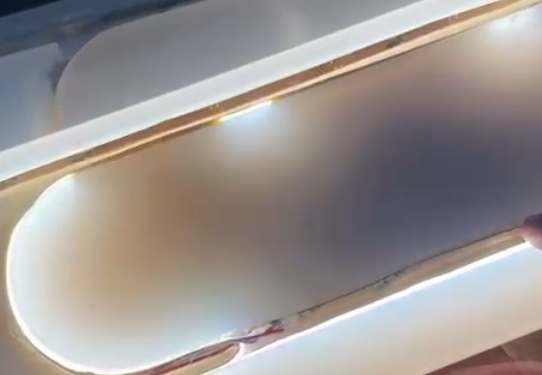
Recently, I received feedback from a customer about a 5mm wide, 3000K COB LED strip. The customer sent me a video showing an unusual lighting problem.
As shown in the video, the entire LED strip was not completely off. Instead, some sections were flickering while others were not lighting up properly.
What caught my attention was that when the customer pressed the dark areas with a finger, those sections started lighting up again.
I learned that the COB LED strip had been installed on a product with a curved surface. After watching the video, I realised that the problem might not be related to the product itself alone. The installation method could also be an important factor.
So, what could cause a COB LED strip to flicker or stop working after installation?
Our First Step: Find Out When the Problem Started
After receiving the video, I immediately shared the problem with our engineering team for further investigation.
Instead of jumping to conclusions, our engineer asked one important question:Did the problem appear immediately after installation, or did it happen after the LED strip had been used for some time?
Why is this important? Because the timing of the failure helps us narrow down the possible causes.
If the problem appears immediately after installation, we need to check the product condition and whether the strip was pulled, stretched, bent or damaged during installation.
If the problem appears after a period of use, we also need to consider long-term mechanical stress, loose connections, external pressure and the operating environment.
I passed this question on to the customer and asked them to check with their end customer.
The customer later confirmed that the problem appeared immediately after installation. Even more importantly, the same issue was found on four or five separate product panels.
This information helped us investigate the problem further based on the actual installation conditions.
Possible Causes: Repeated Peeling and Incorrect Bending
Based on the video and installation conditions, we discussed several possible causes with the customer.
Repeatedly Peeling Off and Reapplying the LED Strip
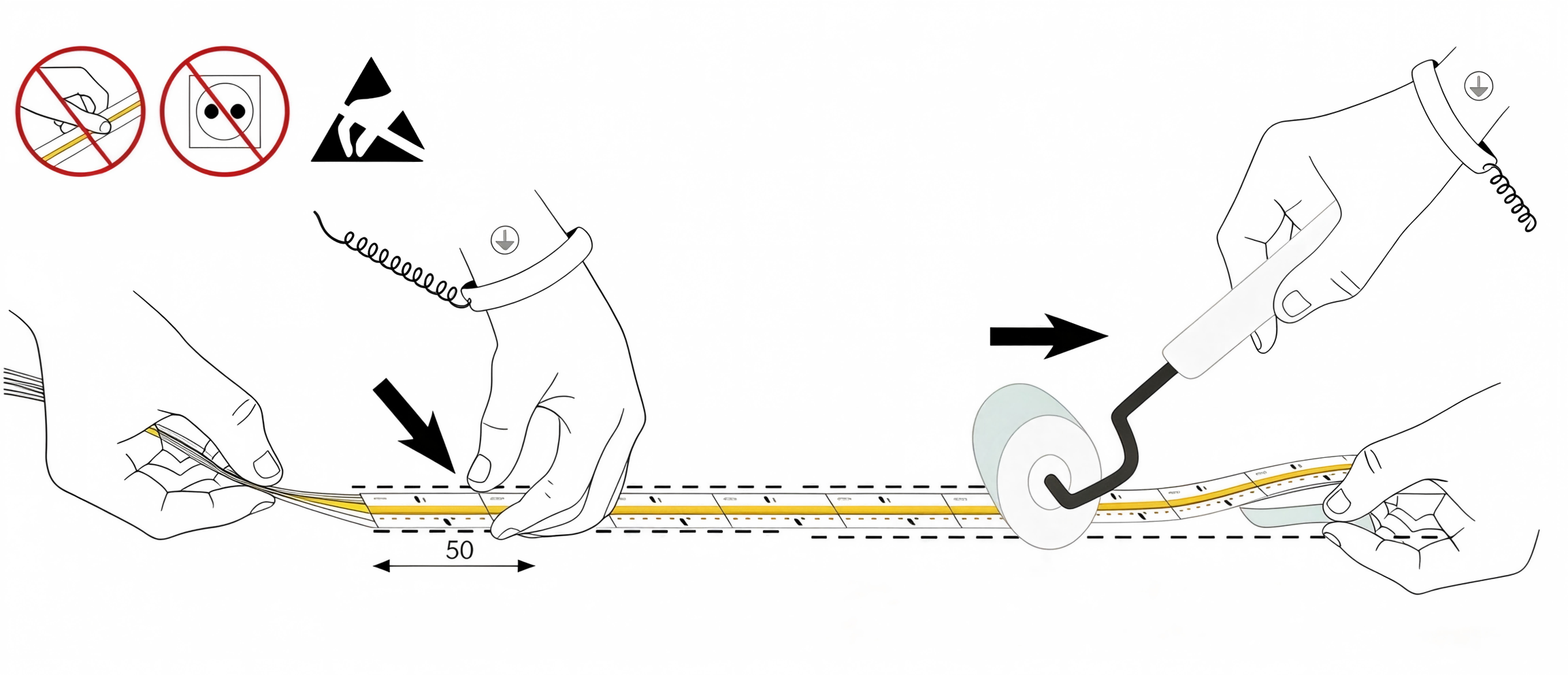
During installation, if the LED strip is not positioned correctly the first time, the installer may peel it off and stick it back several times. This can create additional mechanical stress on the LED strip.
If the strip is pulled too hard or forcefully removed from the mounting surface, the internal connections between the LED chips and the PCB may be damaged.
In some cases, this may lead to LED chip detachment, damaged connections, dark sections or intermittent flickering.
This is why we recommend checking the installation position carefully before removing the adhesive backing. Try to position the LED strip correctly the first time and avoid repeatedly peeling it off and repositioning it.
Why Can COB LED Chips Become Detached?
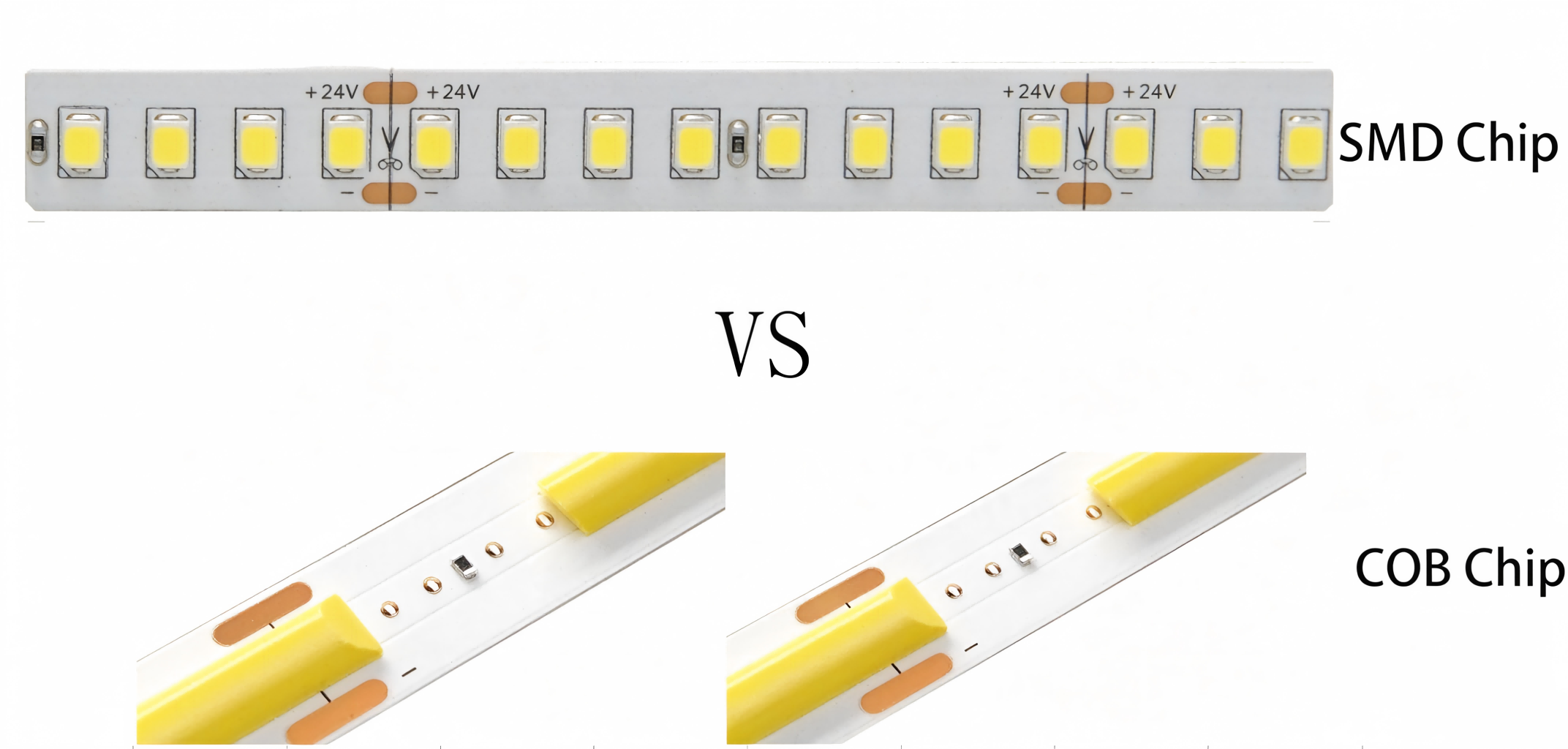
To understand this problem, we first need to look at the structural differences between COB and SMD LED strips.
COB LED Strip (Chip on Board)
With COB technology, bare LED chips are mounted directly onto the PCB. They are electrically connected through processes such as die bonding and wire bonding, depending on the design, and then protected by an encapsulation layer to create a continuous lighting surface.
SMD LED Strip (Surface Mounted Device)
SMD LED strips have a different structure. The LED chips are already packaged inside individual LED components. These complete LED packages are then soldered onto the PCB through their electrical terminals.
The main difference lies in how the LED chips are packaged and connected to the PCB.
During installation, excessive pulling, repeated peeling, folding or incorrect bending can create additional mechanical stress on a COB LED strip.
This stress may damage the die attachment, electrical connections or encapsulation structure. In severe cases, it may cause chip detachment or electrical connection failure.
Excessive Bending, Folding or Twisting
In this case, the customer installed the LED strip on a product with a curved surface.
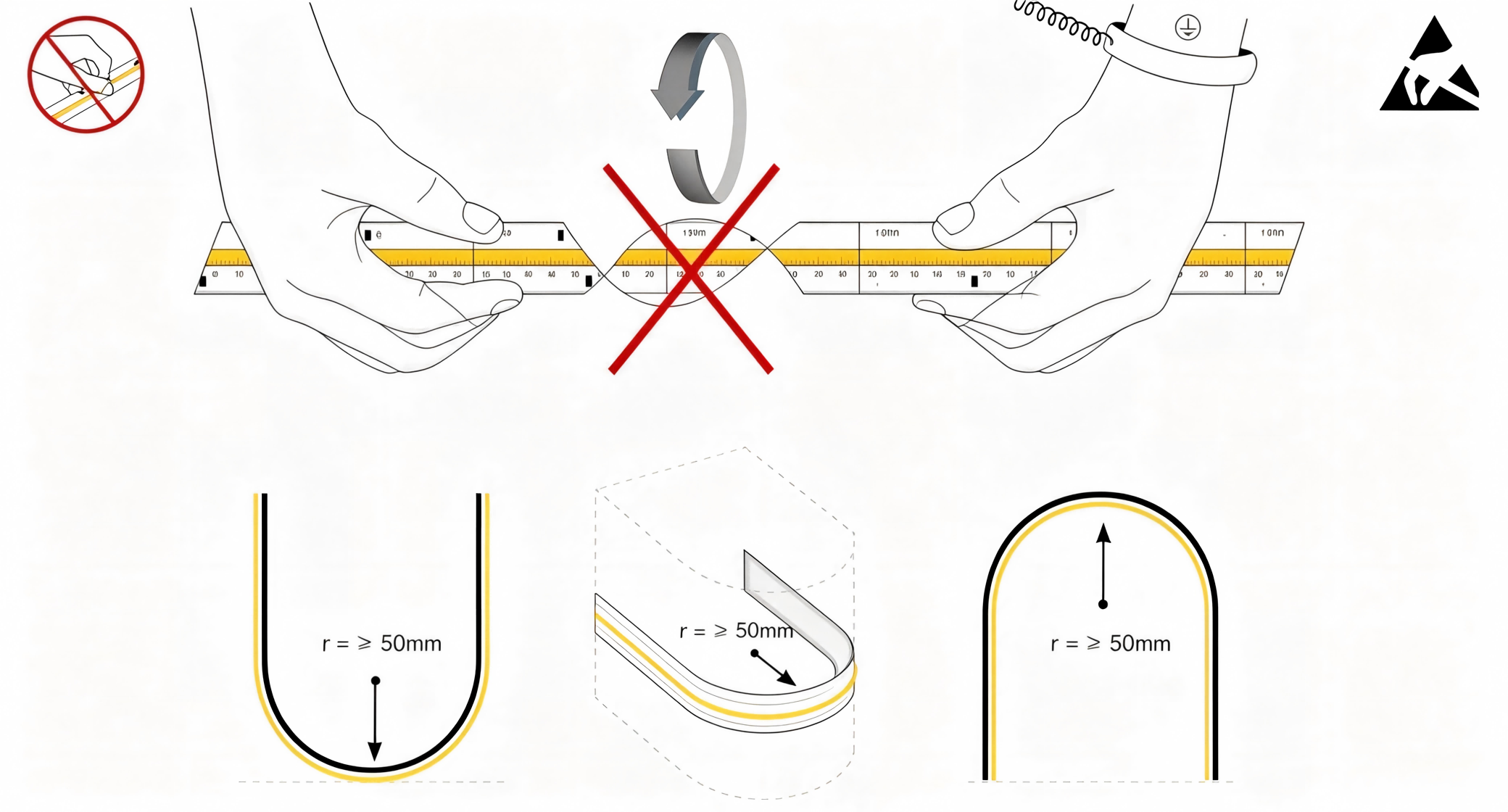
Flexible LED strips do not mean they can be folded, twisted or bent without limitations.
Although COB LED strips are flexible, bending them beyond their specified radius or applying excessive force may damage internal chip connections, solder joints or PCB tracks.
For this particular 5mm COB LED strip, we recommend the following:Minimum bending radius: R≥50mm.
Do not fold the LED strip.
Do not twist the LED strip.
Avoid repeatedly bending the same section.
Do not stretch the strip during installation.
Always check the recommended bending radius before installing a flexible COB LED strip on a curved surface.

Recommended News