
When DMX512 Meets Design Limits: Finding a Better Solution
By Libby Chen | Updated: Nov 11, 2026
LED Strip Insights | Real Engineering Thinking from an LED Manufacturer

Is a "Simple" Customer Request Really That Simple?
Not long ago, we received an inquiry from a customer.

They were looking for a DMX512 flexible neon strip, size 8×17mm. The product type was clear, the size was clear, and the control method was clear. On paper, it looked like a very straightforward request.
But once our engineering team started looking into it, we realized it wasn't so simple.
It raised a question worth thinking about:
When a customer's requested size runs into the limits of reliable manufacturing, should we find a way to stick to the original spec, or work with the customer to find a better solution?
This project made us think again about what "custom" really means
What Technical Challenges Did the Customer’s Request Raise?
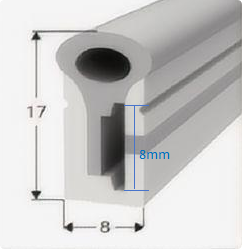
The customer asked for LED neon flex lights with an 8×17mm side-emitting profile.
Inside a Neon tube like this, there’s very little room. It can only fit a PCB that’s 8mm wide.
In this design, the LED strip light width is limited by the space inside the neon profile, leaving little room for solder pads and wiring.
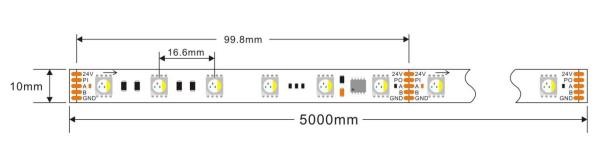
Our existing DMX512 strip design usually needs five connection points: positive (+), negative (−), PI, A, and B.
That means fitting five solder pads onto a PCB that’s only 8mm wide.
It might sound like a small layout problem. But in real production, we have to think about pad size, the spacing between pads, and wire thickness, all at the same time.
If the pads are too small, soldering gets harder, and the connection may not hold up well.
If the pads are too close together, there’s a higher risk of short circuits or poor connections.
And we can’t just keep making the wires thinner to fit the space. The power wires need to carry enough current to handle the strip’s peak load. Thicker wires, in turn, need more room to solder.
So the requirements start pulling against each other.
The PCB has to be narrow. The pads have to be reliable. The wires have to handle the current. And every connection still has to work for mass production.
From our experience with DMX512 strips, a 12mm-wide PCB usually gives enough room for these connections.
So does that mean an 8mm PCB is impossible?
Not exactly.
The real question isn’t whether we can make the circuit work. It’s whether we can make the connections reliable, keep production stable, and avoid quality problems down the road.
For a manufacturer, that’s where the real thinking has to happen.



Recommended News