
30M One-End Power COB LED Strip: Working Principle, Benefits, Buying Guide and Troubleshooting
By Kimi Liu | Updated: Nov 3, 2026
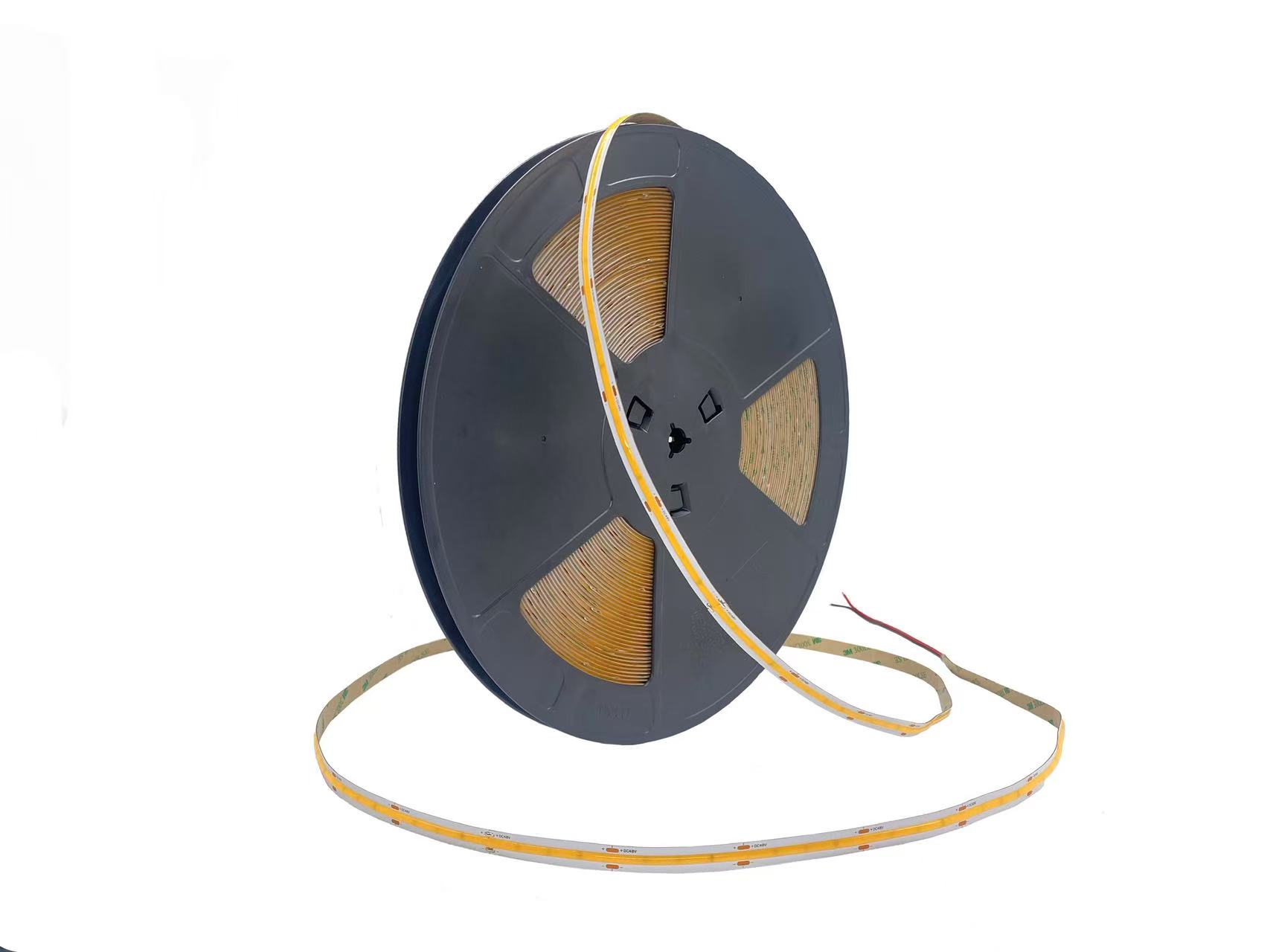
Long LED strip installations often come with one common challenge: voltage drop.
When conventional LED strips are connected over long distances, the brightness may gradually decrease from the power input end to the far end. This can result in uneven lighting, inconsistent colours and additional installation work.
A 30M one-end power COB LED strip is designed to address this challenge. Using a 48V constant-current design, it supports a connection length of up to 30 metres with power supplied from just one end.
But how does it work? Is it suitable for every lighting project? And what should you check before purchasing one?
In this guide, we will explain everything you need to know.
1. What Is a 30M One-End Power COB LED Strip?
A 30M one-end power COB LED strip is a long-run LED lighting solution designed to operate over a continuous length of up to 30 metres using a single power connection.
Unlike many conventional LED strips that may require power injection at multiple points to maintain consistent brightness, this product is designed to provide more uniform illumination across the entire 30-metre run.
Our 30M one-end power COB LED strip uses a 48V DC constant-current design. It combines COB (Chip on Board) LED technology with a high-quality double-sided copper flexible PCB (FPC).
| Parameter | Specification |
| LED Type | COB |
| LED Density LED | 480 LEDs/m |
| Input Voltage | DC 48V |
| Power Consumption | 10W/m |
| PCB Width PCB | 10mm |
| Maximum Connection Length | 30 metres |
| Cutting Distance | 50mm |
| Beam Angle | 180° |
| CRI | Ra ≥90 |
| Luminous Flux | 900–1200 lm/m (rated specification ) |
| CCT Options | 2700K / 3000K / 4000K / 6000K |
| Standard IP Rating | IP20 |
| Operating Temperature | -25°C to +45°C |
| Warranty | 5 years |
The strip is available in warm white, neutral white, cool white and selected single colours.
It also supports customised waterproof versions, including IP65, IP67 and IP68.
2. How Does a 30M One-End Power COB LED Strip Work?
To understand how this product works, we first need to understand why voltage drop happens in conventional LED strips.
2.1 Why Does Voltage Drop Happen?
The copper PCB tracks in an LED strip have electrical resistance, which causes voltage drop as current flows through them. Over long runs, reduced voltage at the far end can lead to uneven brightness. This is why some conventional LED strips require power to be supplied from both ends or at additional points along the run.
For a detailed explanation and ways to reduce voltage drop, see our LED Strip Voltage Drop Guide.
2.2 How Does the Constant-Current Design Help?
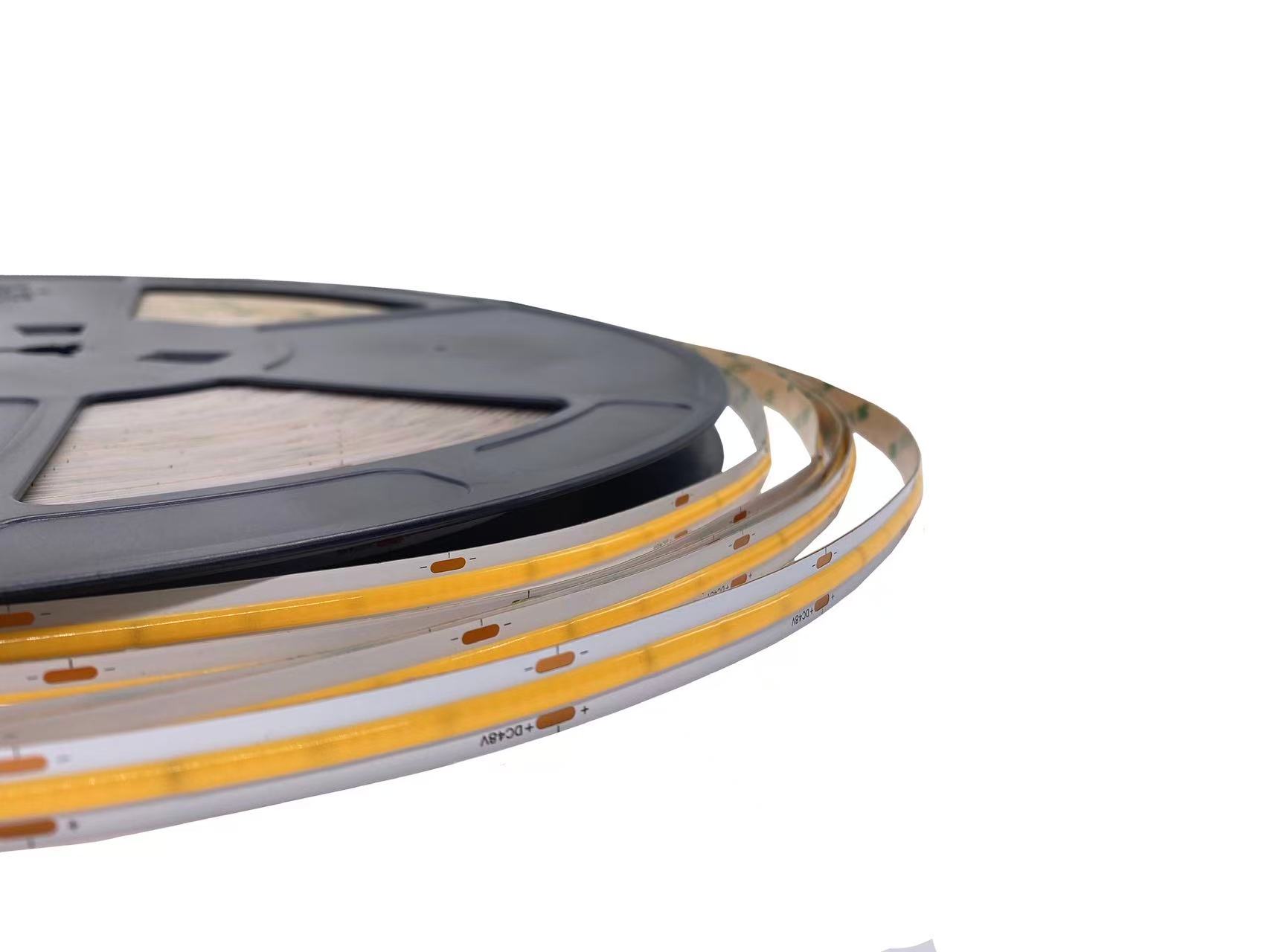
Our 30M LED strip uses a 48V DC constant-current design.
The constant-current design is intended to regulate the current supplied to the LEDs, helping maintain more consistent lighting performance along the strip.
Combined with the high-quality double-sided copper FPC, the design aims to reduce the effects of voltage variation over long distances.
Within its specified operating range, the constant-current circuit helps reduce noticeable brightness differences between the beginning and end of the strip.
2.3 Why Is 48V Used?
Compared with a 24V system delivering the same power, a 48V system requires approximately half the input current.
For example, at a power consumption of 10W/m:
24V system: approximately 0.417A/m.
48V system: approximately 0.208A/m.
Lower current helps reduce resistive losses in the power distribution path, making 48V a practical choice for long-run LED strip applications.
This is one of the reasons why 48V LED strips are suitable for installations requiring longer continuous runs.

Recommended News