
LED Strip Lights for Architectural Lighting: Applications and Selection Guide
By Shirley Huang | Updated: Oct 26, 2026
More Than Illumination: Giving Architecture More Possibilities
Flexible, slim and easy to conceal, architectural LED strip lights blend into both the outline of a building and its interior details. From ambience to commercial display to supplementary lighting on stairs and walkways, architectural LED strip lighting does more than provide light. It also plays a part in how a space expresses itself.
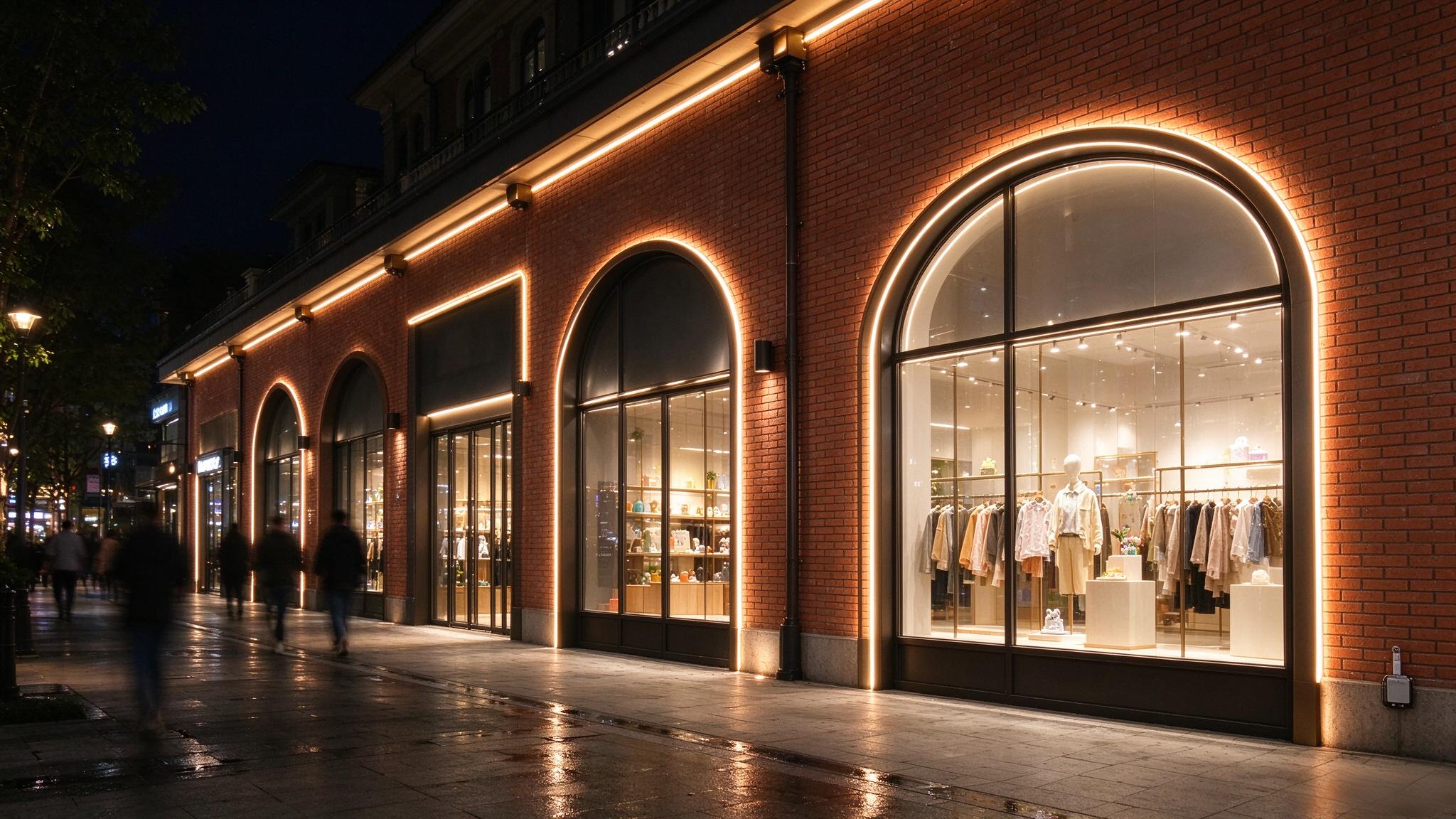
But different scenarios call for different products and supporting solutions. A strip that suits a hotel ceiling isn’t necessarily right for an outdoor facade, a bridge handrail or a fountain. When selecting led strip lights architectural projects can rely on, look beyond the lighting effect. You also need to consider IP rating, power supply distance, control method and installation structure.
This guide walks through 17 architectural lighting applications and explains which LED strip lights for architectural lighting suit each scenario. It also covers power supply and controller pairing, plus installation and maintenance essentials, to help designers, contractors and buyers determine the products and configuration their project needs.
What Are Architectural LED Strip Lights?
1.1 Definition and Main Uses
Architectural LED strip lights are linear light sources built into a building or landscape structure. They are mainly used to outline contours, provide indirect lighting, light up displays and guide people along walkways.
“Architectural lighting” describes how a strip is used, not one fixed product. A single project might use SMD strips set in aluminum profiles, COB strips hidden in coves, and flexible neon strips run along the edge of a building. Which one to choose depends on the lighting effect you want, the installation environment, the structural dimensions and the power supply conditions.
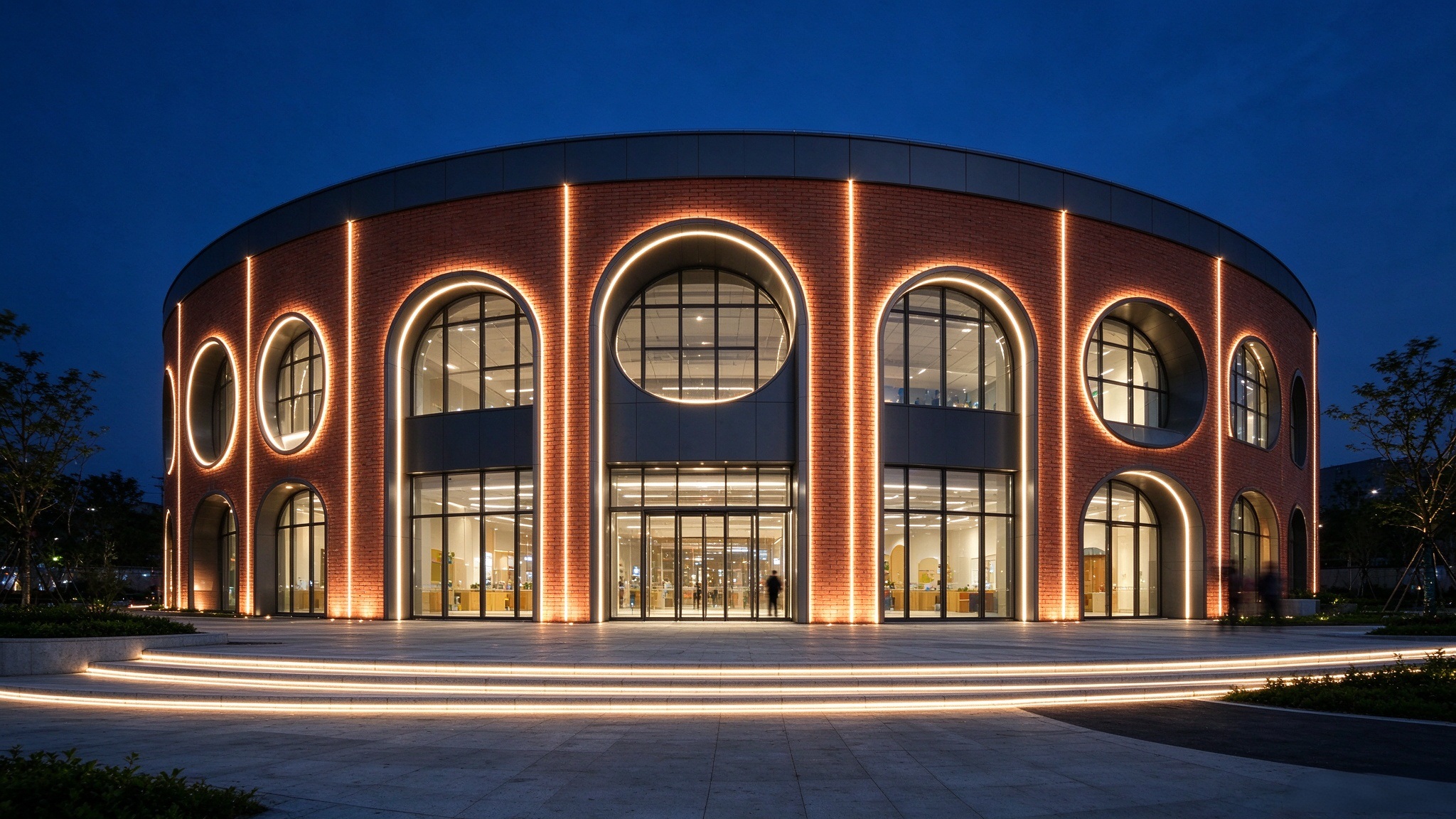
1.2 LED Strip Lights vs. Floodlights, Wall Washers and Linear Luminaires
These products handle different lighting tasks, and they can be used together in the same project.
| Product | Main Use | Selection Focus |
|---|---|---|
| LED strip lights | Cove lighting, close-range display lighting, architectural detail lighting | Installation space, LED dot visibility, heat dissipation and power supply |
| Flexible neon strips | Forming a continuous, directly visible line of light | Cross-section size, bending direction, mounting method and suitability for the environment |
| Floodlights | Lighting large surfaces or areas from a distance | Throw distance, beam angle, glare and spill light |
| Wall washers | Lighting vertical walls through dedicated light distribution | Distance from the wall, installation spacing and uniformity |
| Finished linear luminaires | Linear lighting from a complete housing, light source and optics | Overall light distribution, dimensions, mounting method and electrical configuration |
Ordinary strips don’t automatically have the throw of a floodlight or wall washer. If the goal is to light a whole facade from a distance, start by evaluating fixtures designed for that job. If the goal is a clean contour line or concealed lighting, strips are usually easier to work into architectural details.
1.3 Common LED Strip Types for Architectural Lighting
LED strip lights for architectural lighting generally fall into five types, each suited to different installation methods and project sizes.
Standard SMD strips are the most common. They are compact and fit easily into aluminum profiles or coves, so they are mostly used for concealed lighting indoors.
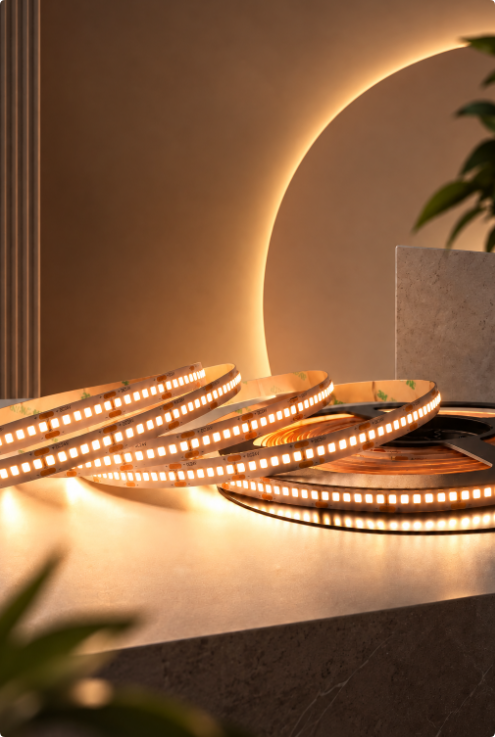
COB strips have densely packed LEDs that give continuous light with no visible dots, which makes them a good fit where the light source may be seen directly.
Constant current LED strip keeps brightness more stable over long distances. It suits very long single runs and can reduce the number of power feed points on projects such as facades.
High Voltage AC strips connect directly to 110/220/230V mains and don’t need an extra power adapter. They suit outdoor facades, landscape and contract projects.
Neon flex LED strip for architecture comes in a silicone jacket and shows as one clear, visible line of light. It is often used for building outlines, bridges and sculptures, and our range is divided into several series by installation direction and use. If a project needs dynamic pixel effects, addressable strips are an option.
1.4 Four Core Functions
Here are the four main roles LED strips play in architectural lighting:
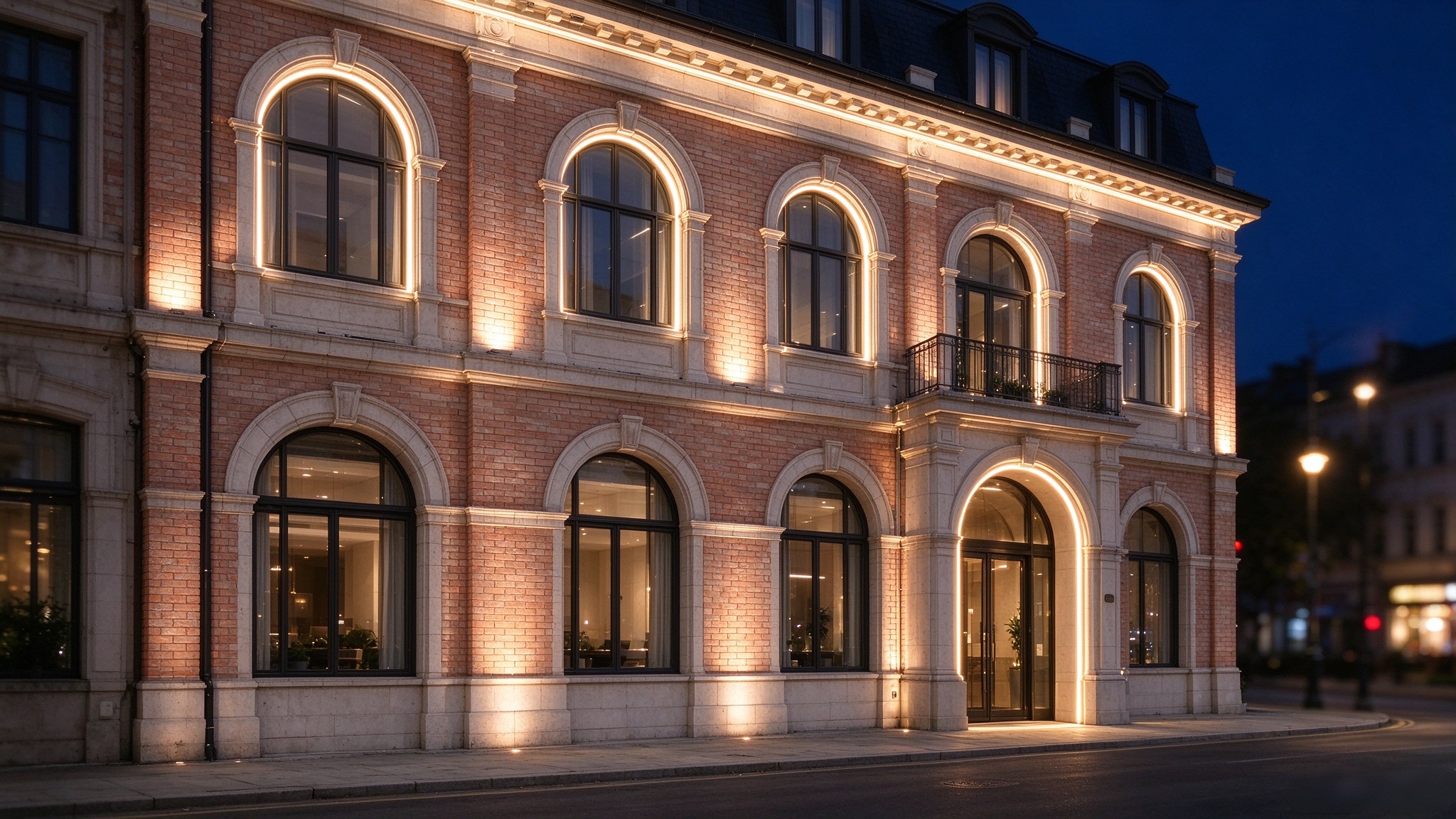
(1). Building Outline Definition
Architectural LED strip lighting can clearly trace the structural lines of a building, making it stand out more in the city’s night view.
- High brightness and seamless connection for a continuous glow
- Customizable length and color temperature to suit different facade materials
- Paired with protective profiles to meet outdoor use requirements

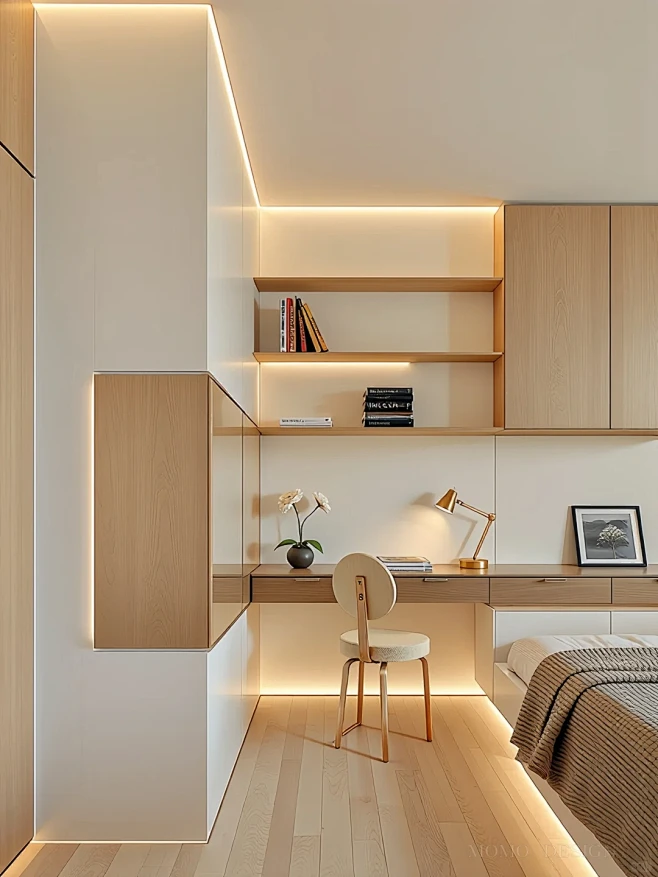
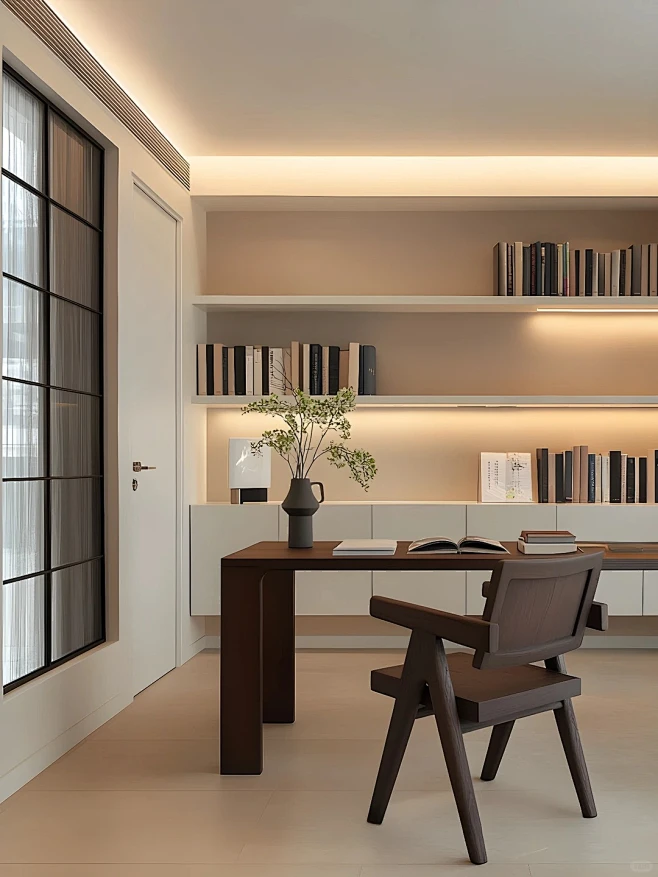
(2). Ambience Creation
With concealed linear light sources, strips create a soft, even glow that adds warmth and depth to indoor spaces.
- High CRI for true-to-life material colors
- Dimmable and color-tunable to suit different times of day and settings
- Can be recessed into ceilings, walls and skirting boards, so light and space blend together
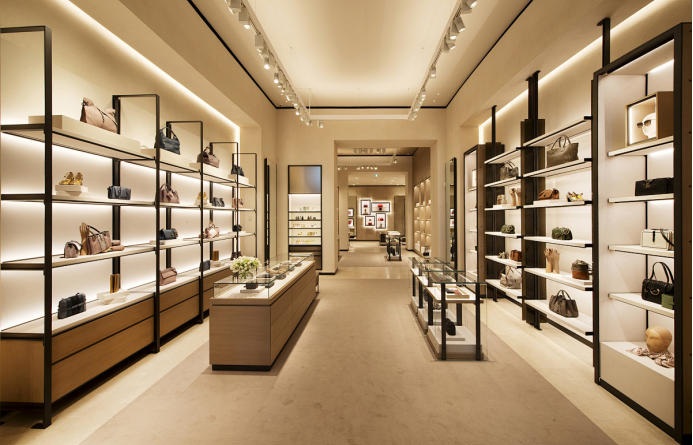
(3). Commercial Display
In retail and exhibition settings, strips use precise lighting to guide the eye and make products more appealing.
- Ultra-thin build that fits into display windows, showcases and other tight spots
- Stable color temperature and accurate color rendering that bring out the quality of the goods
- Works with smart controls for dynamic lighting displays
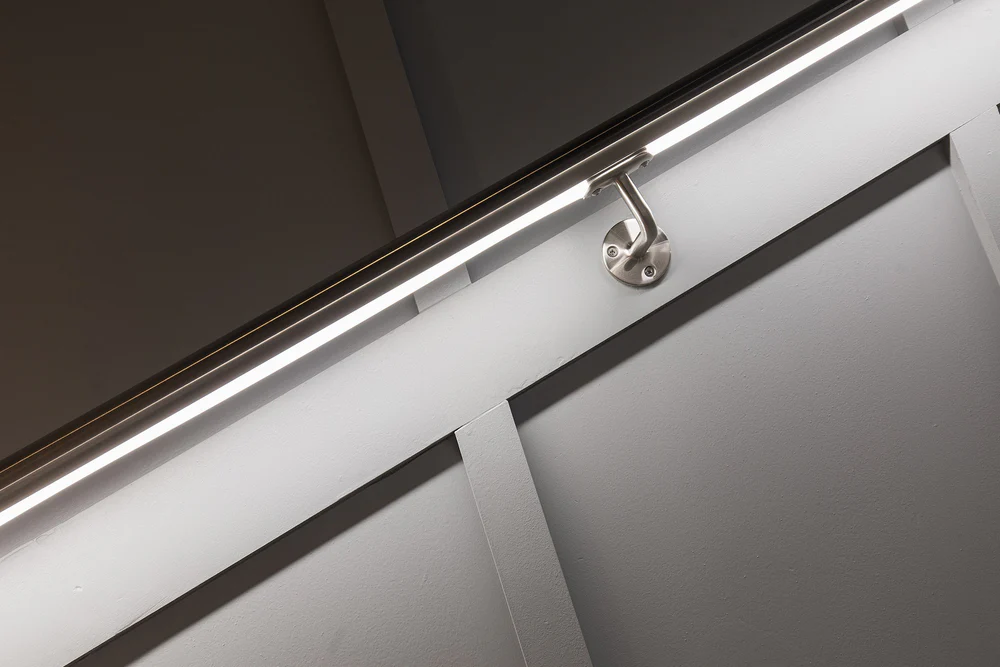
(4). Functional Lighting
Beyond decoration, strips can handle practical lighting tasks in walkways, stairs, restrooms and similar areas, improving both comfort and safety.
- Low-voltage drive for peace of mind
- Can be paired with motion sensing, timers and other controls to save energy
- Delivers lighting and wayfinding in one

Recommended News