
How Long Do LED Light Strips Last? Understanding the 50,000‑Hour Rating, Early Failure Causes, and How to Extend Lifespan
After two years of use, an LED strip starts dimming, flickering, or even going completely dark in sections. Is this simply the strip reaching the end of its life, or is something wrong with the power supply, installation, or operating environment?


This is a question many customers run into in real‑world use — and it often boils down to how long do LED strips last. On the spec sheet or packaging, you'll usually see something like: Lifetime: 50,000 Hours.
So how many years does 50,000 hours actually translate to?
And if an LED strip can genuinely run that long, why do most manufacturers only offer a 3‑year or 5‑year warranty? Why do some products show noticeable light decay, color shift, flickering, or dead sections after just two or three years — sometimes even within a few months?
The issue is this:
the rated LED strip lifetime, the lumen maintenance life of the LED chips themselves, the actual service life of the complete strip system, and the manufacturer's warranty period are not the same thing.
the rated LED strip lifetime, the lumen maintenance life of the LED chips themselves, the actual service life of the complete strip system, and the manufacturer's warranty period are not the same thing.
A complete LED strip is more than just LED chips. The PCB, solder joints, connecting wires, driver, waterproofing materials, installation temperature, heat dissipation, and power supply distance — a problem in any one of these can cause a strip to fail well before it reaches its theoretical lifespan. This is especially true for a high intensity LED strip, which runs at higher current and generates more heat.
This article draws on the LED industry's commonly used lifetime concepts — L70, LM‑80, and TM‑21 — along with real issues we've encountered in actual LED strip projects, to explain what that 50,000‑hour figure really means, why some strips show problems early, and how correct selection and installation can extend actual LED strip light lifespan.
Understanding LED Strip Lifespan
When customers see "50,000 hours," they often assume it means the strip will run continuously for 50,000 hours and then fail.
That's not quite how it works.
LEDs typically don't fail suddenly at a specific hour count. Instead, light output gradually declines and color shifts occur over time. Meanwhile, the PCB, solder joints, connectors, adhesive backing, waterproofing materials, and driver in the strip are also aging alongside the LEDs.
So 50,000 hours shouldn't be read as a guarantee that the entire strip system will run fault‑free for that long.
How many years does 50,000 hours actually add up to?
A simple formula gives the theoretical figure:
Theoretical years = rated lifetime hours ÷ daily usage hours ÷ 365
Theoretical years = rated lifetime hours ÷ daily usage hours ÷ 365
| Daily usage | 25,000‑hour theoretical lifespan | 50,000‑hour theoretical lifespan |
|---|---|---|
| 4 hrs (typical residential) | ~17.1 years | ~34.2 years |
| 8 hrs (typical commercial) | ~8.6 years | ~17.1 years |
| 12 hrs (typical retail) | ~5.7 years | ~11.4 years |
| 24 hrs (continuous project use) | ~2.9 years | ~5.7 years |
Based on this table, running 24 hours a day, 50,000 hours works out to roughly 5.7 years.
Yet many strips fail after just two years — well short of that figure. That's because the actual LED strip lifespan depends on far more than the number printed on the packaging or spec sheet. The rated value is a theoretical one; real‑world results vary depending on the environment, materials, driver quality, and how the strip is used — and this gap tends to be even more pronounced for a high intensity LED strip, where higher operating current accelerates component aging under the same rated hours.

ES32 PIR Sensor Stair Light Controller: Smarter, Smoother and More Efficient Stair Lighting
See how the ES32 stair light controller uses PIR motion sensors and LED strips to create smooth, automatic lighting for modern staircases.

WT5 5-in-1 LED Controller Installation Guide: One Controller for Multiple LED Strip Types
Need one controller for different LED strips? See how the WT5 makes installation and expansion easier.
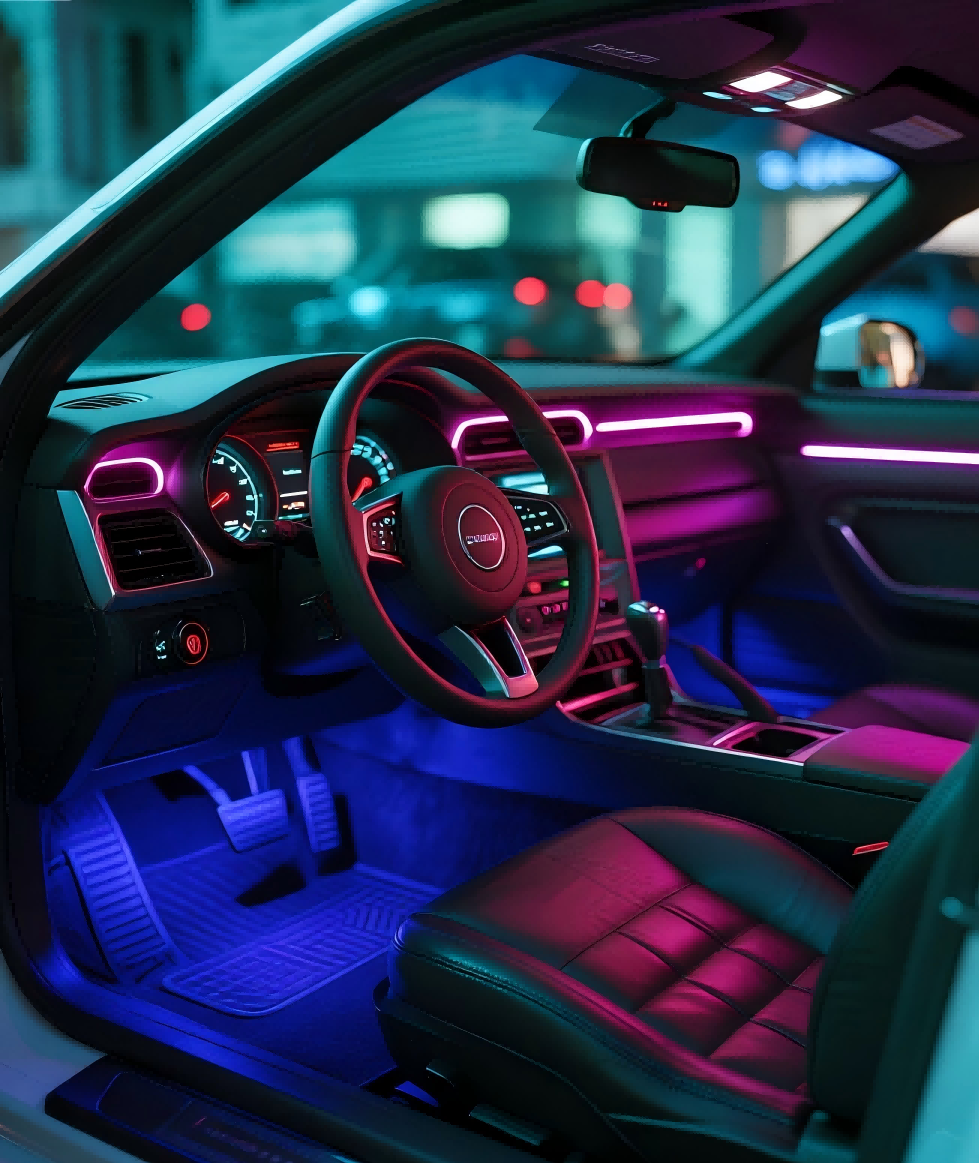
LED Strips for Cars: A Guide to Automotive Ambient Lighting and Installation
A modern car interior illuminated with flexible LED strips along the dashboard, door panels, and footwells, showcasing automotive ambient lighting and a clean professional installation.
Recommended News