
Why Are My LED Strip Lights Not Working? Common Causes and How to Fix Them
By Sunny Zhang | Updated: Oct 26, 2026
If you're wondering why your LED strip lights won't turn on, the problem may be related to a faulty or mismatched power supply, loose or incorrect wiring, or an incompatible controller or dimmer, rather than the LEDs themselves. An incorrect voltage, a poor connection, or an unsuitable power layout can leave a strip completely off, lit only in sections, or flickering.
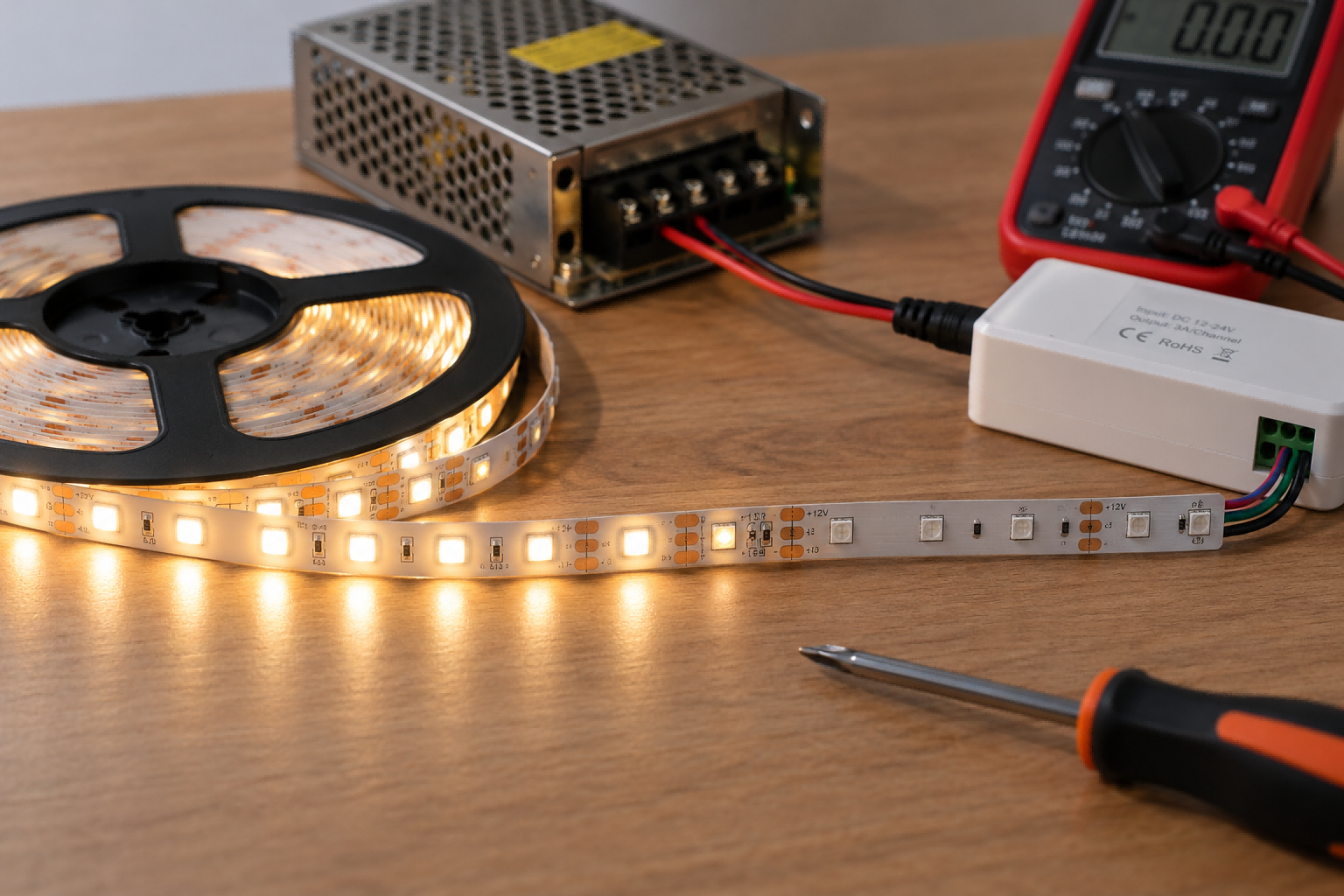
Replacing the entire lighting system is not always necessary when an LED Strip light stops working. Checking the power supply, connections, and control system can often help identify the source of the problem more accurately. This article explains the common reasons why LED Strip lights stop working, the basic troubleshooting steps to follow, and practical solutions for different types of faults.
Common Reasons Why LED Strip Lights Stop Working
LED Strip lights can stop working for several reasons. Understanding the most common causes before troubleshooting can help narrow down the problem and avoid unnecessary replacements or repairs.
1.1 Power Supply or LED Driver Failure
LED strip lights typically require a power supply that matches their specifications. If the power supply is damaged, its output voltage is unstable, or its capacity is insufficient for the actual load, the strip may not work properly. For LED fixtures with separate drivers, a faulty driver can also cause the light to stop working completely or operate abnormally.
Start by checking whether the power supply is functioning correctly and whether its output voltage matches the LED strip's rated input voltage. You should also confirm that the power supply has sufficient wattage capacity for the connected load, with an appropriate allowance for operating headroom.
1.2 Incorrect Wiring or Loose Connections
Incorrect wiring, poor solder joints, loose connectors, or damaged cables can prevent LED strip lights from working properly. If the connection between the power supply and the strip is unreliable, current may not flow consistently, causing the lights to remain off, turn off intermittently, or flicker.
Check that the power cables, connectors, and terminals are secure, and make sure the positive and negative connections are correct. For RGB and other multi-channel LED strips, also verify that each channel is connected to the corresponding controller output.
1.3 Incompatible Controllers or Dimmers
For RGB, RGBW, addressable LED strips, and dimmable lighting systems, the controller or dimmer may also be responsible for the problem. If the controller is incompatible with the strip, the wiring is incorrect, or the dimmer is incompatible with the power supply, the lights may fail to turn on, display incorrect colours, or flicker during dimming.
Check whether the controller's input voltage, output type, and load capacity meet the LED strip's requirements. If the problem occurs only when dimming, verify the compatibility of the dimmer, power supply, and LED strip.
1.4 Damage to the LED Strip Itself
If the power supply, wiring, and control system appear to be functioning correctly, the LED strip itself may be damaged. Excessive bending, cutting at the wrong position, damaged solder pads, mechanical pressure, or prolonged exposure to unsuitable operating conditions can all affect performance.
Inspect the strip for visible damage, burn marks, discolouration, or other abnormalities. For cuttable LED strips, make sure the cuts have been made at the designated cutting points to avoid damaging the circuit.
1.5 Unsuitable Installation Methods or Operating Conditions
The installation environment can also affect the reliability of LED strip lights. Insufficient heat dissipation may cause excessive temperatures, while moisture or water ingress can damage products that do not have adequate protection. Uneven mounting surfaces or improper fixing methods may also cause mechanical damage.
Before installation, select a product with a suitable protection rating for the intended application and follow the manufacturer's requirements for mounting, heat dissipation, and wiring. For outdoor or damp environments, pay particular attention to the product's water protection and the sealing of connectors and wiring points.


Recommended News