
ESP32 LED Strip Controller: Compatibility, Wiring and Setup Guide
By Kimi Liu | Updated: October 26, 2026
An ESP32 LED strip controller can bring Wi-Fi control, programmable lighting effects and smart lighting features to compatible digital LED strips. With firmware such as WLED, users can adjust colours, brightness, lighting effects and other settings directly from a smartphone or web browser.
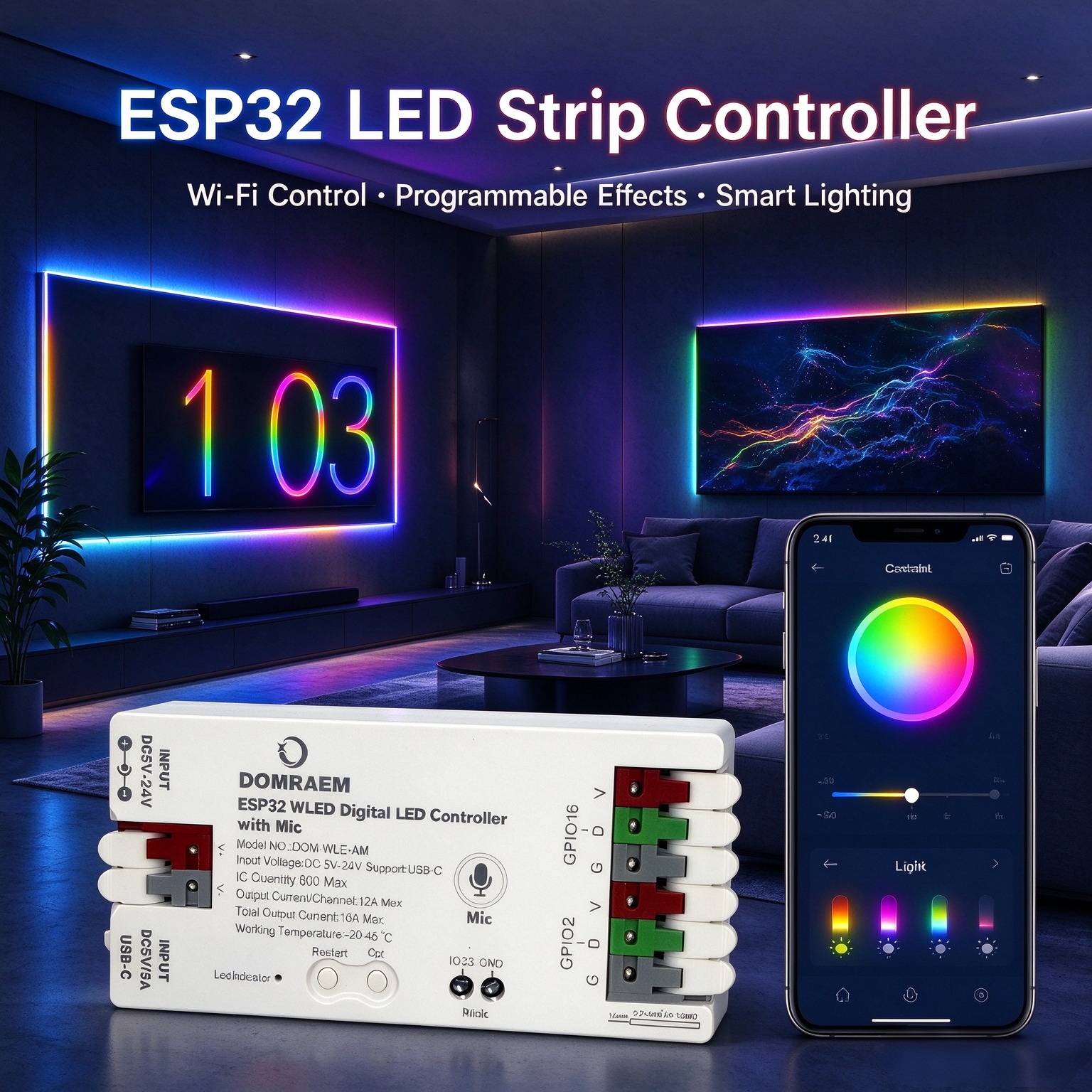
However, successful installation depends on choosing a compatible LED strip, connecting the power and data wires correctly, and configuring the controller properly. This guide explains how ESP32 LED strip controllers work, which digital LED strips they can support, how to wire them, and how to set up and operate WLED using a smartphone.
What Is an ESP32 LED Strip Controller?
An ESP32 LED strip controller is a lighting control device built around an ESP32 microcontroller. Depending on the hardware and firmware, it can connect to a Wi-Fi network, receive commands from a smartphone and send digital control signals to compatible LED strips.
WLED is a popular firmware option for ESP32-based lighting controllers. It provides a web interface and smartphone app for controlling compatible addressable LED strips, including colour selection, brightness adjustment, dynamic effects and presets.
ESP32 controllers are commonly used in DIY lighting, gaming setups, display lighting, architectural projects and smart lighting installations.
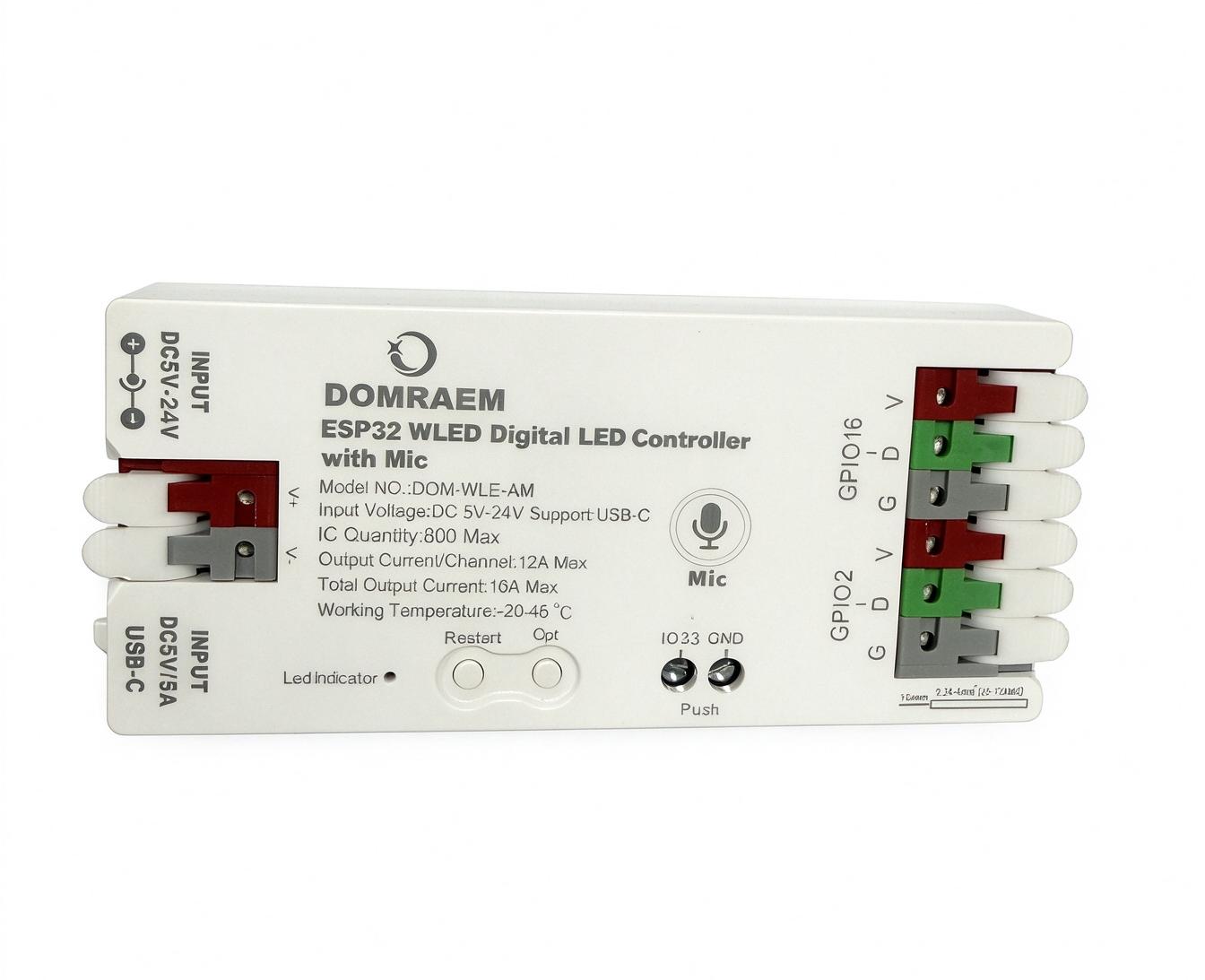
How Does an ESP32 LED Strip Controller Work?
An ESP32 controller receives commands from a smartphone app, web interface or supported automation system. Its firmware processes these commands and converts them into digital signals that control the connected LED strip.
For addressable LED strips, control data is sent to the strip's data input. Depending on the supported chipset and protocol, individual LEDs or groups of LEDs can display different colours and effects.
For example, a compatible WS2815 digital LED strip can display moving colour patterns, while a suitable WS2812B strip can produce colourful animations and other programmable effects.
The controller and LED power supply have different functions. The controller generates control signals, while the power supply provides the electrical power required by the LED strip. For this reason, the supply voltage, current capacity and power distribution must be suitable for the installation.

Benefits of Using an ESP32 LED Strip Controller
Wireless control
With compatible firmware and network configuration, users can control their LED strips through a smartphone or web browser without needing a dedicated handheld remote.
Dynamic lighting effects
WLED offers a range of lighting effects, colour combinations, brightness settings and presets. These features are useful for decorative lighting, gaming rooms, display installations and creative lighting projects.
Flexible configuration
Users can configure supported LED types, data output pins and LED counts to match their installations. The available settings depend on the controller hardware and firmware.
Smart lighting integration
Depending on the firmware and configuration, an ESP32 controller can support additional integrations with compatible smart home systems and automation tools.
Cost-effective customisation
ESP32-based controllers provide a flexible option for DIY projects and custom lighting installations that require wireless control and programmable effects.
Which LED Strips Can an ESP32 Controller Control?
An ESP32 controller can control compatible digital addressable LED strips. However, compatibility depends on the controller model, firmware, LED driver chipset, signal protocol and wiring configuration.
Examples of digital LED chip families listed in the supplied controller documentation include:
WS2811
WS2812 and WS2812B
WS2813
WS2815
WS2805
SK6812
This list is not a guarantee that every ESP32 controller supports every chipset. Always check the supported-chip list for the exact controller and firmware before purchasing or connecting an LED strip.
You should also check the strip's voltage, data input requirements, LED count and any special signal requirements. Some digital strips use an additional backup data line, so their wiring requirements may differ from those of other addressable strips.
For RGBW, RGB+CCT and other multi-channel digital products, confirm that the controller supports the specific chipset and colour configuration rather than relying on the product's colour description alone.



Recommended News