
ES32 PIR Sensor Stair Light Controller: Smarter, Smoother and More Efficient Stair Lighting
By Kimi Liu | Updated: Sep 11, 2026
Stair lighting is often treated as a simple lighting application, but in modern residential and commercial projects, it involves much more than simply turning lights on and off.
A well‑designed stair lighting system should provide safety, visual appeal, energy efficiency and a smooth user experience.
This is where a smart stair light controller can make a significant difference.

Why Does Stair Lighting Need Smart Control?
Traditional stair lighting systems usually rely on a wall switch or a standard motion sensor.


(Traditional stairs lack LED light strips) (Modern stairs are equipped with LED light strips)
While these solutions can turn the lights on, they often cannot provide the smooth lighting experience required for modern staircases.
For example:
· The entire staircase may turn on at once.
· Lights may remain on longer than necessary.
· There is no indication of the direction of movement.
· The lighting experience can feel abrupt.
· Energy can be wasted when the staircase is not being used.
· The entire staircase may turn on at once.
· Lights may remain on longer than necessary.
· There is no indication of the direction of movement.
· The lighting experience can feel abrupt.
· Energy can be wasted when the staircase is not being used.
For decorative staircases, luxury homes, hotels and commercial projects, these limitations can become even more noticeable.
A smart stair lighting controller can transform a basic lighting system into an automated and dynamic lighting experience.
What Is the ES32 Stair Light Controller?
The ES32 is a PIR sensor stair light controller designed specifically for staircase lighting applications.
Instead of manually switching the lights, the controller uses motion detection to activate the LED strips when someone approaches the staircase.
The lights can then illuminate progressively, creating a smooth flowing‑light effect along the steps.
This makes the staircase not only more functional, but also more visually impressive.

How Does ES32 PIR stair light Controller Work?
The basic working principle is simple:
Detect → Trigger → Illuminate → Delay → Switch Off
Detect → Trigger → Illuminate → Delay → Switch Off

When a person approaches the staircase, the PIR sensor detects movement and sends a signal to the controller.
The ES32 then activates the stair lighting according to the configured lighting sequence.
Instead of switching on every light simultaneously, the LED strips can create a step‑by‑step lighting effect, producing a smooth visual transition.
Once the staircase is no longer being used, the lights automatically switch off after the preset delay.
This automated operation reduces unnecessary energy consumption while maintaining convenient and safe illumination.
Key Features of ES32 PIR stair light Controller
1. PIR Motion Detection
The PIR sensors detect human movement and automatically trigger the staircase lighting. This eliminates the need to manually operate a wall switch every time someone uses the stairs.
The PIR sensors detect human movement and automatically trigger the staircase lighting. This eliminates the need to manually operate a wall switch every time someone uses the stairs.
2. Dynamic Step‑by‑Step Lighting
One of the most attractive features of a smart stair lighting system is the ability to create a progressive lighting effect. The steps illuminate sequentially, producing a flowing light effect that gives the staircase a more premium appearance. This is particularly effective when combined with concealed LED strip lighting installed underneath each step.
One of the most attractive features of a smart stair lighting system is the ability to create a progressive lighting effect. The steps illuminate sequentially, producing a flowing light effect that gives the staircase a more premium appearance. This is particularly effective when combined with concealed LED strip lighting installed underneath each step.
3. Up and Down Direction Detection
For staircase applications, movement direction matters. The ES32 can detect whether someone is approaching the staircase from the top or bottom and control the lighting sequence accordingly. This creates a more natural lighting experience and makes the system more intelligent than a conventional motion sensor.
For staircase applications, movement direction matters. The ES32 can detect whether someone is approaching the staircase from the top or bottom and control the lighting sequence accordingly. This creates a more natural lighting experience and makes the system more intelligent than a conventional motion sensor.
4. Adjustable Lighting Parameters
Different staircases have different requirements. A private residence may require a subtle and slow lighting effect, while a hotel, showroom or commercial project may require a faster and more dynamic sequence. The ES32 provides adjustable control parameters, allowing installers to configure the lighting behaviour according to the project requirements.
Different staircases have different requirements. A private residence may require a subtle and slow lighting effect, while a hotel, showroom or commercial project may require a faster and more dynamic sequence. The ES32 provides adjustable control parameters, allowing installers to configure the lighting behaviour according to the project requirements.
5. Automatic Switch‑Off
After the staircase has been used, the lights do not need to be switched off manually. The controller automatically turns the lighting off according to the configured timing. This is especially useful for areas where lights are frequently forgotten after use.
After the staircase has been used, the lights do not need to be switched off manually. The controller automatically turns the lighting off according to the configured timing. This is especially useful for areas where lights are frequently forgotten after use.

60 lm/W vs. 100 lm/W: What Is the Technical Reality Behind Cut-Free COB LED Strip Lights?
When competitors offer higher luminous efficacy at a lower price, how do we determine whether this represents genuine technological progress or simply a more attractive set of specifications?
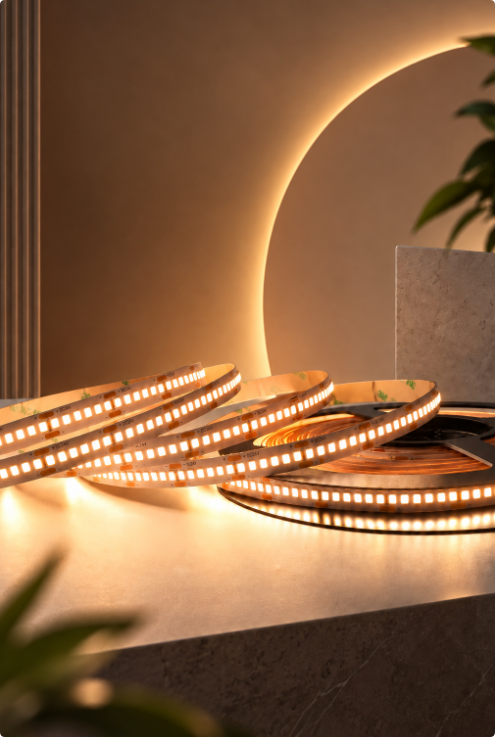
How Long Do LED Light Strips Last? Understanding the 50,000-Hour Rating, Early Failure Causes, and How to Extend Lifespan
How long do LED strips last in real-world use? Learn what the 50,000-hour rating really means, what affects LED strip lifespan, and how to help your lighting last longer.

WT5 5-in-1 LED Controller Installation Guide: One Controller for Multiple LED Strip Types
Need one controller for different LED strips? See how the WT5 makes installation and expansion easier.
Recommended News