
Market Trends and Applications of 2835 Rigid LED Strips
With the development of commercial lighting and customized lighting needs, market requirements for LED strips have gradually shifted from pure brightness toward higher reliability, better luminous efficiency, and long-term stable performance.
Compared to traditional lighting solutions, the 2835 Rigid LED Strip stands out for its stable structural design and uniform linear light output, making it increasingly popular in lighting projects that require precise installation and continuous operation. As a reliable Rigid LED Strip Light, it delivers consistent performance even in demanding commercial environments.
Currently, the 2835 Hard LED Strip is widely used in the following scenarios:
Display Cabinet Lighting
Used in retail stores, jewelry display cases, museums, and commercial showrooms, providing even and soft illumination to enhance product presentation and reduce dark spots.
Shelf & Retail Lighting
Suitable for shelves and display areas in shopping malls, supermarkets, and brand stores, helping improve product visibility and create a clean, professional lighting environment.
Cabinet & Furniture Lighting
Widely applied in kitchen cabinets, wardrobes, bookshelves, and wine cabinets, this LED Rigid Strip delivers a clean and consistent linear light effect for interior spaces.
Light Box & Signage Lighting
Serves as a backlighting solution for advertising light boxes, signage, and display lighting, delivering stable and even brightness output while minimizing uneven lighting issues.

What Is 2835 Rigid LED Strip Light?
The 2835 Rigid LED Strip Light is a linear LED lighting product built with SMD2835 LED chips and a rigid PCB circuit board design. It is also known as a Hard LED Strip or Rigid LED Strip, formed by soldering 2835 LED beads onto an FR4 PCB or aluminum-based PCB to create a linear lighting solution with a fixed structure.
Unlike flexible LED strip lights, the LED Rigid Strip uses a non-bendable rigid PCB as its supporting structure, allowing the strip to maintain a stable form. This makes it well suited for lighting applications that require precise dimensional installation and fixed layouts.

Why More Commercial Projects Choose Rigid LED Strips
In professional lighting projects, different areas have varying requirements for lighting effects, installation methods, and long-term performance. Commercial projects focus not only on visual effects but also on product stability, maintenance costs, and long-term reliability.
For example, hidden lighting areas such as ceilings and walls usually emphasize soft, continuous light effects, making flexible LED strip lights more suitable for ambient lighting. In applications such as display cabinets, shelves, furniture, and commercial spaces, where higher brightness output, precise installation, and long-term operation are required, the Rigid LED Strip delivers a more stable and reliable linear lighting solution.


Therefore, the Rigid LED Strip is not simply a replacement for flexible LED strip lights, but rather a more suitable solution for professional lighting projects that demand structural stability, high brightness, and long-term reliability. Based on these project requirements, the Rigid LED Strip offers clear advantages in light output, heat dissipation, structural stability, and long-term operational reliability, making it a widely used linear lighting solution in commercial lighting projects.
High Brightness Output
Powered by efficient SMD2835 LED chips, the Rigid LED Strip delivers stable high brightness output and uniform linear illumination while maintaining excellent light quality, making it well suited for display cabinets, shelves, and commercial spaces that demand high lighting performance.
Excellent Heat Dissipation for Long-Term Operation
LEDs generate heat during operation, and heat dissipation directly affects product lifespan and stability. The Rigid LED Strip uses an FR4 PCB or aluminum-based PCB structure, with the aluminum-based PCB able to quickly conduct heat away from the LEDs, lowering operating temperature, reducing light decay, and making it better suited for commercial lighting and long-term operation projects.
Stronger Structural Stability and Precise Installation
The Rigid LED Strip features a fixed rigid PCB design that provides better mechanical support, keeping LED beads consistently aligned and reducing the risk of deformation during installation. Compared to flexible LED strip lights, it is better suited for display cabinets, furniture lighting, and linear lighting projects that require high installation precision.
Energy Efficiency and Reliable Performance
The 12v Rigid LED Strip Light and its 24V counterpart support low-voltage DC power supply, reducing energy consumption while maintaining lighting performance and delivering safer, more reliable operation for commercial spaces, display lighting, and other long-term use scenarios.
Flexible LED Strip vs Rigid LED Strip
Rigid LED Strip and flexible LED strip are both common linear lighting products, but each is designed for different installation environments and project requirements. The Rigid LED Strip focuses more on structural stability and long-term operational performance, while flexible LED strip lights emphasize installation flexibility and adaptability to various shapes.
Key Features of 2835 Rigid LED Strips
01. High-Quality Soldering Process
Built with a mature reflow soldering process, ensuring a stable connection between LED components and the PCB. Low-temperature soldering reduces thermal damage to components while keeping solder joints flat and reliable, improving product durability and long-term operational stability.

02. Aluminum PCB For Better Heat Dissipation
Designed with high-quality aluminum-based or FR4 PCB options, available in thicknesses ranging from 1.2mm to 2.0mm, effectively enhancing heat dissipation. Excellent thermal conductivity helps lower LED operating temperature, making the product better suited for long-term operation.

03. High CRI For Better Color Rendering
Equipped with a high color rendering index LED source, with CRI reaching 90 or above, allowing more accurate color reproduction. Suitable for display cabinets, retail spaces, furniture lighting, and other applications with demanding color performance requirements.

04. Cuttable Design For Flexible Installation
The Rigid LED Strip can be cut to custom lengths based on project requirements, making it easy to adapt to different installation sizes. Combined with standard cutting points, this design helps installers complete on-site installation quickly, improving overall project efficiency.

Specification of 2835 Rigid LED Strips
In addition to standard specifications, LW Lighting also offers flexible customization to meet different project requirements.
Packaging and Branding: Custom packaging, instruction manuals, labels, and PCB-printed logos.
Performance Customization :Parameters such as length, power, LED quantity, PCB width, waterproof rating, color temperature, and CRI can be adjusted according to project requirements.
Accessories

Aluminum Trough

Power Supply

Dimmer Controller
Drawings


FAQ
What is a hard LED strip?
A hard LED strip, also known as a Rigid LED Strip, is a linear lighting product made by soldering LED beads onto an FR4 PCB or aluminum-based PCB substrate. Unlike flexible LED strip lights, the hard strip has a fixed rigid structure and cannot be bent freely, ensuring the stability of the LEDs and circuitry while avoiding damage from excessive bending.
What is the difference between a hard LED strip and a flexible LED strip?
The main difference lies in the PCB structure. The Rigid LED Strip uses a rigid PCB that cannot bend but offers better mechanical support and heat dissipation, making it suitable for straight-line installations and long-term operation projects. Flexible LED strips use a flexible FPC circuit board that can bend and adapt to complex installation environments, making them better suited for building contours, decorative lighting, and hidden installations.
Can a hard LED strip be cut?
Yes. The LED Rigid Strip has standard cutting marks on the PCB, allowing it to be cut at designated points to meet different installation length requirements. Since the rigid PCB structure is fixed, cutting must be done at the marked points to avoid damaging the circuit and affecting normal operation.
Is a hard LED strip brighter than a flexible LED strip?
A Rigid LED Strip is generally better suited for applications requiring high brightness output, as the rigid PCB provides better heat dissipation, helping the LED chips operate more stably. However, brightness mainly depends on the LED chip type, LED density, power, and overall design.
Is a hard LED strip waterproof?
A standard Hard LED Strip is typically an IP20 indoor-rated version, suitable for indoor use. For damp or outdoor environments, a higher protection rating can be achieved by adding a protective housing.
Which is better for a hard LED strip: aluminum PCB or FR4 material?
The two PCB materials suit different application needs. Aluminum PCB offers better thermal conductivity, quickly transferring heat generated during LED operation, making it more suitable for high-brightness, long-term, and commercial lighting projects. FR4 PCB is more cost-effective and suitable for general indoor lighting with lower heat dissipation requirements. For projects requiring higher reliability and long-term stable operation, aluminum PCB is usually the better choice.
Does a hard LED strip support dimming?
Yes. A Rigid LED Strip can achieve dimming functionality depending on the driver type and control system used.
What is the best voltage for a hard LED strip?
Common voltages for a hard LED strip include DC12V and DC24V. The DC24V Rigid LED Strip is more widely used in commercial lighting projects, as it has lower voltage loss compared to a 12v Rigid LED Strip Light, making it more suitable for longer-distance installations.
Get More Information
Choosing the right Hard LED Strip solution requires careful consideration of installation requirements, lighting performance, and long-term reliability.
LW Lighting provides professional 2835 Rigid LED Strip solutions, backed by flexible OEM/ODM customization capabilities and stable production strength, while offering project support for distributors, contractors, designers, and lighting professionals.
Feel free to contact us today to discuss your project requirements and find the most suitable Rigid LED Strip Light solution for your application.

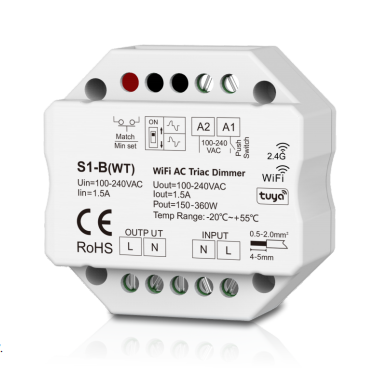
How to Upgrade Traditional LED Lighting with S1-B(WT) WiFi Triac Dimmer Controller
Bring smart control to existing Triac dimmable LED strips without replacing fixtures or drivers. The S1-B(WT) delivers smooth, flicker-free dimming with app, RF remote, push switch, and voice control in one compact solution.
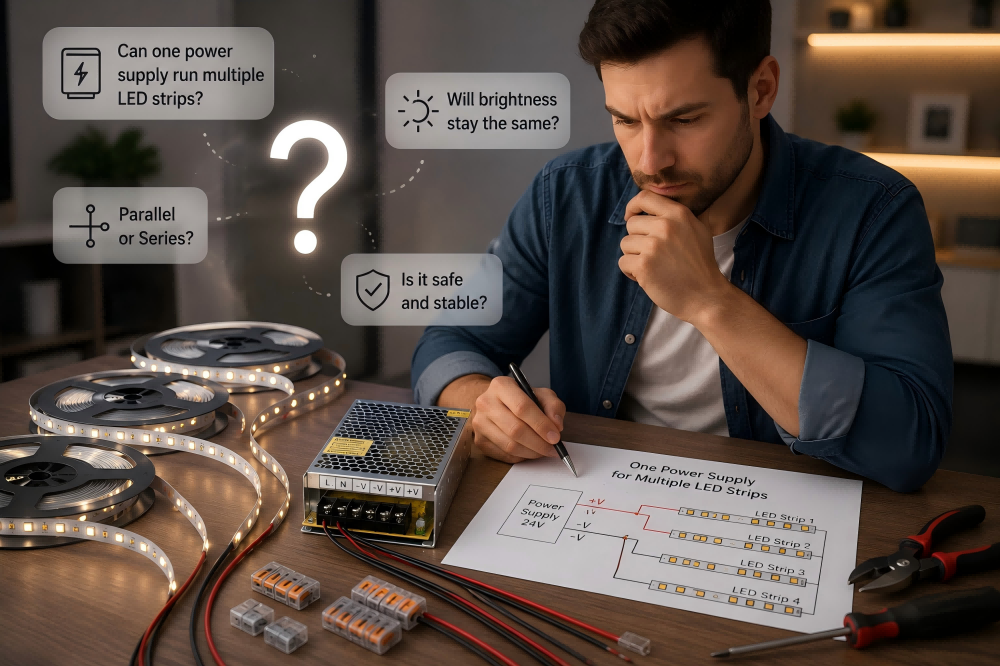
Unified Power Supply Solutions for Multiple LED Strips/ How to Power Multiple LED Strips with One Solution
Learn how to connect multiple LED strip lights to one power supply. Discover wiring methods, power calculations, voltage drop solutions, and installation tips.
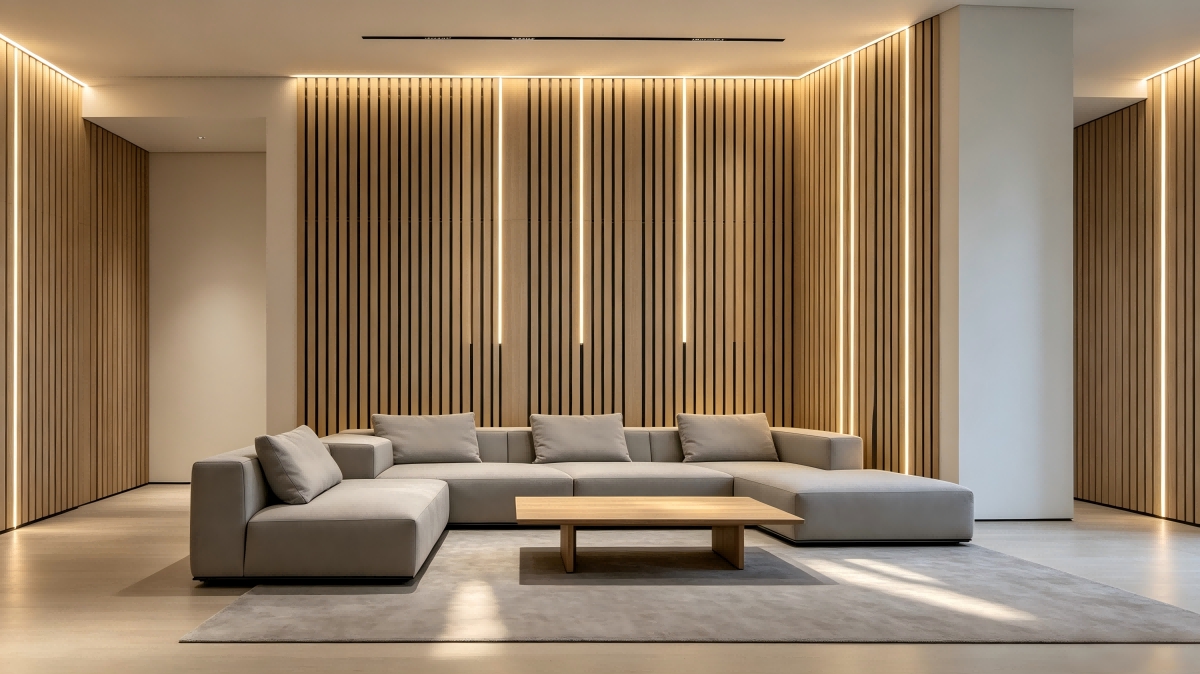
Why More Architects Are Integrating LED Lighting Into Slat Wall
Black neon slat wall LED lighting hides into wood slats, giving a dimmable, dot-free glow and bringing a warm touch to modern homes and hospitality interiors.
Recommended News