How to Choose the Right Color Temperature for LED Strips: A Professional Guide
When selecting LED strip lights, operating voltage isn't the only spec worth your attention — color temperature (CCT) is just as important. It determines the visual "feel" of the light and directly shapes the mood, appearance, and overall lighting experience of a space.
Most LED strips on the market are available across a range of options, from warm white to cool white. Faced with choices like 2700K, 3000K, 4000K, 5000K, or even 6500K, many buyers ask the same question:
Which color temperature is right for my project?
The truth is, there's no single CCT that works for every scenario. Choosing the right led strip lights color temperature depends on the application, the function of the space, the desired visual effect, the surrounding environment, and other lighting parameters working together.
This article breaks down the characteristics of different color temperatures and helps you choose the right led strip color temperature for your specific application.
What Is Color Temperature in LED Lighting?
In LED lighting, color temperature describes the color appearance of the light itself — what we commonly refer to as "warm" or "cool" light. It has nothing to do with brightness; instead, it shapes how the light feels once it fills a space.
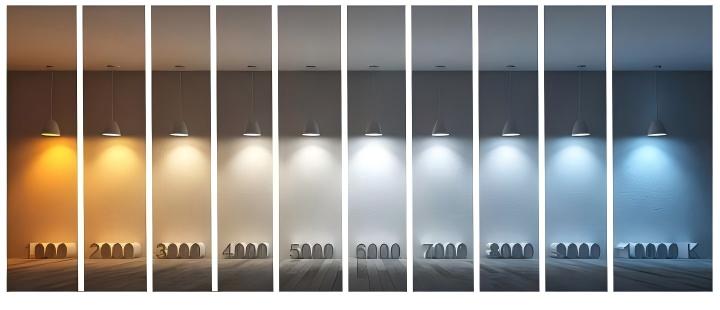
Color temperature is measured in Kelvin (K). As a general rule, the lower the Kelvin value, the warmer the light appears, producing a soft glow similar to candlelight or traditional incandescent bulbs. The higher the value, the cooler the light appears, moving closer to the crisp, bright clarity of daylight.
For LED strips, color temperature is one of the key parameters shaping the final lighting effect. The very same strip, installed in the same space, will create an entirely different atmosphere depending on whether it's 2700K, 4000K, or 6000K. That's why choosing an LED strip shouldn't come down to voltage and wattage alone — the color temperature also needs to match the purpose of the space, the design style, and the lighting atmosphere you're aiming to create.
What Does Kelvin (K) Represent?
Kelvin (K) is the unit used to measure the color temperature of a light source. In LED lighting, the common CCT range runs roughly from 2700K to 6500K.
Here's a simple way to think about it:
- Low Kelvin → warm light, leaning yellow/red
- Mid-range Kelvin → neutral white light, more natural and balanced
- High Kelvin → cool light, leaning white/blue
For example, 2700K typically produces a warm, soft glow, while 4000K appears more natural and clear. Move up to the 5000K–6500K range, and the light gets much closer to daylight.
It's worth noting that a higher Kelvin value doesn't mean a brighter LED strip. Color temperature and brightness are two separate lighting parameters — brightness depends on factors like luminous flux, wattage, LED density, and luminous efficacy.
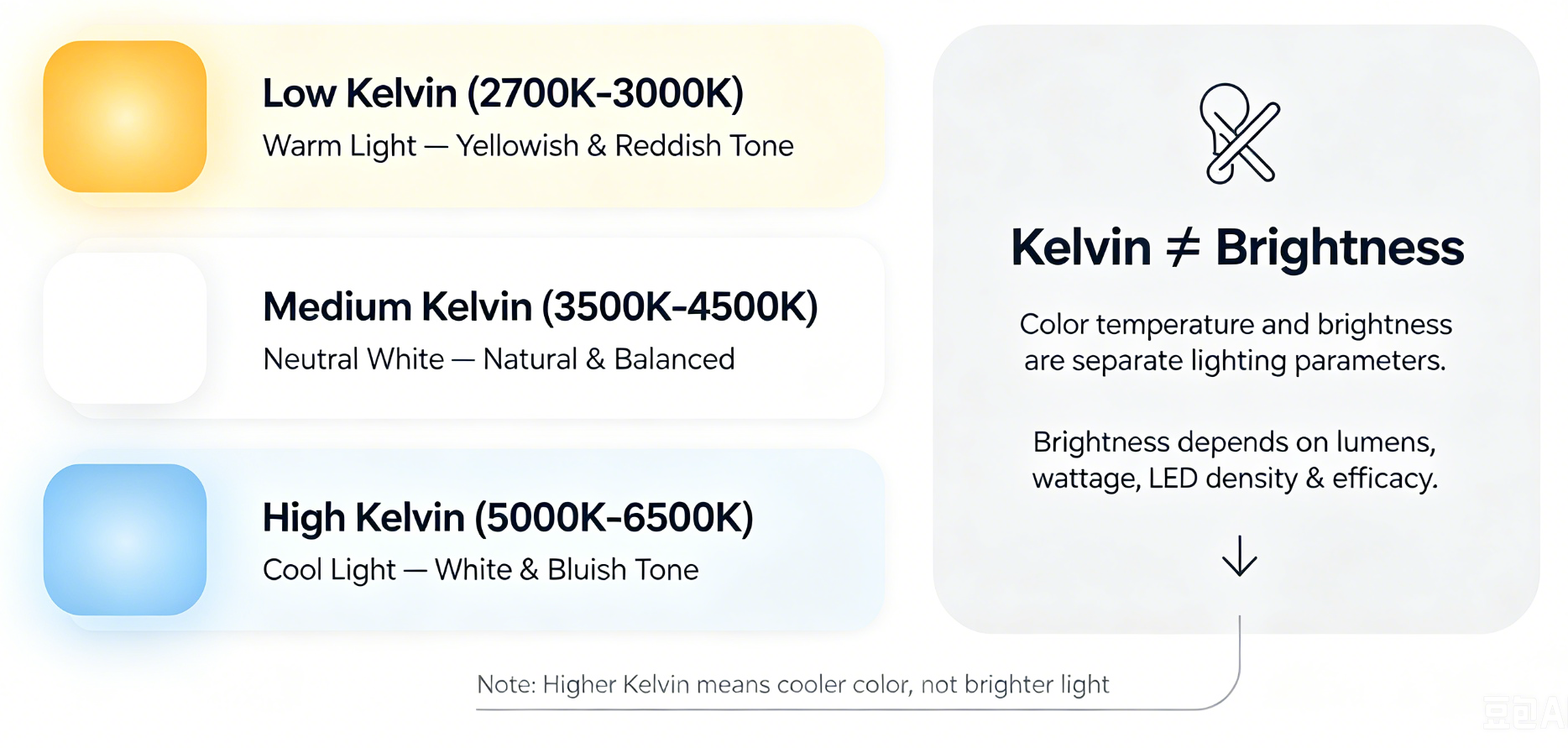
Warm White, Neutral White, and Cool White
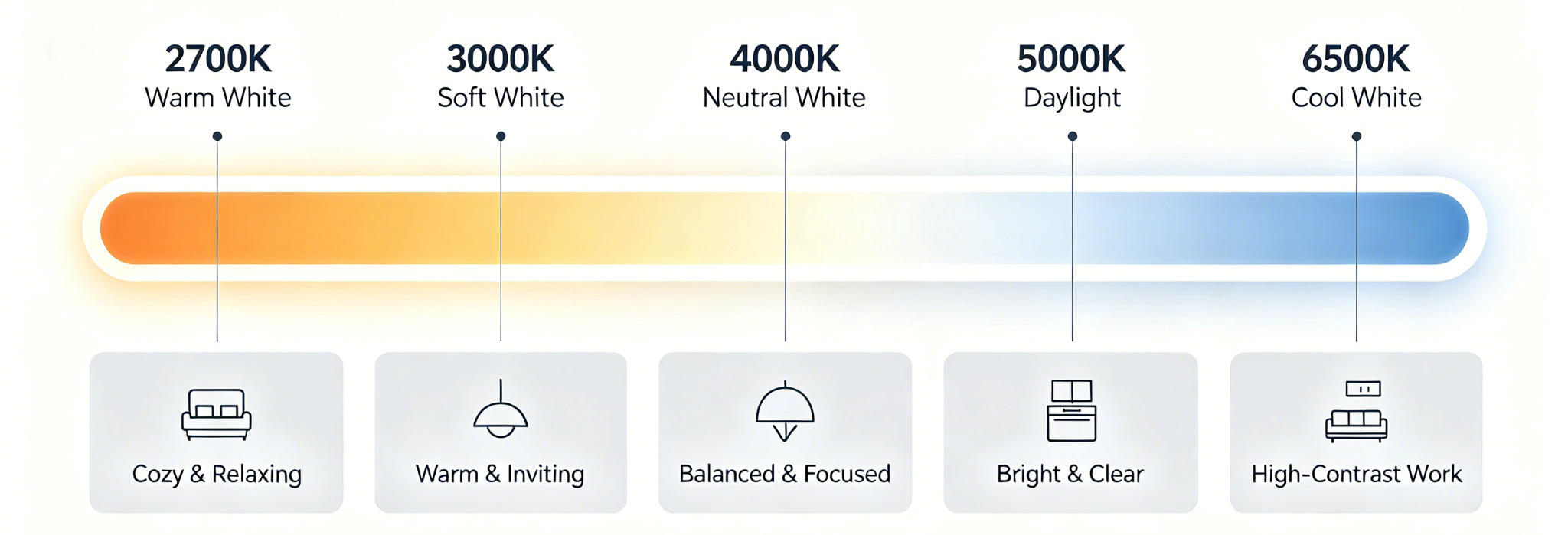
To make selection easier, the color temperature of an led cct strip is generally grouped into a few main ranges:
Warm White | approx. 2700K–3000K
The light carries a noticeably warm tone, creating a soft, cozy atmosphere. It's commonly used in residential spaces, hotels, restaurants, and decorative lighting.
Neutral White | approx. 3500K–4000K
The tone is more natural and balanced, without leaning distinctly yellow or cool. It suits offices, retail spaces, kitchens, and general commercial applications.
Cool White | approx. 5000K–6500K
The light is crisper and cooler, well suited to industrial settings, workspaces, display areas, and other applications where visual clarity matters most.
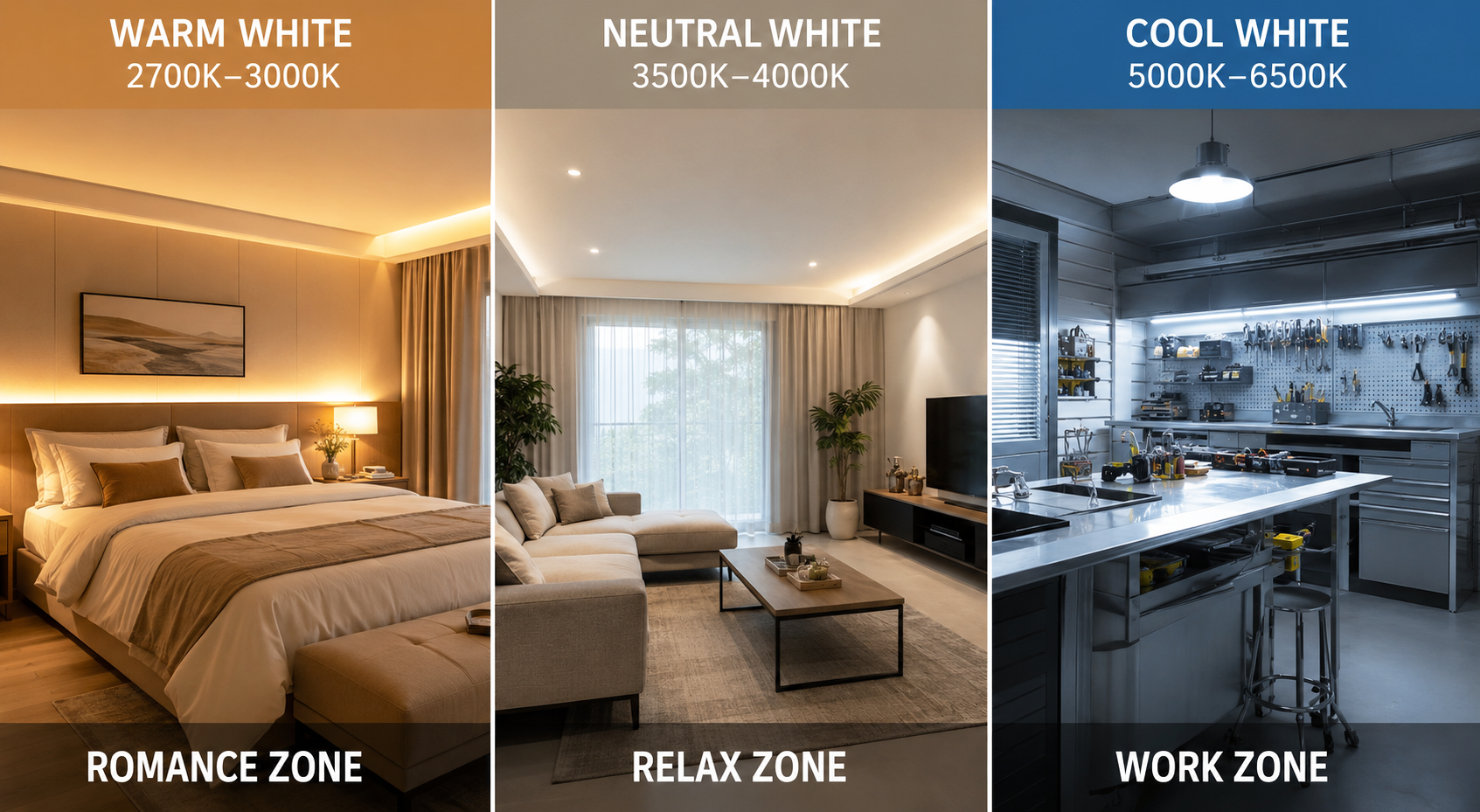

Color Temperature vs. Brightness: What's the Difference?
This is a point that's easy to get confused about when choosing LED strip lights.
Color temperature (CCT) describes the color of the light, while brightness describes the light output.
For example: a 3000K LED strip isn't necessarily dimmer than a 4000K strip. Even with different color temperatures, two strips can have similar — or even different — luminous flux levels. That's why, when choosing LED strips, CCT, brightness, CRI, and optical design should each be evaluated as separate parameters rather than assumed to move together.
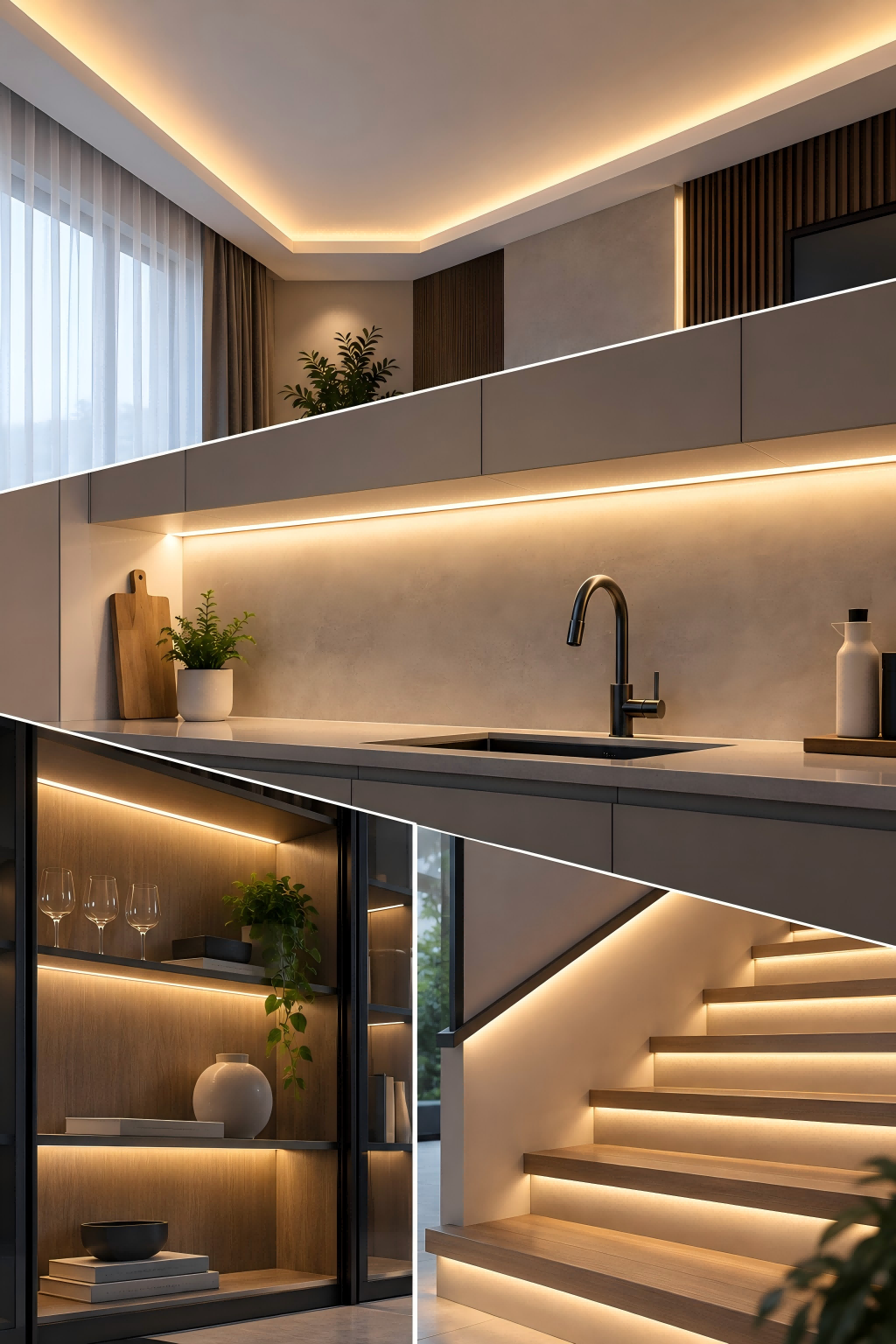
LED Strip Light Color Temperature Guide
LED strips can produce light ranging from warm, soft low CCT to crisp, bright high CCT. No single color temperature is inherently "better" — what matters is whether it fits the function of the space, the design style, and the lighting goal.
For most LED strip applications, common color temperatures can be grouped into the following ranges:

2200K–2700K: Ultra Warm White
2200K–2700K sits at the lower end of the CCT range, with a noticeably warm, yellow-toned glow that visually resembles candlelight or traditional warm-toned sources.
This light color is more about mood than visual clarity, making it well suited to spaces that call for a relaxed, cozy, or upscale atmosphere — hotels, restaurants, bars, lounge areas, and decorative lighting.
If the LED strip is primarily used in recessed light channels, backlighting, or architectural accents rather than as the main functional light source, ultra warm white is also worth considering.
2700K–3000K: Warm White
2700K–3000K is a very common warm CCT for residential and commercial ambient lighting. Compared to 2200K–2700K, the yellow tone is softer while still maintaining a fairly natural white appearance.
This range typically suits:
- Living rooms
- Bedrooms
- Dining areas
- Restaurants
- Hotel rooms
- Decorative lighting
If a project calls for a space that feels comfortable and warm without leaning too yellow, 2700K–3000K is usually a safe, reliable choice.
3500K–4000K: Neutral White
3500K–4000K sits between warm white and cool white, offering a more natural, balanced light that avoids leaning distinctly yellow or feeling overly cool.
As a result, it works well for spaces that need to balance comfort with visual clarity, such as:
- Offices
- Retail stores
- Kitchens
- Hotel lobbies
- Commercial interiors
Among these, 4000K is a frequent choice for many commercial and functional lighting projects. For scenarios that need good visibility without making a space feel too cold, neutral white generally offers strong adaptability.
5000K–6500K: Cool White / Daylight
5000K–6500K produces cooler light that visually resembles daylight, delivering a crisp, bright lighting effect.
This range is better suited to applications with higher demands for visual clarity, detail inspection, or task performance, such as:
- Workshops
- Industrial areas
- Inspection areas
- Photography
- Art and display applications
- Task-oriented lighting
That said, a higher color temperature doesn't mean higher brightness, nor does it indicate better color rendering. For projects where color accuracy and visual performance matter, color rendering index (CRI) should also be factored into the decision.
How Color Temperature Affects the Mood of a Space
Color temperature shapes how warm or cool a light feels, and it also changes the overall visual impression of a space. Choosing the right color temperature based on the function and design intent of a space helps strike a better balance between comfort, visual clarity, and atmosphere.
Warm Light: Creating Comfort and Ambiance
Warm light (2700K–3000K) is well suited to creating a cozy, soft feeling, and is commonly used in hotels, restaurants, and residential spaces to build a comfortable experience. It has a gentle, soothing quality that reduces visual fatigue, making it a good fit for relaxation-focused settings. That said, an overly low color temperature can make colors appear too yellow, which isn't ideal for detailed work.
Neutral Light: Delivering Balanced Illumination
Natural white light (4000K) feels modern and clean, making it well suited to offices and commercial spaces where it enhances a professional feel. It balances the strengths of warm and cool light, keeping a space bright yet comfortable — a good fit for multi-functional spaces.
Cool Light: Improving Visibility and Functional Lighting
Cool light (5000K–6500K) reinforces a modern, high-tech feel, making it well suited to exhibitions, art spaces, or high-precision work environments. The light is clear, bright, and offers strong color accuracy, which suits detailed work or display applications — though prolonged exposure can sometimes feel too stark or harsh.
As a general guideline, choose a color temperature that fits both the intended usage duration and the function of the space, balancing visual needs with comfort.
How to Choose Color Temperature for Different Applications
Different applications call for different led strip color temperature choices. Start by identifying the function of the space and the purpose of the lighting, then factor in design style, existing light sources, and visual requirements to land on the right CCT. Below are some common application scenarios to help you quickly narrow down a suitable color temperature range.
Residential Lighting
Residential spaces tend to prioritize comfort and overall atmosphere, so warm white is generally the go-to choice — it creates a cozy, relaxed feel that supports rest and downtime.
- Living room: 2700K–3000K
- Bedroom: 2700K–3000K
- Dining area: 2700K–3000K
- Kitchen: 3000K–4000K
- Hallway / Stairway: 2700K–3000K
For rest areas like bedrooms and living rooms, lean toward warmer color temperatures. For functional zones like kitchens and countertops, a color temperature closer to neutral white gives you clearer visibility.


Hotel and Hospitality Lighting
Hotels and dining spaces typically rely on lighting to create a comfortable, inviting environment, so color temperature is usually chosen alongside the space's positioning and design style.
- Hotel rooms: 2700K–3000K
- Restaurant: 2700K–3000K
- Lobby: 3000K–3500K
- Bar / Lounge: 2200K–2700K
Guest rooms, restaurants, and lounge areas generally benefit from warmer color temperatures that build a relaxed mood, while public areas like lobbies can use a slightly higher CCT for a brighter, more modern look.

Retail Lighting
Color temperature for retail spaces shouldn't be decided by ambiance alone — the color, material, and display effect of the merchandise itself also matter.
General retail environments typically work well in the 4000K–6000K range, with adjustments made by category and brand style for clothing, home goods, and similar segments.
For jewelry, artwork, food, and other color-sensitive merchandise, CRI and color rendering performance deserve just as much attention as CCT.

Office Lighting
Office spaces generally need to balance visual clarity with comfort over long hours of use, which is why 4000K is a common choice — it supports visual comfort while remaining practical for extended work.
Offices, meeting rooms, and reception areas can be adjusted based on interior design and existing lighting. If a space already uses a consistent lighting system, any newly added LED strips should match the existing color temperature closely to avoid a noticeable color mismatch.
Spaces like offices, meeting rooms, and retail stores tend to suit neutral white (4000K).

Architectural Lighting
In architectural applications, LED strips are often used to outline structure, highlight materials, and add depth to a space — so color temperature needs to be considered alongside the architectural design itself.
- Cove lighting
- Wall washing
- Architectural lines
- Ceiling details
- Facade lighting
For designs that emphasize warm materials and atmosphere, 2700K–3000K works well. For more modern, minimalist designs, 3000K–4000K tends to blend in more naturally.
There's no single "standard" color temperature to prescribe here, since building materials, surface colors, and ambient light all influence the final result.

Outdoor Lighting
Choosing color temperature for outdoor LED strips also comes down to the lighting's purpose.
- Landscape lighting
- Facade lighting
- Pathways
- Outdoor structures
If the goal is to create architectural or landscape ambiance, 2700K–3000K usually delivers a more natural, warm effect. If the priority is functional lighting that needs higher visual clarity, 4000K–6000K is worth considering instead.
So outdoor lighting isn't simply a matter of "picking a higher color temperature" — it starts with deciding whether the goal is ambiance or function.

Specialized Applications
Settings like photography studios, exhibitions, and factory inspection lines call for high-CRI, high-brightness cool white (5000K–6500K), which supports detailed observation and accurate color reproduction.
Beyond Room Function: Other Environmental Factors to Consider
When choosing the color temperature of an LED strip, it also helps to look beyond the room's purpose and consider the surrounding colors, materials, and existing light sources. The same color temperature can look noticeably different depending on the environment it's placed in.
Interior Colors and Materials
Walls, furniture, and finishes all influence how we perceive light color.
Wood tones and warm-colored walls, for example, already carry a strong warm undertone, and pairing them with 2700K–3000K lighting typically brings out that warmth even further. White walls, gray surfaces, stone, and metal, on the other hand, tend to look cleaner and crisper under neutral or cooler light.
So rather than judging an LED strip's light color in isolation, it's worth considering CCT alongside the dominant materials and color palette of the space.

Existing Lighting Environment
If the LED strip is being added to an existing lighting system, the color temperature of the surrounding light sources also needs to be factored in.
For example, if a space already uses 3000K downlights and the new LED strip is 5000K, the mismatch between warm and cool tones can become obvious, making different areas of the space feel visually inconsistent.
This is especially relevant for LED strips used alongside other light sources, such as:
- Cove lighting
- Under cabinet lighting
- Display lighting
- Architectural lighting
For these applications, choosing a CCT close to the surrounding lighting generally makes it easier to keep the overall look cohesive.
Space Function and Scale
The mounting location and physical scale of the space also affect the final visual outcome.
The same LED strip can look quite different depending on whether it's:
- Installed in a recessed channel on a light-colored ceiling
- Mounted in a backlit structure against a dark wall
- Fitted into a narrow aluminum profile
So when choosing color temperature, it's also worth factoring in the mounting position, the reflectivity of nearby surfaces, and the distance between the strip and the surface it's illuminating.
Beyond Color Temperature: Other Factors Worth Considering
Choosing the right color temperature is only part of selecting an LED strip. For a real-world lighting project, you'll also want to factor in strip type, color rendering, light output, and control options.
What Type of LED Strip Should You Choose?
LED strips aren't built on a single light source structure. Depending on the lighting requirements, you can choose between SMD, COB, or CSP LED strips.
- SMD LED strips: Widely used, available in a range of LED densities, wattages, and light colors — a good fit for general linear lighting.
- COB LED strips: Chips are packed more tightly together, producing a continuous glow that suits applications where light uniformity matters most.
- CSP LED strips: Built with a more compact package, useful for projects with specific requirements around strip size, luminous efficacy, or LED density.

SMD LED Strip COB LED Strip CSP LED Strip
Beyond the strip itself, it's also worth considering the installation method — diffuser, aluminum profile, mounting position, and the distance between the strip and the surface it's lighting. For example, the same 3000K LED strip will look different in terms of light uniformity and diffusion when installed in an aluminum profile with a diffuser versus mounted bare.
So when choosing an LED strip, don't just look at the LED type — factor in the light source, optical accessories, and installation method together.
How High Does the CRI Need to Be?
If a project cares not just about the color of the light itself, but also about how natural furniture, products, wall materials, or decorative details look under it, CRI (Color Rendering Index) deserves close attention.
- CRI 80+: Suitable for general lighting where color accuracy isn't a top priority.
- CRI 90+: Better suited to residential, hospitality, retail, and commercial spaces where color performance matters more.
- CRI 95+: Useful for display, art, and photography applications with higher color accuracy demands.
That said, not every project needs CRI 95+. For mostly decorative or basic lighting, CRI 90 is usually more than enough.

How Much Light Output Do You Need?
Light output and energy efficiency are also worth paying attention to. Even products with the same CCT can produce different light output depending on the chip, LED density, and wattage.
When comparing products, it helps to look at:
- Lumens — reflects the actual luminous flux produced by the strip, making it a more reliable way to compare real-world output across products.
- LED density — the number of LEDs affects the continuity and overall output of the light source.
- Wattage — represents the strip's power consumption, useful alongside lumens for judging energy use.
- Luminous efficacy — shows how much light is produced per unit of power, particularly valuable when comparing energy efficiency across products.
For instance, two 3000K LED strips might differ significantly — one could have higher luminous flux, while the other delivers similar output at lower wattage. That's why it's best not to judge a product on wattage or LED count alone, but to weigh lumens, wattage, and luminous efficacy together.
For large-scale projects that run for extended hours, luminous efficacy is especially worth prioritizing, since higher efficacy can meet lighting needs while cutting down on unnecessary power consumption.
Do You Need Dimming or Smart Control?
If a space needs its lighting adjusted for different times of day or use cases, it's worth considering dimming led light strips or smart control features. This can include:
- Brightness adjustment
- Dimming
- Smart lighting control
- Scene control
For residential, hospitality, and commercial projects that need flexibility in lighting mood, dimming allows a single LED strip to adapt to different needs throughout the day.
If a project needs more than just brightness control — say, the ability to shift between warmer and cooler light — it's worth looking into Tunable White or adjustable color temperature led strip options.
Should You Choose Fixed CCT or Adjustable Color Temperature LED Strips?
Once you've nailed down the CCT range your project needs, there's one more question worth asking: should you go with a fixed color temperature LED strip, or a Tunable White strip that can shift color temperature?
If a project's lighting needs are fairly consistent, a single CCT is usually enough. But if the same space needs to adapt to different times, activities, or use cases, an adjustable color temperature led strip offers a lot more flexibility.

Fixed CCT LED Strips
Fixed color temperature LED strips are set to a predetermined CCT — 2700K, 3000K, 4000K, or 5000K, for example. Once installed, the light stays within that set range.
This approach tends to work well for:
- Consistent lighting needs
- A single, clearly defined application
- Projects where the CCT has already been decided
- Spaces that don't require frequent light color changes
For example, a hotel room mainly meant to create a warm atmosphere can simply use a fixed 2700K–3000K LED strip, without needing any color temperature adjustment feature. When a project's lighting needs are already clear, fixed CCT is usually enough — and it keeps the system simpler.
Adjustable Color Temperature LED Strips
Adjustable color temperature LED strips let users shift CCT within a set range. A 2700K–6500K tunable strip, for instance, can change light color to match different times, activities, and uses within a space.
For example:
- 2700K–3000K: suited to a warm, relaxed atmosphere
- 3500K–4000K: suited to everyday work and general functional lighting
- 5000K–6500K: suited to scenes that call for a clearer, crisper visual effect
This flexibility lets a single lighting system adapt to different needs, without having to install separate fixed-CCT strips for every scenario.
When Does It Make Sense to Use a Tunable White Strip?
Tunable White isn't automatically better than fixed CCT — its real value comes down to whether a project genuinely needs to change light color.
Consider a tunable strip when:
- A single space serves multiple functions
- Light color needs to change at different times of day
- Hotels, commercial spaces, and similar settings need different lighting scenes
- The project involves smart lighting or automated control
- A display space needs lighting adjusted for different content
- You want to be able to shift the mood of a space through lighting
For example, a hotel lobby might work best with clear, neutral light during the day and shift to a warmer color temperature in the evening for a cozier feel. For projects like this — where the same space needs different light colors at different times — Tunable White offers more flexibility than a fixed CCT.
In practice, color temperature can also be used deliberately to shape a space's atmosphere and visual layers. Different zones with different functions can each use a CCT suited to their own purpose, rather than applying the exact same color temperature across an entire project.
Frequently Asked Questions (FAQ)
What's the best color temperature for LED strip lights?
There's no single "best" color temperature that works for every project. It comes down to the function of the space, the design style, the existing lighting, and the visual effect you're going for. Ambiance-driven spaces like homes and hotels usually lean toward warmer color temperatures, while offices, retail, and functional lighting tend to suit neutral or cooler options better.
For home lighting, which is better — 2700K or 3000K?
Both work well for residential lighting; the main difference is how the light color feels. 2700K is generally warmer and softer, making it a good fit for bedrooms and rest areas, while 3000K is a touch brighter and more neutral, suiting living rooms, dining areas, and kitchens. Ultimately, it comes down to interior design and personal preference.
What's the best color temperature for commercial lighting?
There's no universal "best" for commercial lighting. Retail, hospitality, restaurants, and offices all serve different lighting purposes, so the ideal CCT varies accordingly. Hotels and restaurants tend to lean toward 2700K–3000K, while offices and some retail spaces may work better at 3500K–4000K. For product display, CRI needs equal attention alongside CCT.
Does a higher Kelvin number mean a brighter LED strip?
No. Kelvin describes the color appearance of light, not its brightness.
What's the difference between CCT (correlated color temperature) and CRI (color rendering index)?
CCT describes whether light appears warm, neutral, or cool, while CRI reflects how accurately colors appear under that light source.
In simple terms:
- CCT = whether the light looks warm or cool
- CRI = whether object colors look true-to-life and accurate
Get A Quote
If you're still weighing which color temperature is right for your project, feel free to reach out — we can help you pin down the LED strip color temperature setup that best matches your use case and requirements.
💬 Get in touch → Contact us here
📧 Or email us at: sales@ledworker.com
How to Properly Connect LED Strips to a Controller and Power Supply (A DIY Guide)
Learn how to connect LED strip lights to a power supply and controller correctly. This guide covers 12V LED strip wiring, LED driver connections, power calculations, wiring diagrams, troubleshooting, and installation tips for DIY projects and professional lighting applications.
Bulk Purchasing & Customization: Meeting Diverse Needs
When sourcing products, it’s not just about the price. Minimum order quantities, packaging options, and customization capabilities also matter. Flexible low-MOQ full-line supply and tailored services can meet the needs of different markets and projects, making procurement more efficient and worry-free, while helping customers respond quickly in a competitive market.
Recommended News