
How to Choose the Right IP Rating for LED Strips
Do you know why waterproofing performance is critical for LED strip lights used in outdoor and moisture-prone environments? On patios, in gardens, and even in bathrooms and kitchens, humidity and water vapor are ever-present — and an inadequate IP rating can lead to strip light failure, short circuits, and compromised overall lighting performance.
The market is flooded with options for waterproof led strip lights for showers, outdoor installations, and beyond, with varying IP ratings, silicone encapsulation methods, and adhesive materials. What exactly sets them apart? Which option is best suited for your project? How do you select the right IP rating based on the environment to ensure long-term, stable operation while maintaining both aesthetics and safety?
This article provides a comprehensive breakdown of waterproof LED strip light types, IP ratings, and ideal application scenarios — helping you make confident, professional sourcing decisions with ease. Whether you're specifying 12 volt led waterproof light strips for a landscape project or evaluating the best indoor led strip lights for commercial interiors, this guide has you covered.
Understanding IP Ratings: What Do IP20, IP65, IP67, and IP68 Actually Mean?
Therefore:
- IP20: 2 — Protection against solid objects larger than 12.5 mm in diameter. 0 — No protection against liquids.
- IP65: 6 — Complete dust-tight protection. 5 — Protection against low-pressure water jets from any direction.
- IP67: 6 — Complete dust-tight protection. 7 — Protection against water ingress when temporarily submerged.
- IP68: 6 — Complete dust-tight protection. 8 — Protection against water ingress when continuously submerged.
How to Choose the Right IP Rating for Your LED Strip Lights?
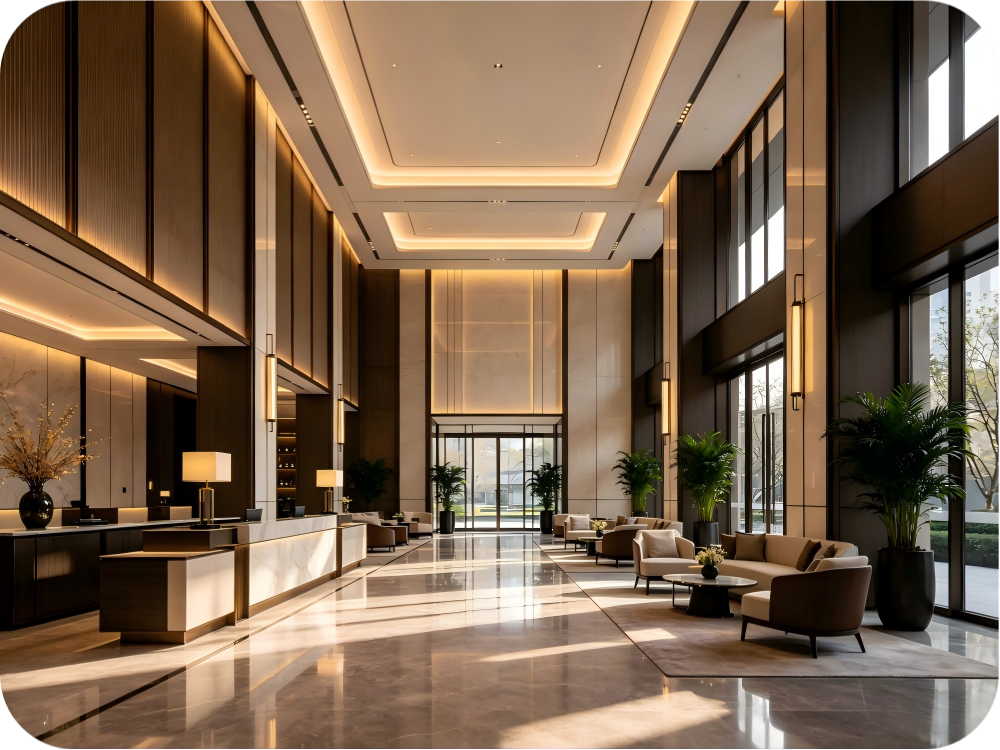
Dry Indoor Environments
In spaces such as living rooms, bedrooms, offices, conference rooms, under-cabinet installations, bookshelves, display cases, or furniture backlighting, the strip lights have no direct contact with water or moisture, and the environment remains relatively stable. These are ideal applications for the best indoor led strip lights, where performance and aesthetics take priority over weatherproofing.
Recommended IP Rating: IP20 — No additional waterproofing treatment required. Well-suited for general indoor ambient lighting and decorative lighting applications.
Damp Indoor Environments
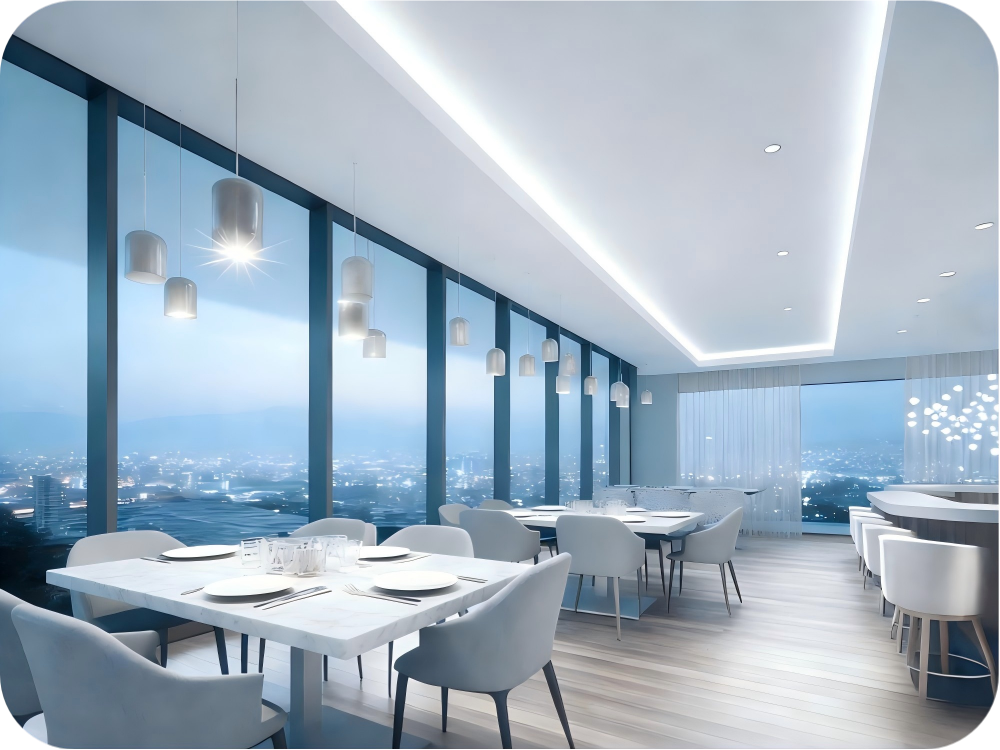
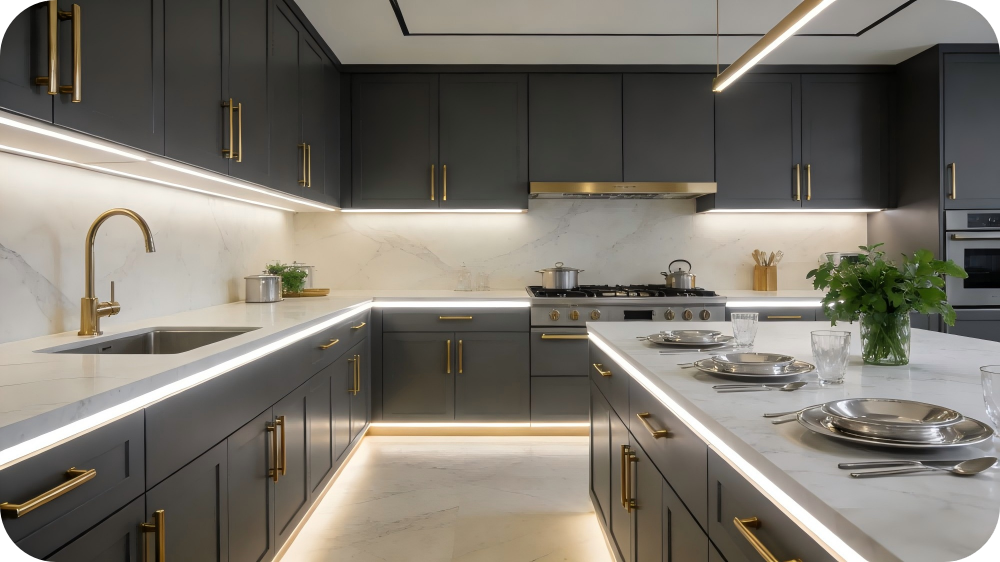
In areas such as kitchens, bathrooms, restrooms, balconies, patios, and laundry rooms, strip lights may be exposed to water vapor, steam, or splashing water. For shower enclosures and wet-area installations, waterproof led strip lights for showers are strongly recommended to ensure safety and longevity.
Recommended IP Rating: IP65 — Effectively guards against light splashing, water spray, and moisture ingress. Suitable for damp indoor environments and semi-enclosed spaces.
Outdoor Environments
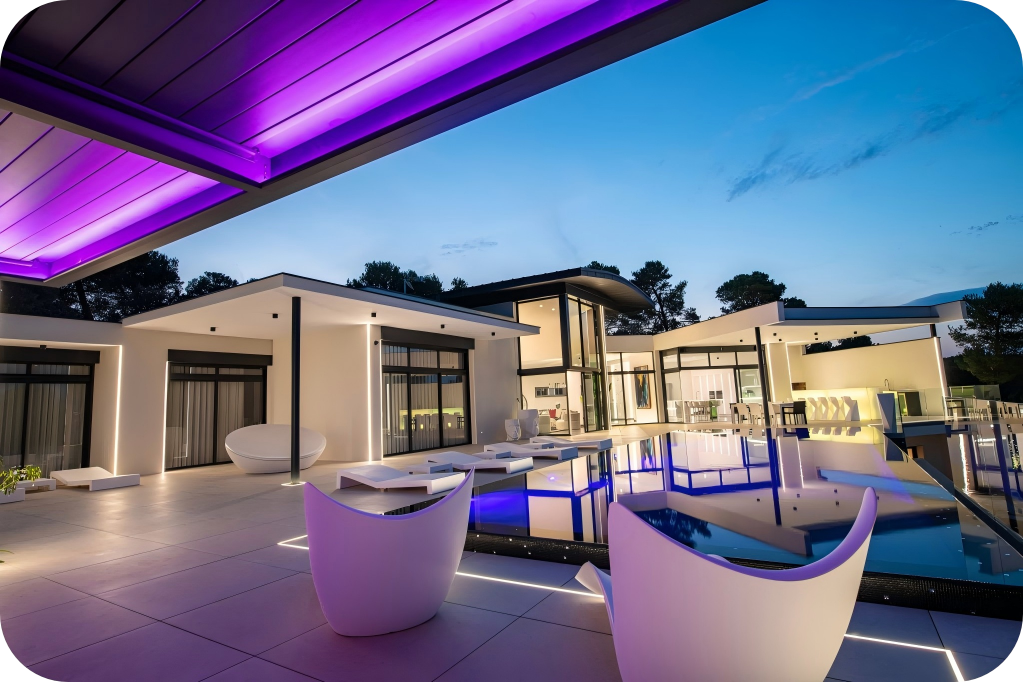
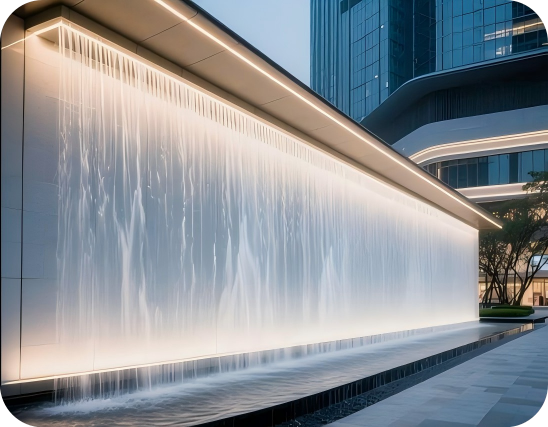
In applications such as outdoor landscape lighting, garden lighting, building façades, commercial storefronts, signage, bridge outline lighting, park pathways, hotel exteriors, and plaza decorative lighting, strip lights are exposed to wind, rain, and the elements on a long-term basis. Led strip outdoor lights with adequate IP ratings are essential for reliable performance in these conditions.
Recommended IP Rating: IP67 — Offers excellent dust-tight and waterproof protection, capable of withstanding rain and brief water immersion. Suitable for the majority of outdoor lighting projects.
Outdoor Submersion or Underwater Environments
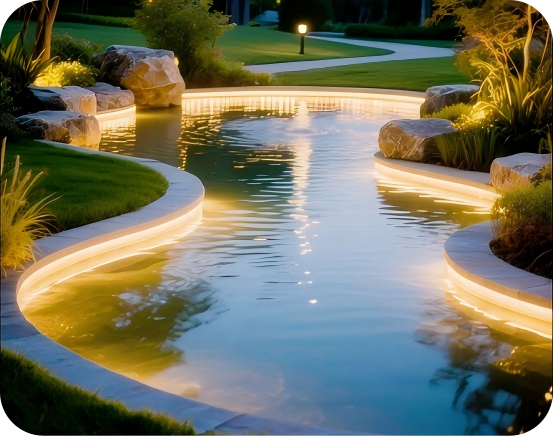
In settings such as pool edges, water feature installations, fountains, pond outline lighting, docks, marine lighting, and other applications requiring short-term water submersion, strip lights may be temporarily submerged.
Recommended IP Rating: IP68 — Ensures stable operation in underwater environments, meeting the demands of high-protection professional lighting applications.

Waterproofing Classifications by Material and Construction Method
Waterproof LED strip lights are not simply differentiated by IP rating alone — their protective performance is also closely tied to the encapsulation materials and waterproofing manufacturing processes used. Different materials vary in terms of waterproofing capability, flexibility, heat dissipation, and environmental suitability, making each better suited to specific application scenarios. The following illustrates the side profiles and thickness specifications of IP20, IP65, IP67, and IP68 strip lights:
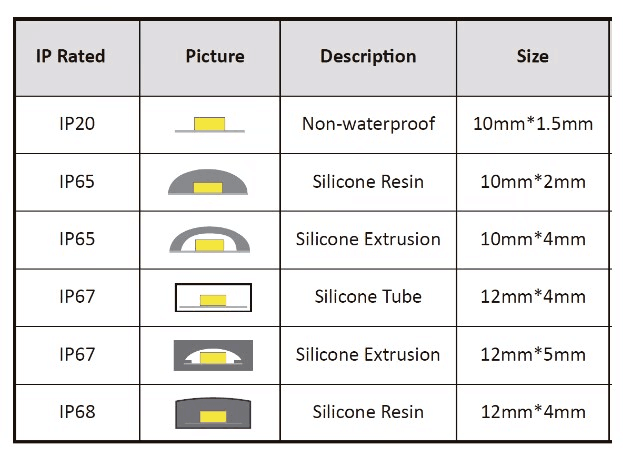
Material and Construction Types for IP20, IP65, IP67, and IP68 Waterproof LED Strip Lights
IP20 Type (Non-Waterproof)
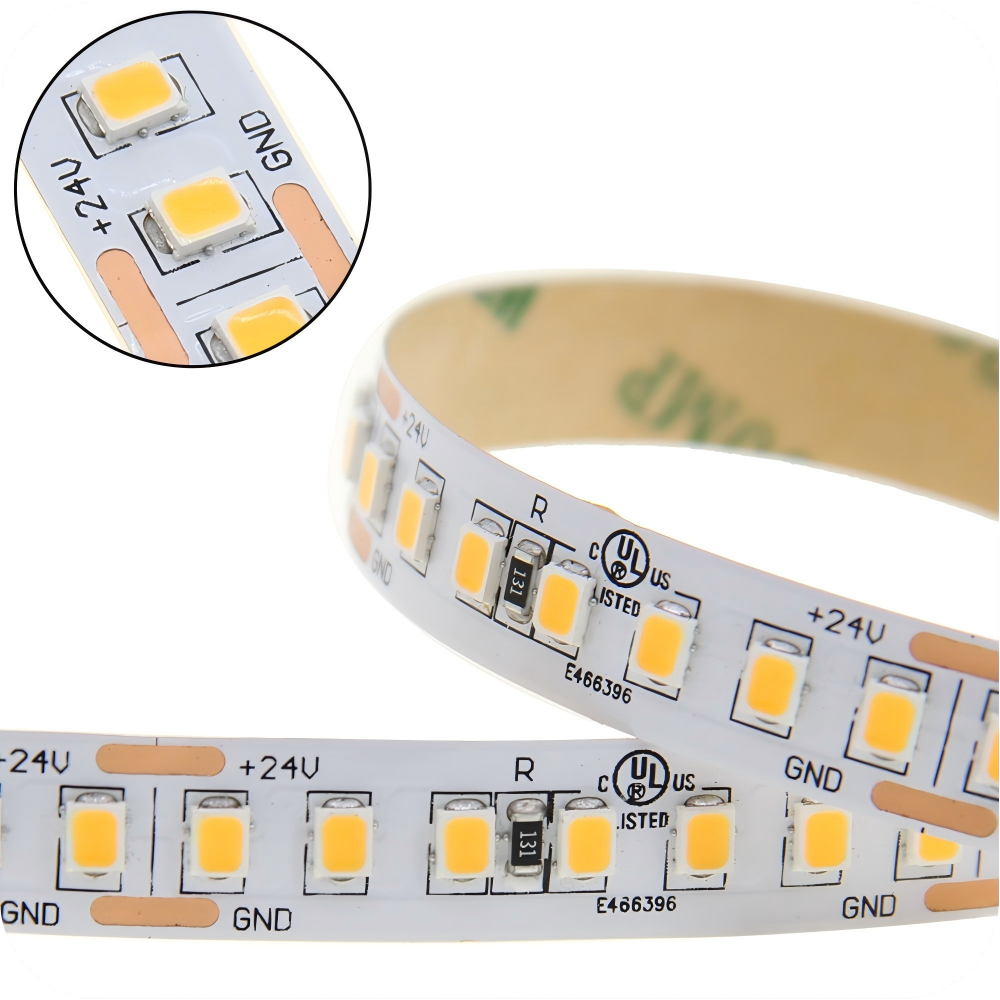
IP20 strip lights feature no protective coating or encapsulation — the LED chips and PCB are fully exposed.
No waterproofing or moisture resistance; provides only basic protection against accidental contact.
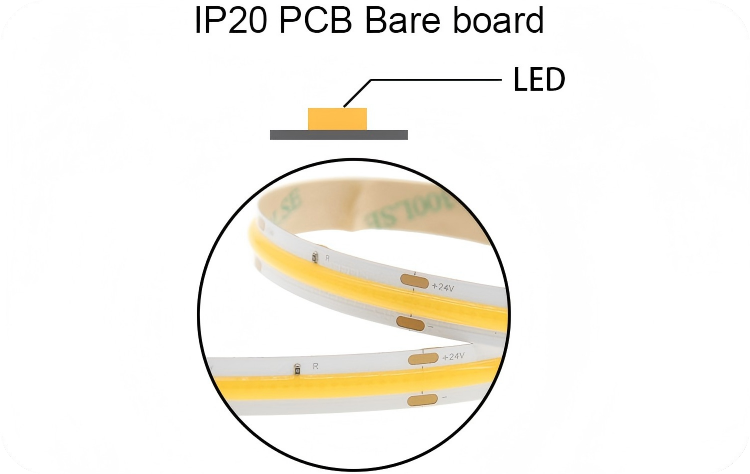
IP65 Protection Level Types
IP65 is the most widely used waterproof rating on the market, primarily designed for environments exposed to moisture and water spray. It is available in three common construction forms:
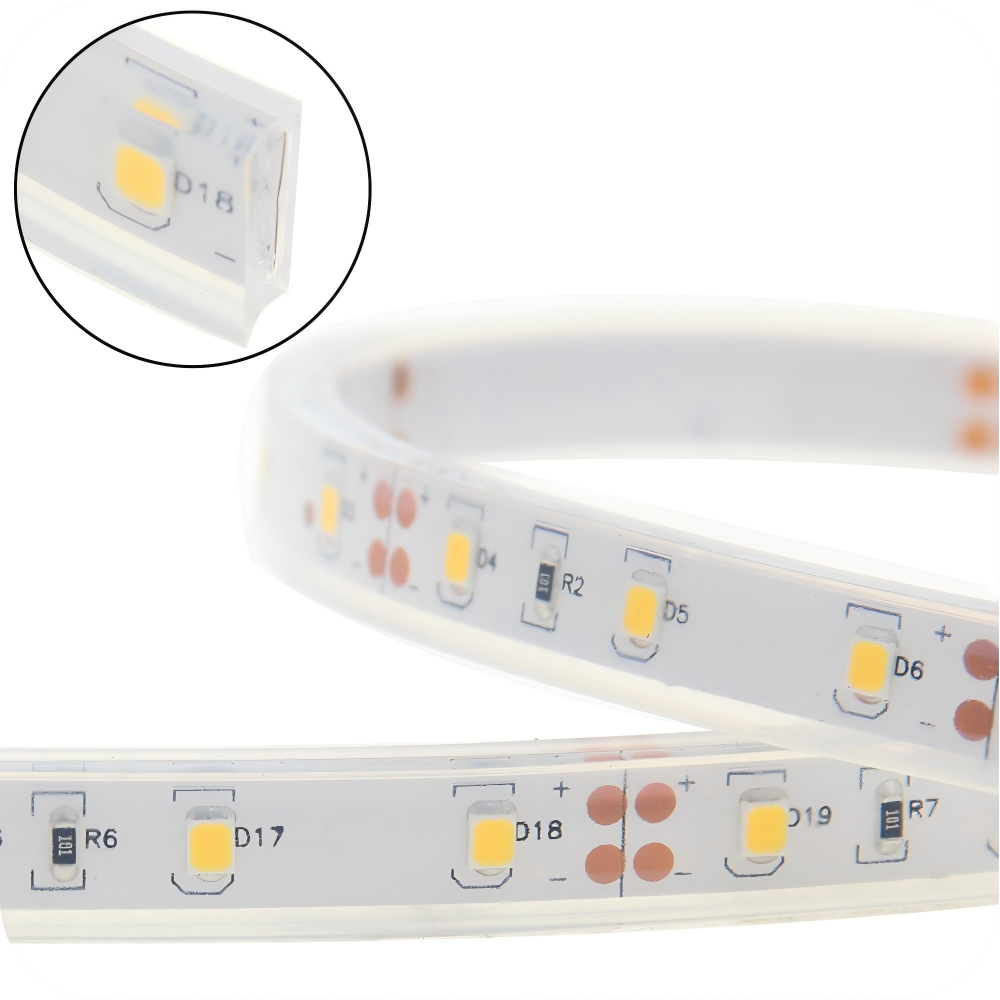
Surface Coating (Drip-Applied Resin): Waterproof on the surface, with no protective treatment on the back. This is the most common IP65-rated product available on the market.
LW Lighting uses anti-yellowing adhesive in its coating process. Standard adhesives are prone to yellowing within just a few months of use. Please refer to the images below for reference.
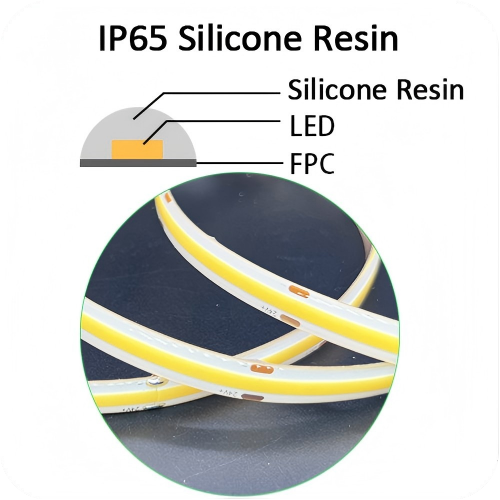
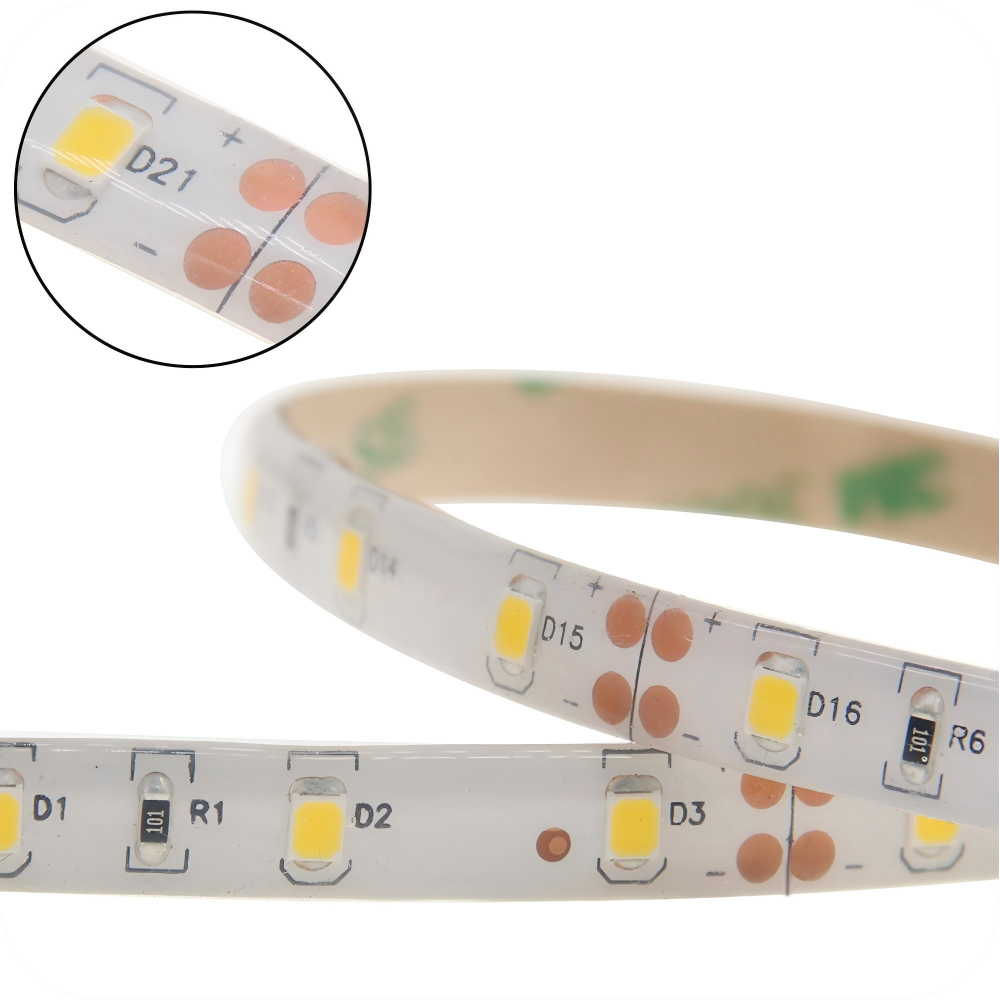
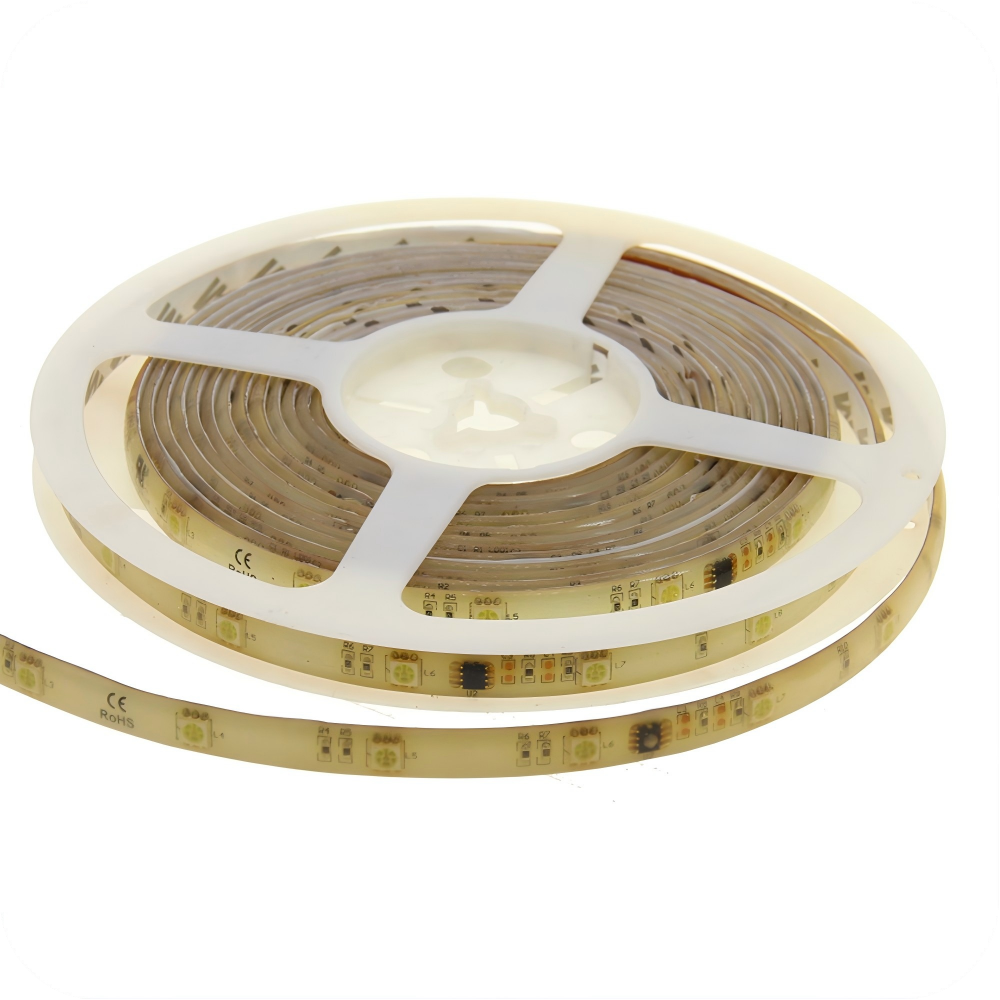
Surface Tube IP65 Type (Half Tube Design)
- A hollow silicone tube is applied over the surface of the strip light, forming a semi-enclosure structure.
- Construction Feature: The front side is protected by a silicone tube; the opposite side remains without waterproof protection.
Nano Coating Type (Nano Coating)
- In appearance, this type is nearly identical to a non-waterproof strip light, but incorporates a nano-level waterproof coating applied to the surface.
- Construction Feature: No visible silicone or resin layer; the surface provides waterproof and moisture-resistant protection.
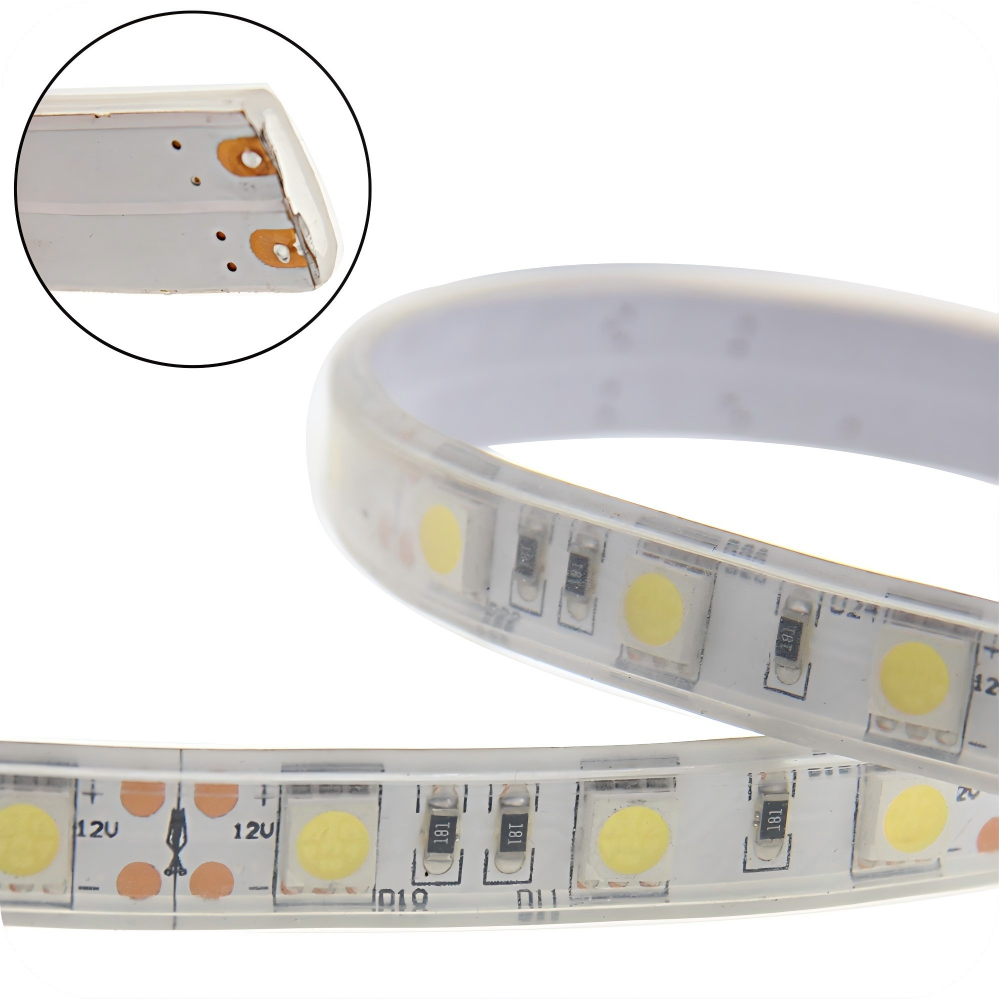 |
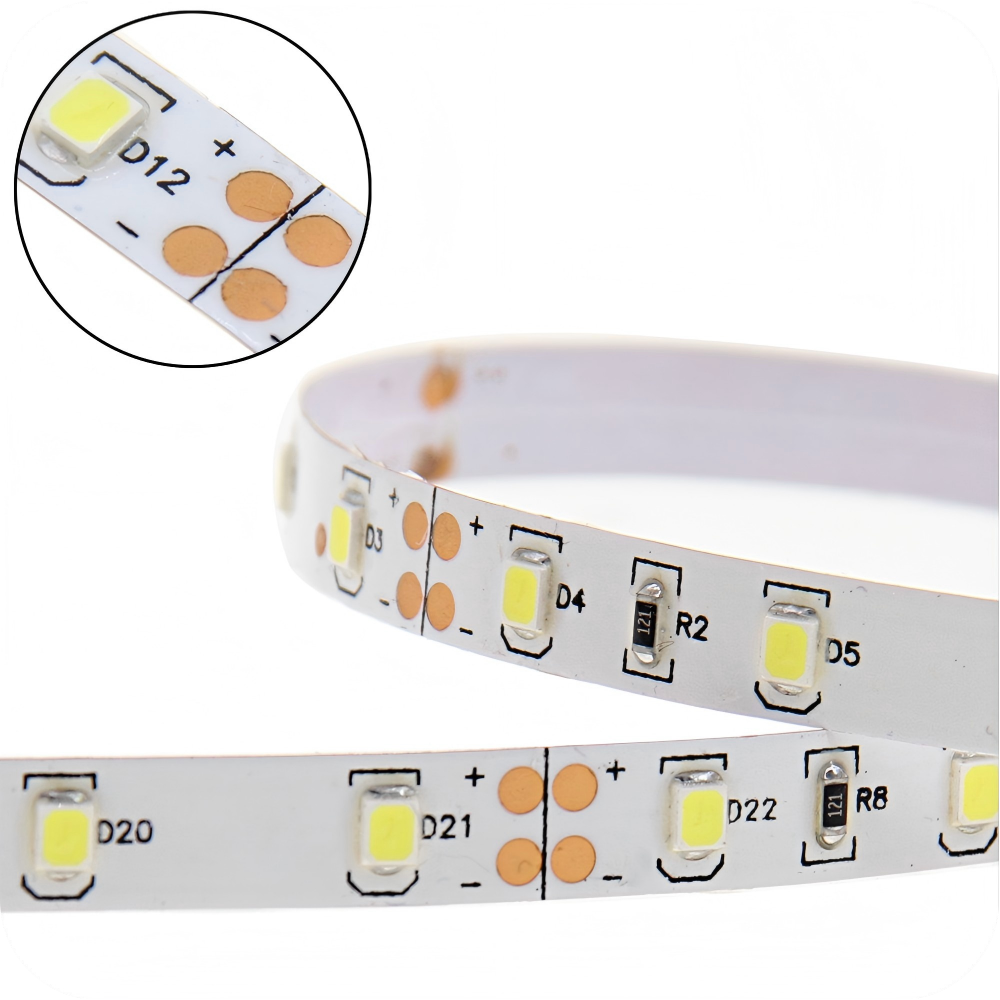 |
| Surface Tube IP65 Type (Half Tube Design) | Nano Coating Type (Nano Coating) |
IP67 Protection Level Types
IP67 is designed for outdoor environments, capable of withstanding rain exposure and short-term water submersion. It is available in two common construction forms:
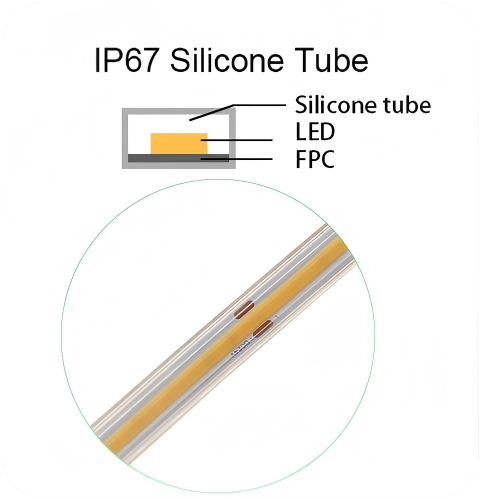
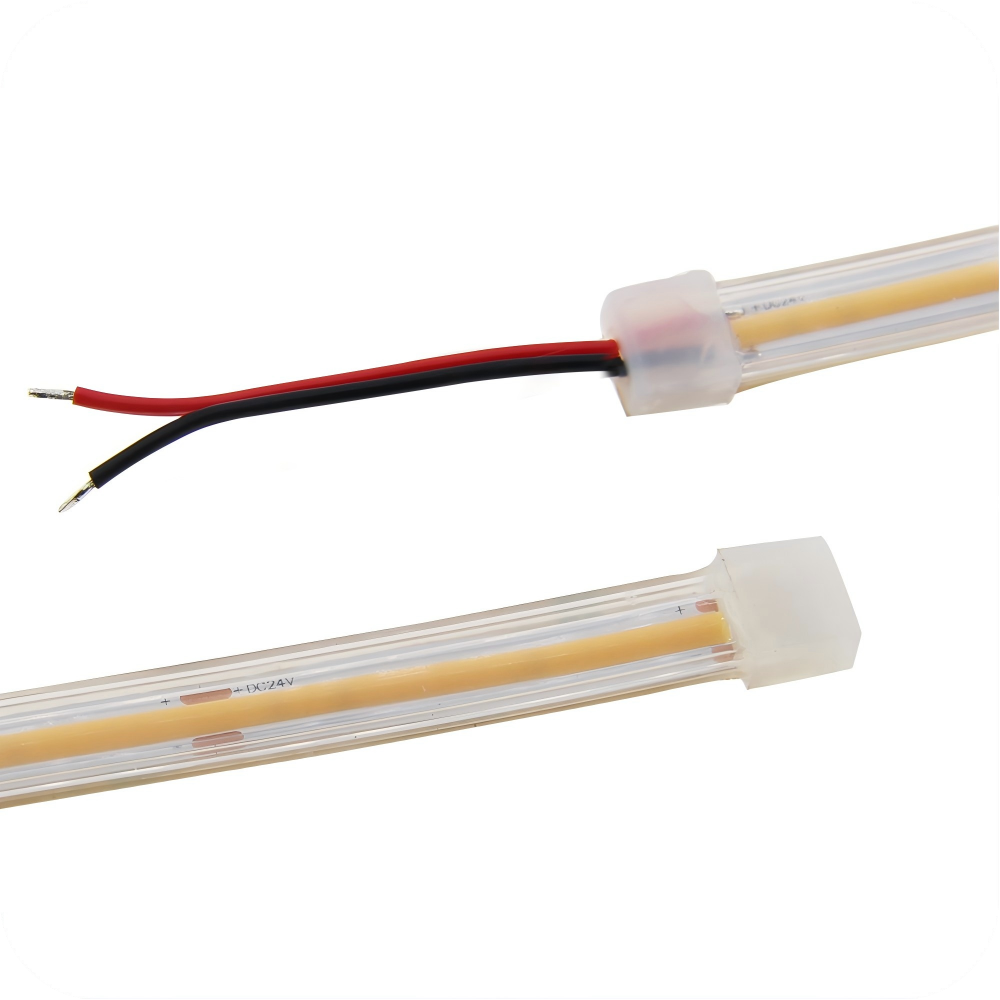
Silicone Sleeve Method
The LED strip is inserted into a tubular silicone sleeve and fully encased, then sealed at both ends with end caps to form a complete, integrated light strip.
Construction Feature: No adhesive inside the tube; the strip and sleeve are produced separately.
Key Advantages: Highly flexible — supports bending and twisting; easy to customize in length, color, and voltage.
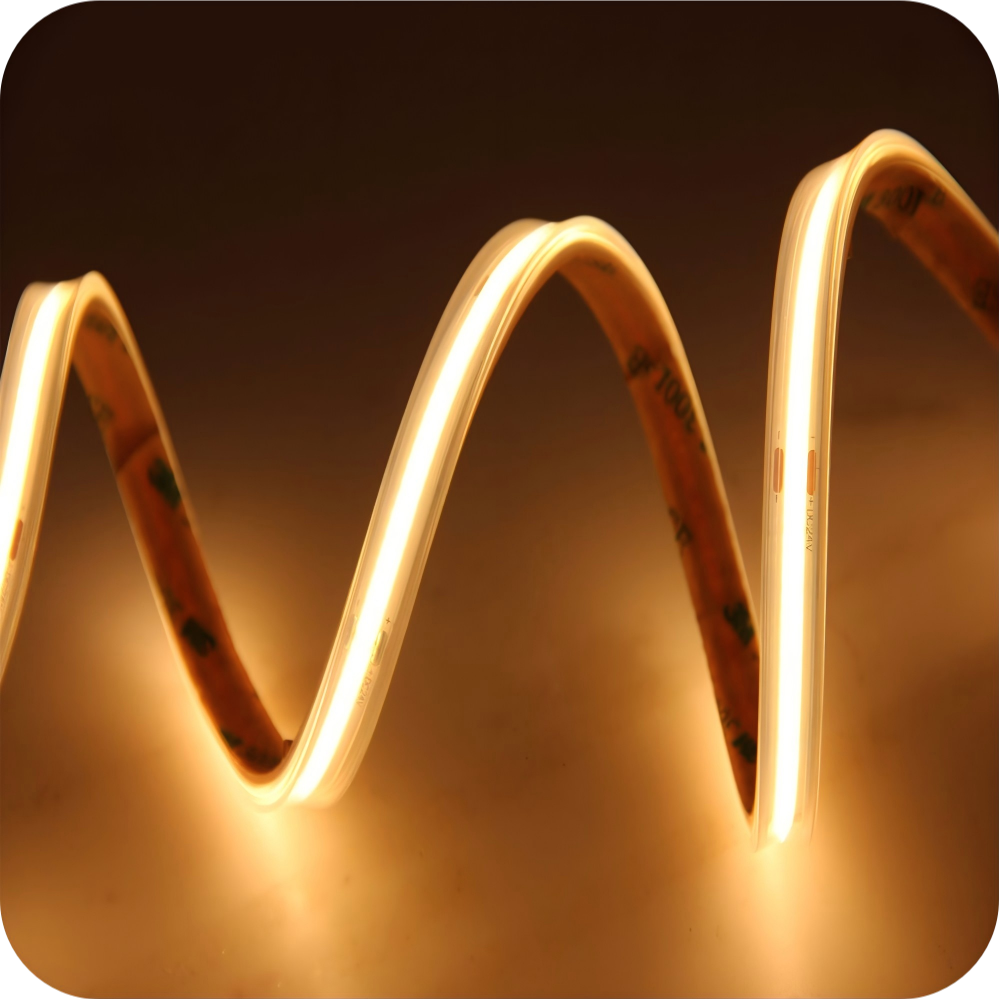
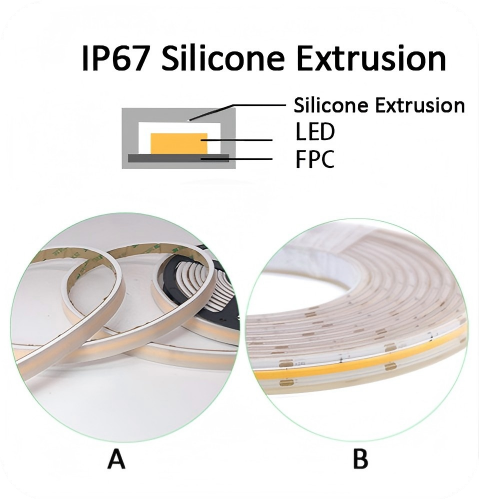
Extrusion Method
During the manufacturing process, the LED strip and silicone material are co-extruded and formed as a single integrated unit.
Construction Feature: More structurally stable waterproof construction with high consistency in appearance.
Extrusion is available in two variants — single-color extrusion and dual-color extrusion:
- Single-Color Extrusion: The base is typically white, with a clear surface that concentrates light on the emitting face and prevents light leakage.
- Dual-Color Extrusion: A two-shot molding process allows the base and emitting surface to be produced in different colors, enabling greater personalization and better integration with wall surfaces or decorative backgrounds.
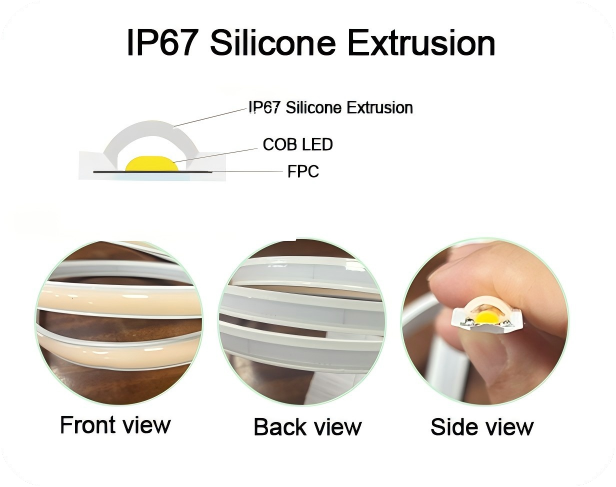
The hollow extrusion shown below is available in Style A, Style B, and an additional semi-arc profile — each with a distinct appearance to suit different project requirements.
IP68 Protection Level Types
IP68 represents the highest level of protection, designed for environments subject to short-term or repeated water submersion. It is available in two primary construction methods:
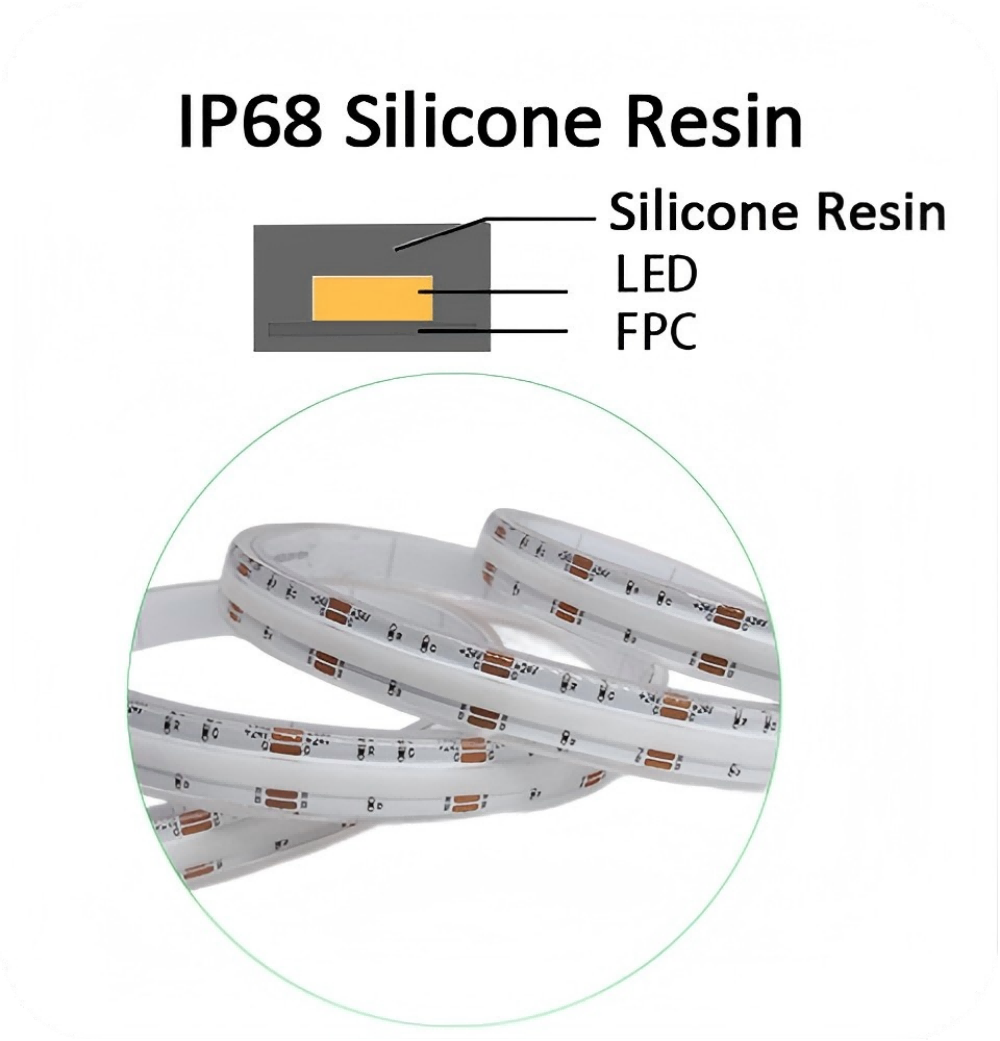
Silicone resin is injected into the tube, fully encapsulating the LED strip to create a completely sealed structure.
Feature: Exceptional waterproof and dust-tight performance; suitable for short-term underwater use.
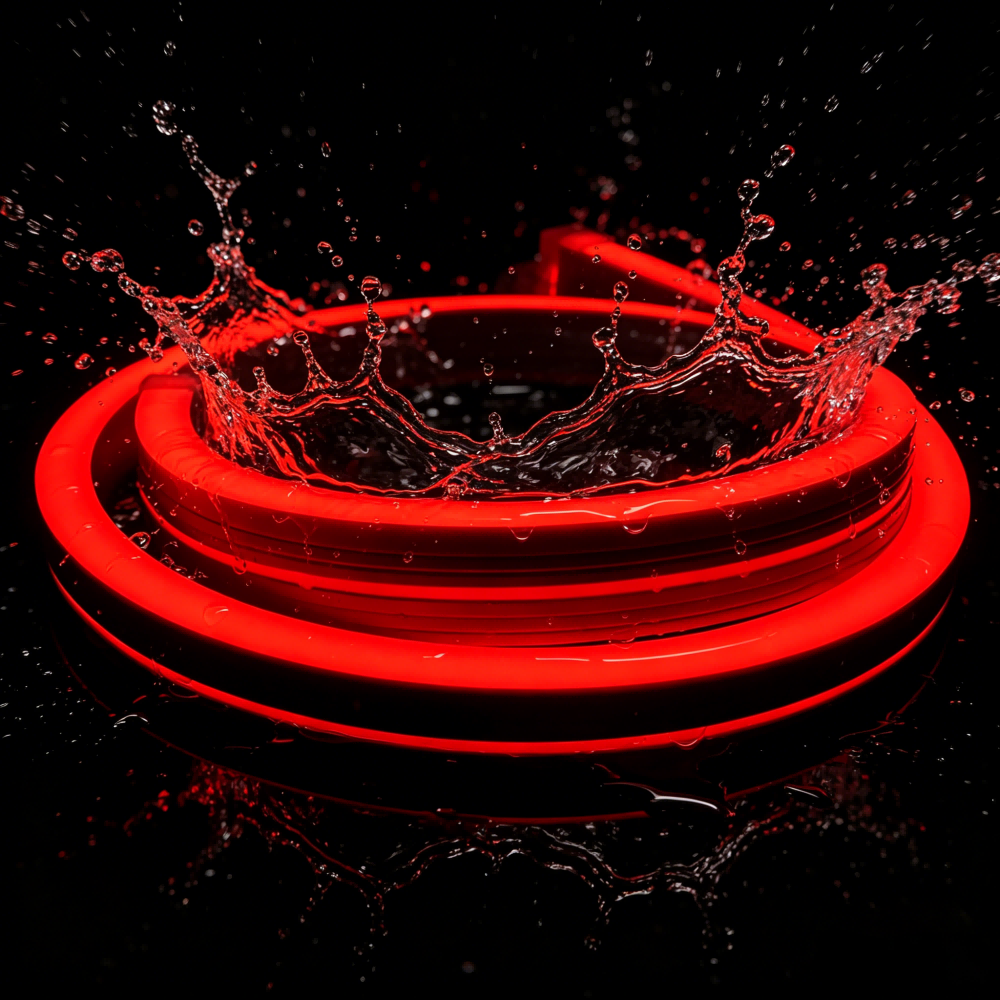
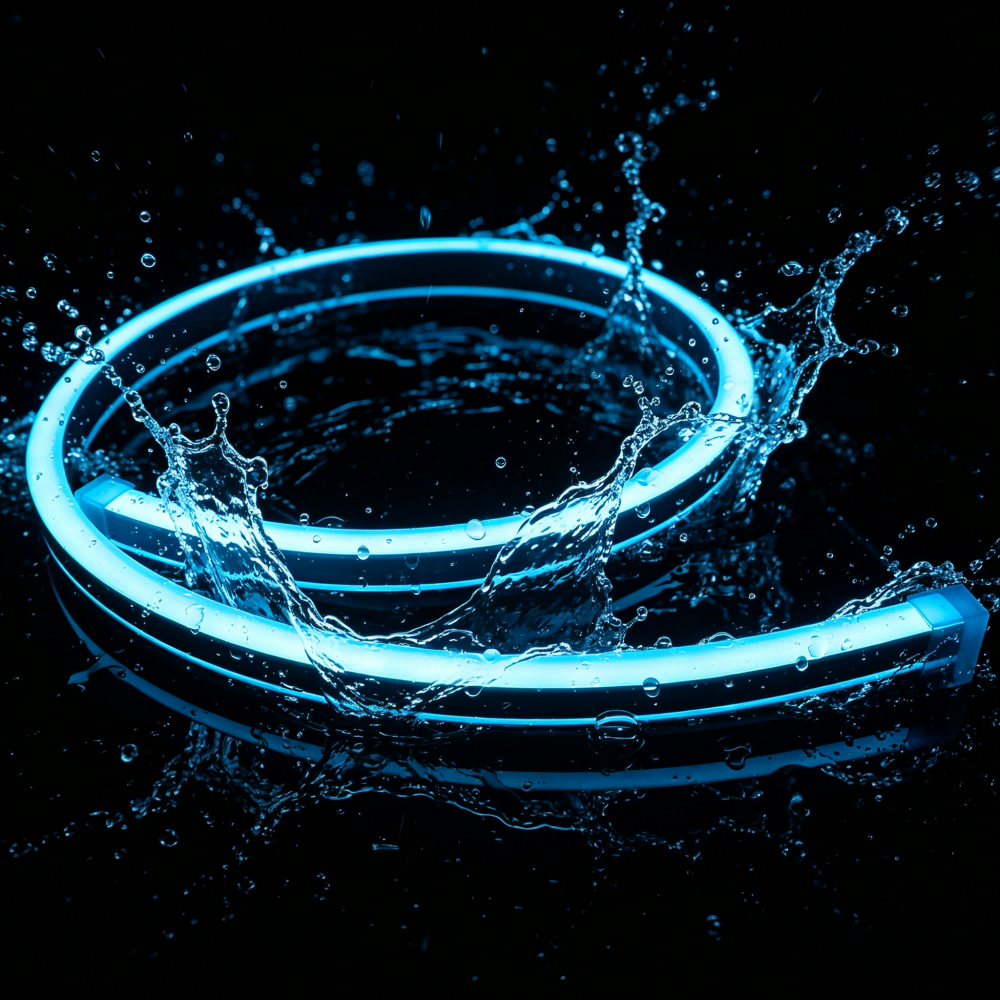
A fully integrated extrusion process based on neon-style construction, achieving IP68-level protection.
Advantage: High-level protection combined with soft, uniform light emission — balancing both decorative appeal and functional performance.
Which Types of LED Strip Lights Can Achieve IP20, IP65, IP67, and IP68 Ratings?
| The main led strips | IP rank: |
| Neon led strip | IP67, IP68 |
| Addressable led strip | IP20, IP65,IP67,IP68 |
| High CRI led strip | IP20, IP65,IP67,IP68 |
| Multi color led strip | IP20, IP65,IP67,IP68 |
| S Shape Bendable Series | IP20 |
| High-voltage LED strip lights | IP65/IP67 |
| COB LED Strip | IP20, IP65,IP67,IP68 |
| SCOB LED Strip | IP20, IP65,IP67,IP68 |
| CSP LED Strip | IP20, IP65,IP67,IP68 |
Selection Guidelines and Special RemindersSelection Guidelines and Special Reminders
- Match the environment: Prioritize IP rating selection based on the moisture level and water exposure of the installation environment. There is no need to default to the highest available rating — for example, IP20 is perfectly adequate for dry indoor environments, while specifying IP65 unnecessarily adds cost and can negatively impact heat dissipation.
- Consider the construction method: Even within the same IP rating, different manufacturing processes suit different installation scenarios. For instance, nano-coated IP65 strips are better suited for curved installations, while surface resin-coated IP65 strips are more appropriate for flat surface mounting. Selection should account for both installation method and aesthetic requirements.
- Pay attention to connection points: For IP67 and IP68 strip lights, connectors, end caps, and wiring joints require additional waterproofing treatment — such as waterproof connectors and sealant — to prevent water ingress at these vulnerable points.
- Duration of submersion: Even IP68-rated products are not designed for prolonged continuous immersion. The standard laboratory test involves submerging the strip in one meter of water for a minimum of 30 minutes without damage. Extended submersion — such as 30 days — may still result in water ingress and product failure.
- Water depth limitations: Laboratory testing is conducted at a depth of one meter only. If the installation environment exceeds this depth, hydrostatic pressure becomes a factor — the deeper the water, the greater the pressure, which may compromise the waterproof seal. In such cases, IP68 strips specifically rated for deep-water environments should be specified (consult the manufacturer for detailed parameters in advance).
- Water type considerations: Fresh water — such as in swimming pools and fountains — has relatively low corrosive impact on strip lights. Saltwater environments — such as docks and coastal installations — contain salt that corrodes metal components and sealants. For these applications, corrosion-resistant IP68 strips should be selected, such as those featuring stainless steel connectors and salt-resistant silicone encapsulation, to avoid premature failure.
- Adhesive and material selection: For the encapsulation adhesive used in IP65, IP67, and IP68 strip lights, silicone-based anti-yellowing adhesives with high and low temperature resistance are strongly recommended — such as the anti-yellowing adhesive used by LW Lighting. Standard adhesives should be avoided, as they are prone to yellowing and cracking over time, ultimately compromising waterproof integrity.
- Balancing heat dissipation and waterproofing: Higher IP ratings — such as IP68 solid silicone resin filling — can impede heat dissipation. For higher-wattage strip lights (e.g., 14.4W per meter or above), construction methods with superior thermal performance should be considered, such as IP68 neon extrusion, to prevent LED degradation and shortened service life caused by inadequate heat management.
REQUEST A QUOTE
To learn more about waterproof LED strip light selection, or to receive professional sourcing recommendations tailored to your specific project — whether it's led strip outdoor lights for landscape applications, water feature installations, or garage led strip lights and bathroom lighting — feel free to contact us. We will provide a customized solution and detailed quotation based on your installation environment, budget, and aesthetic requirements.

Recommended News