
TM1934 Pixel LED Strips: Redefining Modern Illumination with Intelligence and Flexibility
In recent years, the demand for sophisticated lighting atmospheres in modern entertainment settings has surged. Lighting has evolved into a pivotal tool for emotional expression and spatial ambiance. With the widespread adoption of intelligent control systems, LED strips can now be remotely adjusted via mobile devices and synchronized with music rhythms, further enhancing the immersive experience of any venue.
The TM1934 LED flexible strip has rapidly gained market attention due to its high cost-effectiveness and outstanding performance. It has become a premier choice for various lighting projects across multiple applications:
- Residential Applications: Ideal for cabinet lighting, staircase guidance, and accentuating feature walls to elevate the home environment. Specifically, they are popular as led strips for tv backlighting to reduce eye strain and enhance cinema-like vibes.
- Commercial Spaces: Frequently used in display cabinets, signage, and hotel ambiance to boost visual appeal. When choosing the power supply for large-scale installations, professionals often weigh the pros and cons of 12v vs 24v led strip configurations to ensure optimal brightness and minimal voltage drop.
- Outdoor Lighting: The waterproof versions are perfect for garden paths and architectural contouring. These exterior led strip solutions are designed to be durable and provide long-lasting effects against the elements.
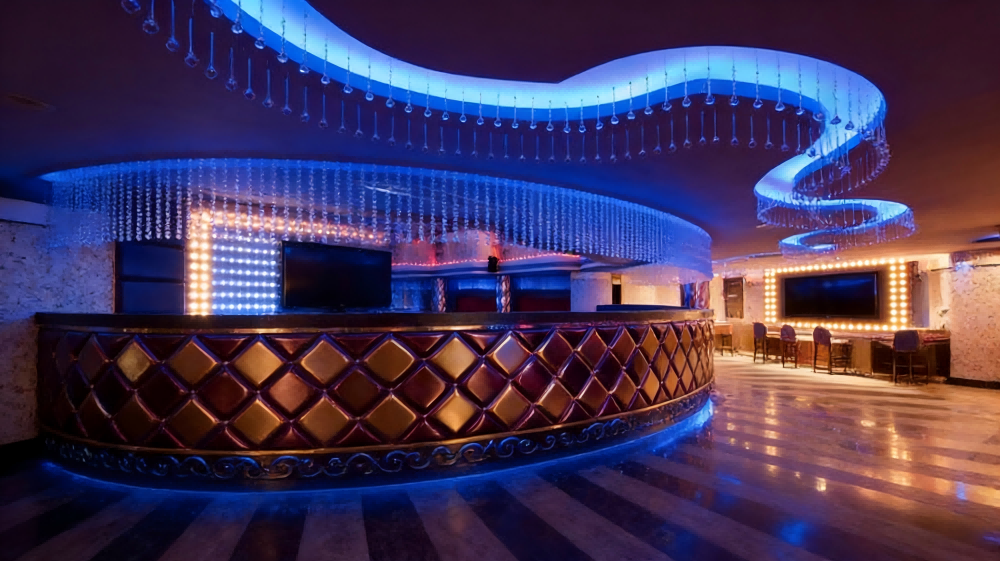
- Bars & Entertainment Venues: These addressable led strips allow for dynamic light effects and flexible design, creating a rich atmosphere that strengthens the emotional engagement of the space.
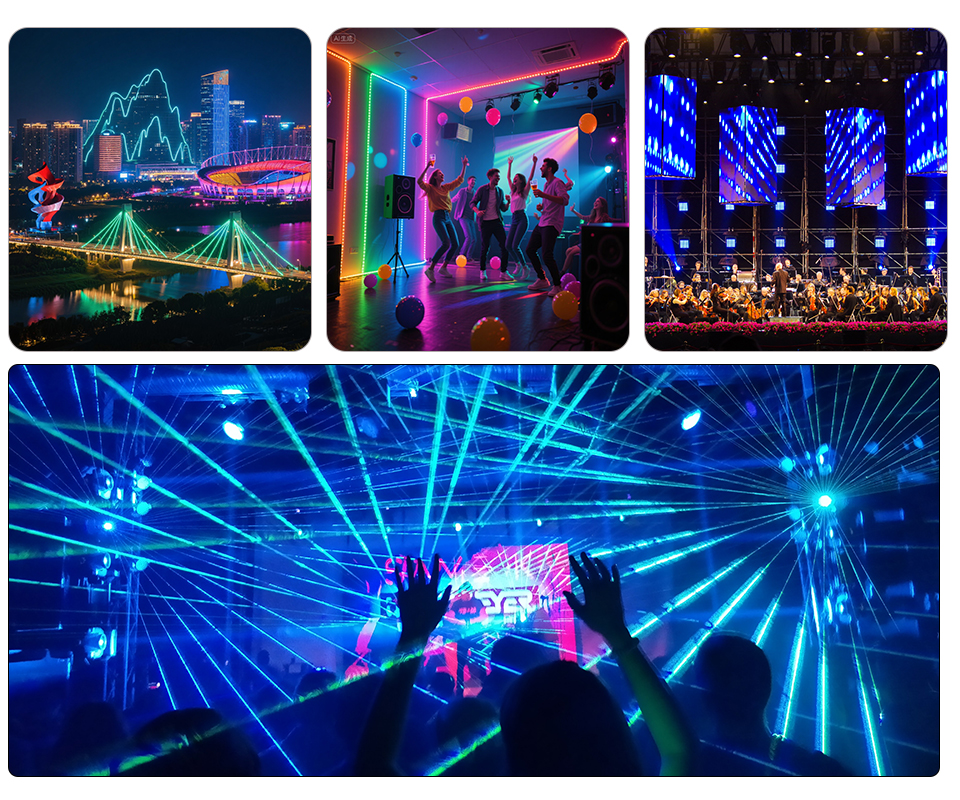
As technology advances, the TM1934 Pixel LED strip continues to evolve, integrating more smart functions and innovative effects to offer diverse options for lighting designers. In the following sections, we will provide a technical overview of the TM1934 Pixel LED strip, covering its core concepts, product features, and practical installation advice.
What is TM1934 Pixel Led Strip?
The TM1934 Pixel LED strip is a high-performance addressable led strips solution, featuring external TM1934 ICs and 5050 RGB LED chips soldered onto a flexible PCB. The primary function of the TM1934 IC is to precisely control the color and brightness of each RGB (Red, Green, Blue) segment on the LED strip, enabling a vast spectrum of color variations and sophisticated dynamic effects. This design allows the strip to support complex lighting control protocols, making it an ideal choice for lighting applications that require meticulous adjustment of luminosity and chromaticity.
Internal vs. External IC: What is the Difference?
In the world of smart lighting, internal and external ICs represent two distinct design approaches for integrated circuits. The primary difference lies in the placement of the control chip and the distribution of its functions.
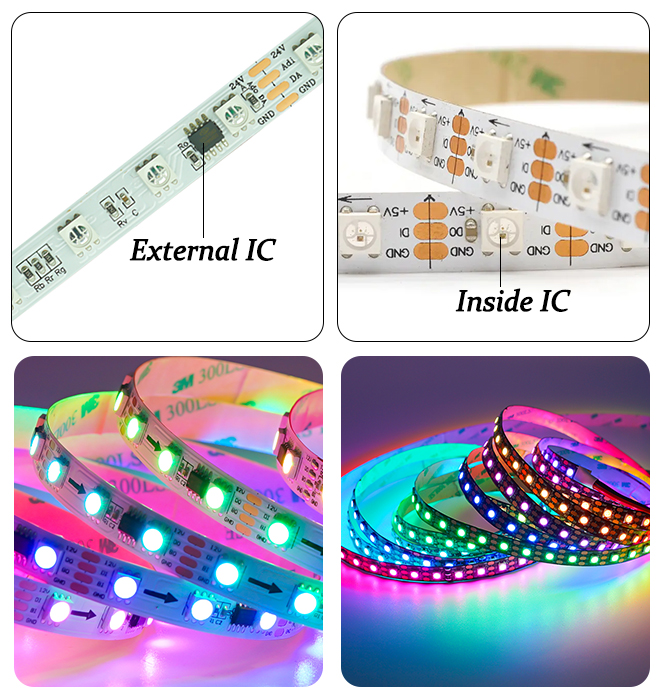
Internal IC (Built-in IC)
An internal IC means the control chip is embedded directly inside the LED bead, creating a unified package. A classic example is the WS2812B strip, where the LED and the control chip are integrated. This design allows for independent control of every single LED while simplifying wiring and installation. It is an excellent choice for DIY projects, such as creating custom led strips for tv backlighting.
Common Internal IC Models: WS2812B, WS2813B, WS2815B, SK6812, SK6813, SK9822, P943, P9423F, P9411, APA102, APA104, GS8812, HD107S, HD108, etc.
External IC
External IC design keeps the control chip separate from the LED beads. Each segment of LEDs is governed by a standalone chip, with data lines connecting multiple segments to ensure precise color and brightness adjustments. This architecture is common in professional projects. For instance, in a 12v vs 24v led strip comparison, the 12V version typically features one IC controlling three LEDs, while the 24V version uses one IC for six LEDs to manage power efficiency.
Because external IC strips often come in longer runs, it is crucial to use a high-quality adhesive for led strip during installation to ensure the strip remains securely mounted over time.
Common External IC Models: WS2801, WS2821, WS2811, LPD8806, TM1803, TM1804, DMX512, UCS512, UCS1903, TM1934, WS2814, WS2818B, UCSDMX512B, etc.
Product Features
High-Performance Emitting Chips: Engineered with a 9*9 mil chip design, these strips are built for high brightness and stability. They ensure superior luminous efficacy and consistent performance even under high loads and extended operating hours, perfectly meeting diverse and demanding lighting requirements.
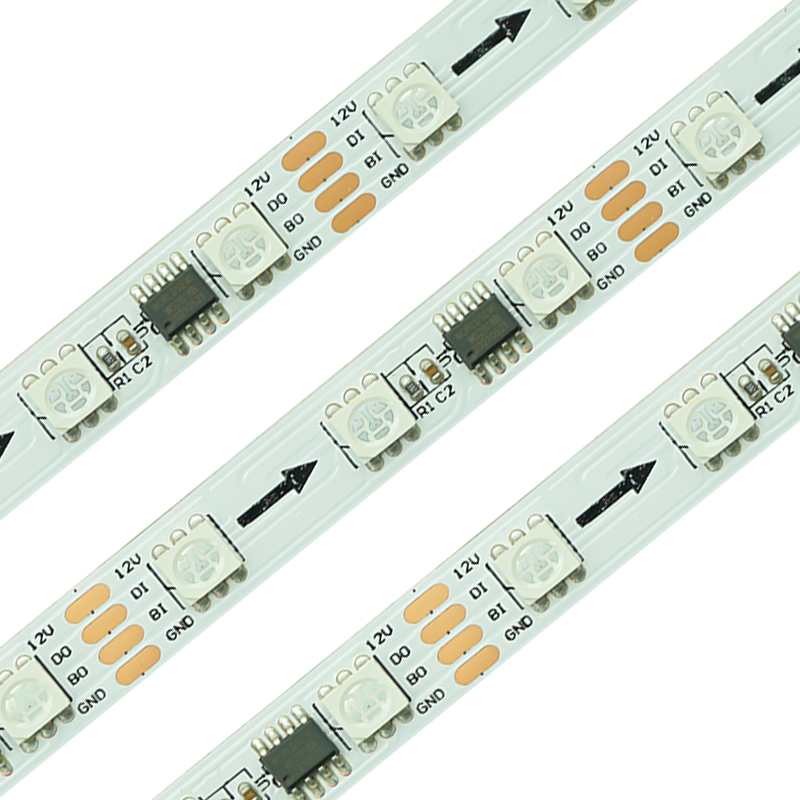
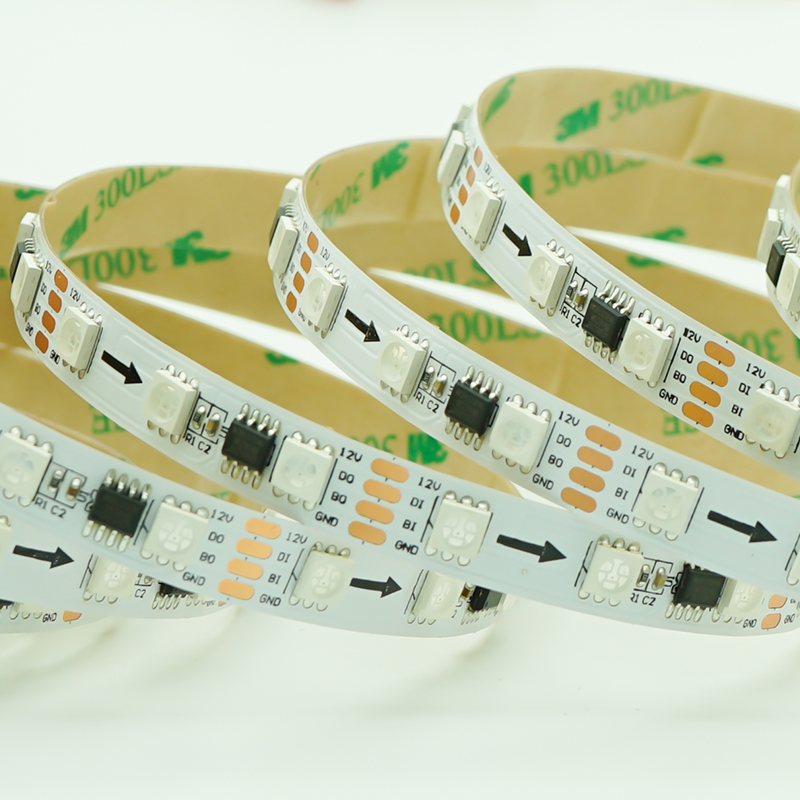
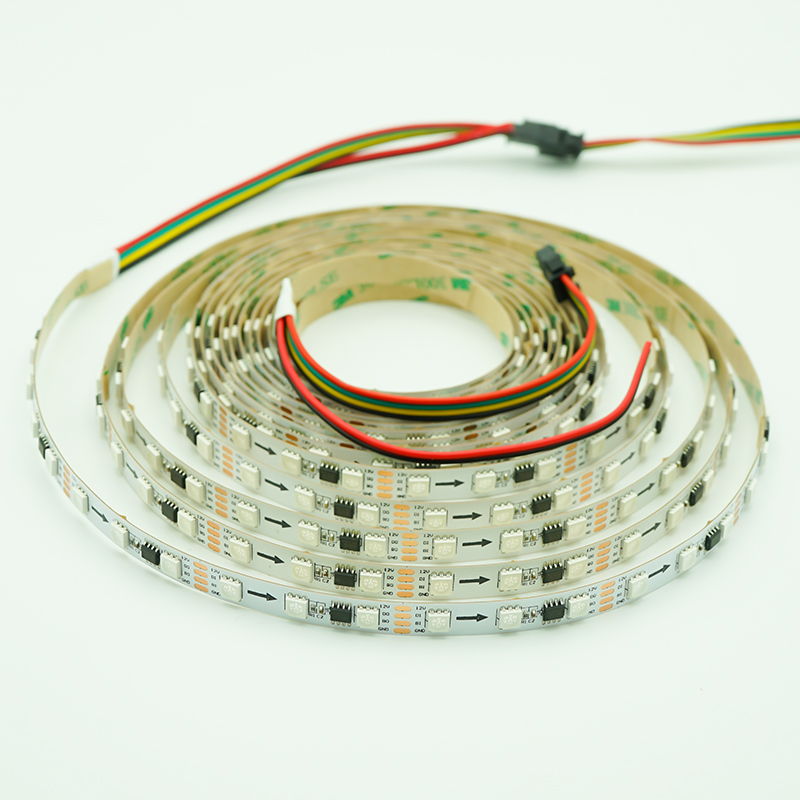
Intelligent "Breakpoint Resume" Technology: The TM1934 LED strip features an innovative signal break transmission mechanism. If a single pixel fails, the rest of the addressable led strips will continue to operate stably, preventing the common "chain reaction" of failures. This technology significantly reduces maintenance difficulty and operational costs, providing customers with peace of mind and long-term reliability.
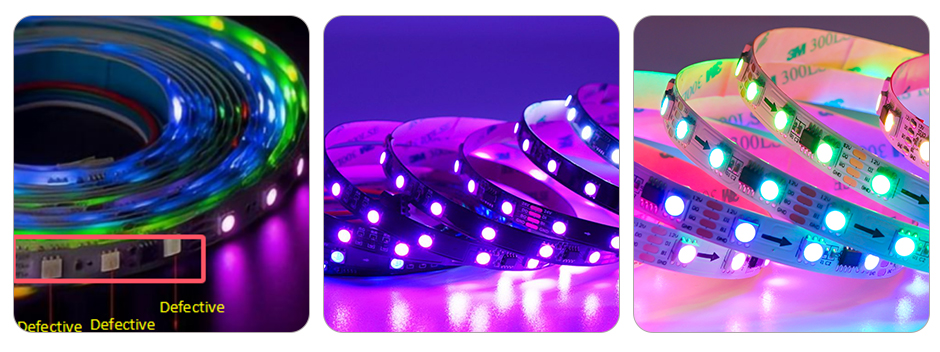
Long-Reach and Efficient Power Supply: The TM1934 boasts exceptional power management capabilities. It maintains stable light output over distances of up to 10 meters, with almost imperceptible voltage fluctuations. When planning large installations, understanding the technical nuances of 12v vs 24v led strip setups is essential to maximize this efficiency over long runs.
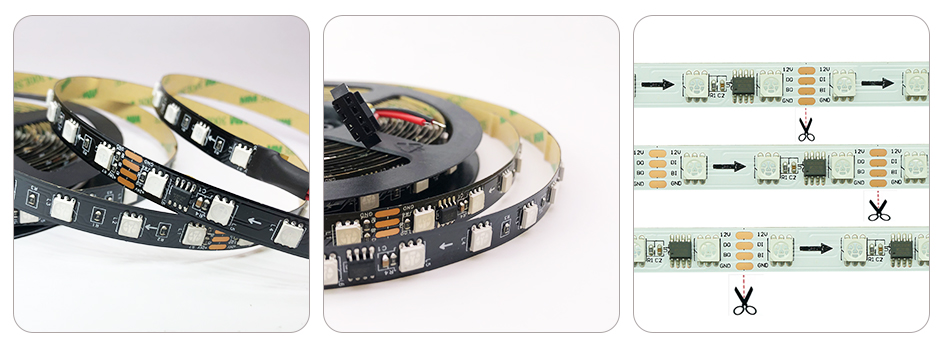
Flexible Design and Easy Installation: Constructed with a flexible PCB, the TM1934 strip offers extreme bendability and trimmability. Whether it needs to be curved around corners, cut to size, or spliced for custom lengths, it ensures a perfect fit for various spaces and shapes. To ensure a professional finish, we recommend using high-quality adhesive for led strip to maintain a secure bond on different surfaces, including architectural contours or as exterior led strip for outdoor accents.
Product Specification
Below is LW Lighting’s product specification
| Part No: | Input Voltage | IC type | LED Quantity | IC QTY | PCB width: | Color | Max Power | Min Cut | IP Grade | Control signal: |
| LW-D0023 | 12V | TM1934 | 30leds/m | 10 | 10mm | Addressable RGB | 9W/M | 100mm | IP20 | SPI |
| LW-D0024 | 12V | TM1934 | 60leds/m | 20 | 10mm | Addressable RGB | 18W/M | 50mm | IP20 | SPI |
| LW-D0025 | 24V | TM1934 | 48leds/m | 8 | 10mm | Addressable RGB | 14.4W/M | 125mm | IP20 | SPI |
| LW-D0026 | 24V | TM1934 | 60leds/m | 10 | 10mm | Addressable RGB | 18W/M | 50mm | IP20 | SPI |
LW Lighting provides a comprehensive range of customization options, from packaging design and label printing to PCB logo branding, ensuring every project meets its unique identity and technical requirements.
- Packaging & Branding: Custom packaging, user manuals, specialized labeling, and silk-screened logos on the PCB.
- Performance Tailoring: We can adjust parameters such as LED density, PCB width, waterproof ratings, color temperatures, and Color Rendering Index (CRI) based on specific project needs. Whether you are designing high-end led strips for tv or large-scale commercial displays, we tailor the solution to you.
Accessories
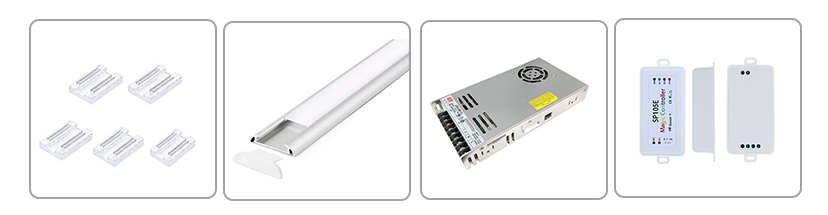
LW Lighting provides a range of accessories required for installing LED strips, including connectors, aluminum profiles, power supplies, and controllers. We also offer professional adhesive for led strip and other mounting components.
Dimensions

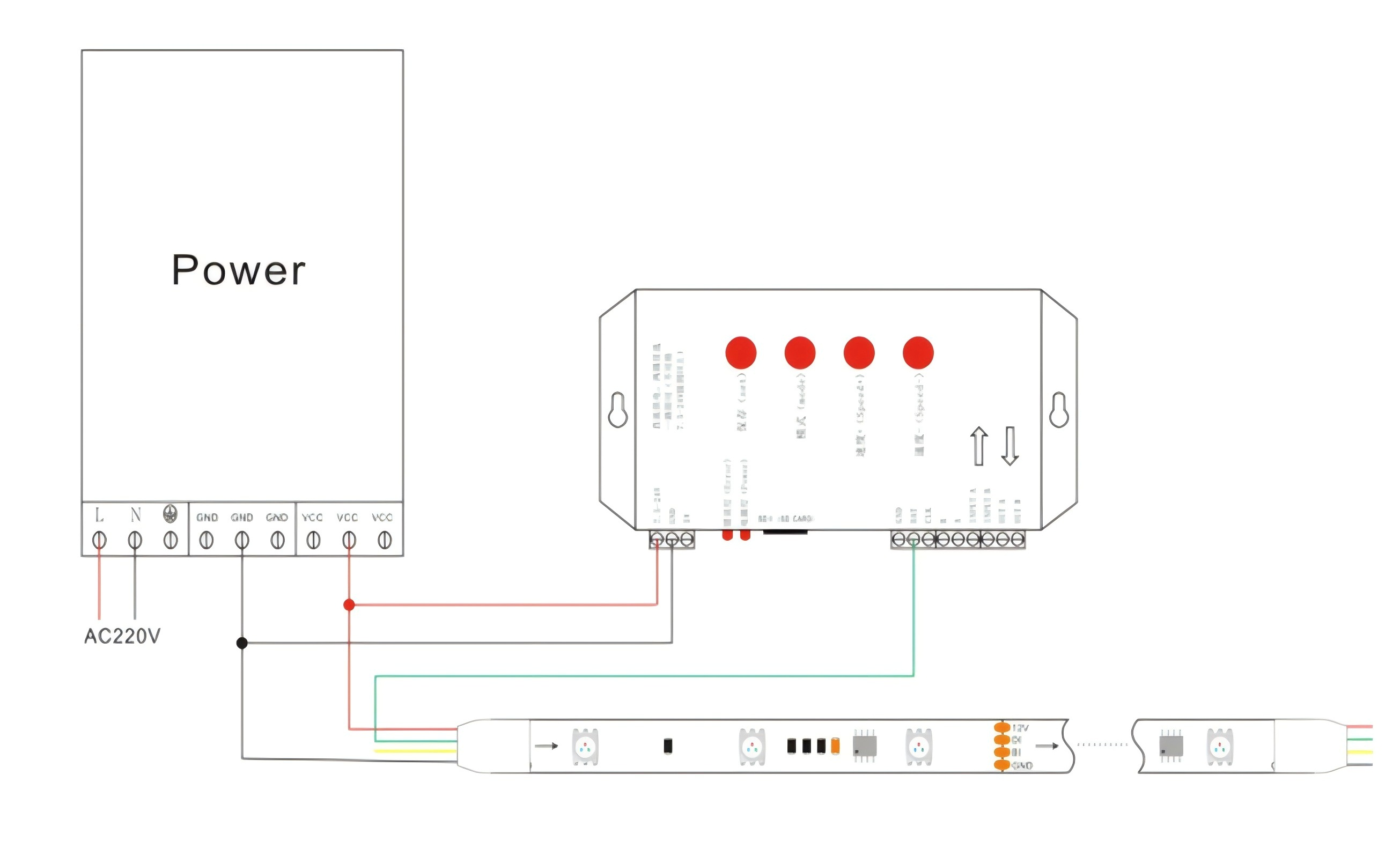
Connect Drawing
Basic Functions of the Four Wires in addressable led strips
When installing digital LED strips, many users find four wires and are unsure of their individual functions. Understanding their roles is essential for correctly connecting the controller and ensuring the stable operation of the light strip.
- Red Wire (VCC): Positive power input, providing the power supply for the strip (essential for both 12v vs 24v led strip setups).
- White or Black Wire (GND): Negative power/Ground.
- Green Wire (DAT / DO / DI): Data line, used to transmit the strip control signals.
- Blue Wire (CLK): Clock line, used for signal synchronization (only present on certain models).
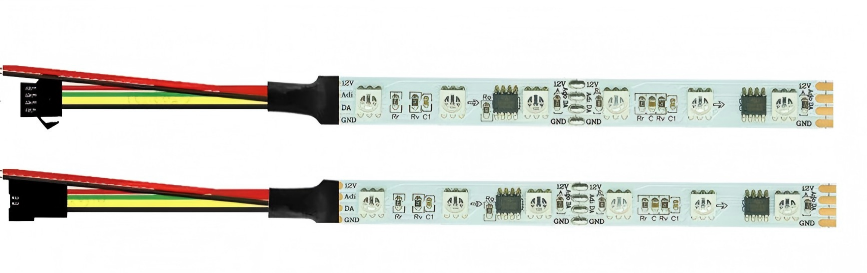
Special Note on "Breakpoint Resume" LED Strips
Some addressable led strips support "breakpoint resume" technology. These strips feature two data lines, both of which are connected to the Data interface of the controller. If one data line is damaged, the other continues to transmit the signal, ensuring the strip remains operational.
This design significantly reduces maintenance costs and enhances the overall stability of the exterior led strip or indoor installation.
REQUEST A QUOTE
As global consumer demand for personalized and interactive lighting continues to grow, future LED strips will be more than just illumination tools; they will become an integral part of the smart home, commercial, and entertainment experience.
Contact us to learn how the TM1934 helps clients across various sectors achieve efficient and intelligent lighting solutions. We provide exclusive customization services and can even offer free samples of our addressable led strips, allowing you to fully evaluate the actual performance of our products—whether you are comparing a 12v vs 24v led strip or testing durability for an exterior led strip project.

60 lm/W vs. 100 lm/W: What Is the Technical Reality Behind Cut-Free COB LED Strip Lights?
When competitors offer higher luminous efficacy at a lower price, how do we determine whether this represents genuine technological progress or simply a more attractive set of specifications?
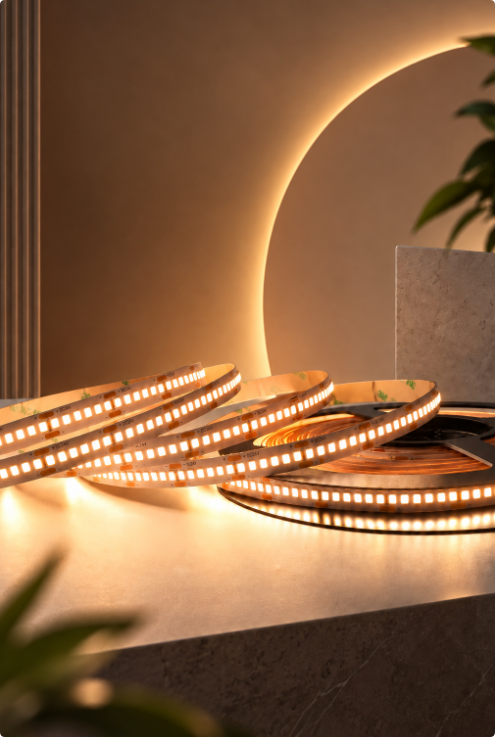
How Long Do LED Light Strips Last? Understanding the 50,000-Hour Rating, Early Failure Causes, and How to Extend Lifespan
How long do LED strips last in real-world use? Learn what the 50,000-hour rating really means, what affects LED strip lifespan, and how to help your lighting last longer.

ES32 PIR Sensor Stair Light Controller: Smarter, Smoother and More Efficient Stair Lighting
See how the ES32 stair light controller uses PIR motion sensors and LED strips to create smooth, automatic lighting for modern staircases.
Recommended News