
LED Strips for Cars: A Guide to Automotive Ambient Lighting and Installation
Why Are LED Strips Becoming a New Trend in Car Customization?
In recent years, automotive ambient lighting and LED customization have become increasingly popular in the car modification market. More and more drivers are using lighting to transform the interior atmosphere or create a distinctive appearance at night.
Compared with traditional automotive lighting fixtures, LED strips offer several advantages, including a compact size, flexible installation, low power consumption, and a wide range of colors.
They can be installed under dashboards, inside door panels, beneath seats, around footwells, and even inside engine compartments.
The development of COB flexible LED strips, RGB strips, addressable running‑light strips, and Bluetooth or APP‑controlled lighting has transformed automotive LED lighting from simple illumination into an important part of vehicle customization.
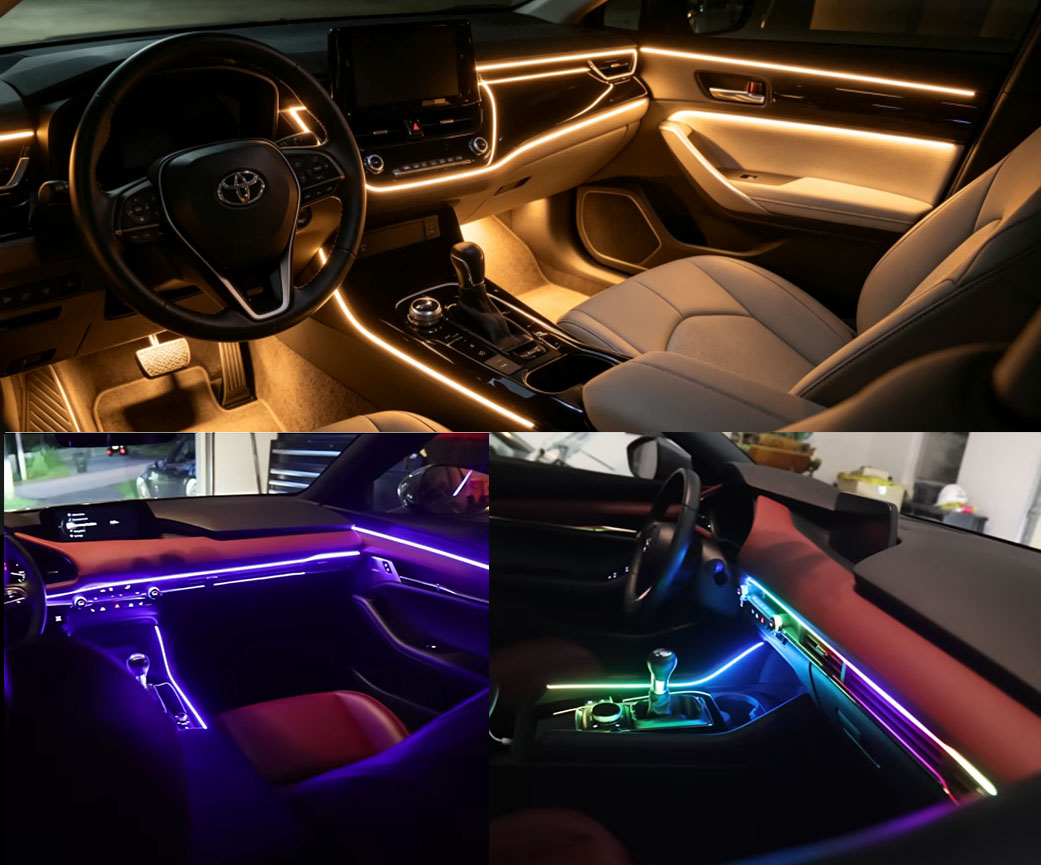
For DIY enthusiasts, choosing the right led strips for cars makes it possible to create a high‑tech, luxurious, or sporty lighting effect without a complicated installation process.
Why Are LED Strips Ideal for Car Customization?
LED strips are popular among car enthusiasts because they can provide stable and uniform illumination even in limited installation spaces.
First, LED strips generally offer high luminous efficiency and low power consumption, making them suitable for automotive applications where both power and space are important considerations.
Second, flexible LED strips can be bent around dashboards, door panels, center consoles, and other interior surfaces, allowing them to adapt to different vehicle designs.
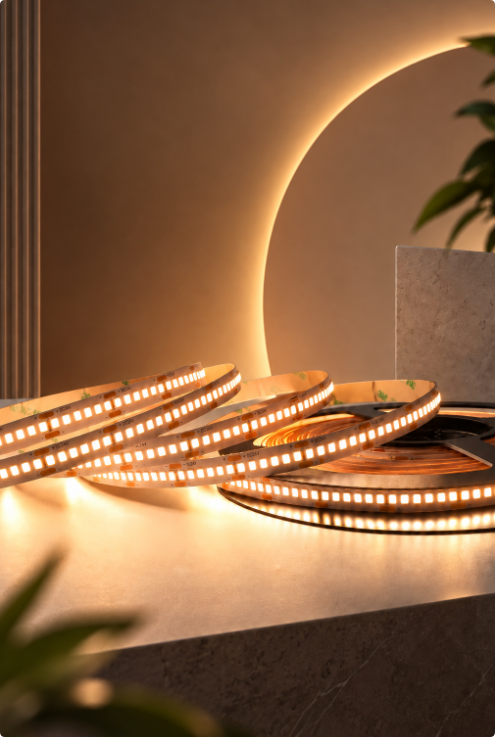
For a more premium appearance, COB LED strips provide a continuous and uniform line of light with significantly fewer visible hotspots than conventional SMD LED strips.
RGB LED strips offer even more flexibility by allowing users to change colors according to different situations. Blue can create a high‑tech appearance, red can enhance a sporty atmosphere, while warm white can provide a more luxurious and comfortable interior.
Where Can LED Strips Be Used in a Car?
1. Dashboard and Center Console
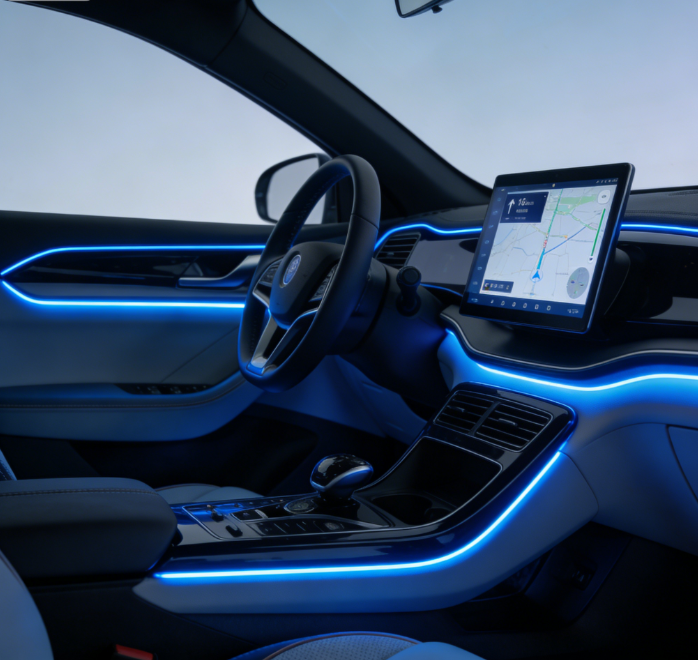
The dashboard and center console are among the most popular locations for automotive ambient lighting.
If you want a smooth and continuous lighting effect, Side-emitting COB flexible LED strips are an excellent option. For narrow spaces or concealed installations, a thin LED strip for car can be a better choice.
Slim LED strips can be hidden behind trim panels, inside gaps, or along decorative elements, creating a clean linear glow when illuminated.
2. Door Panels and Footwell Lighting
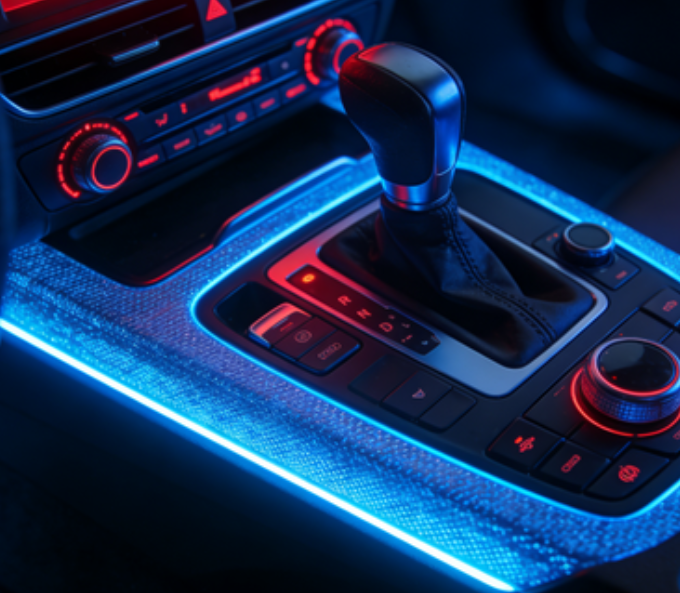
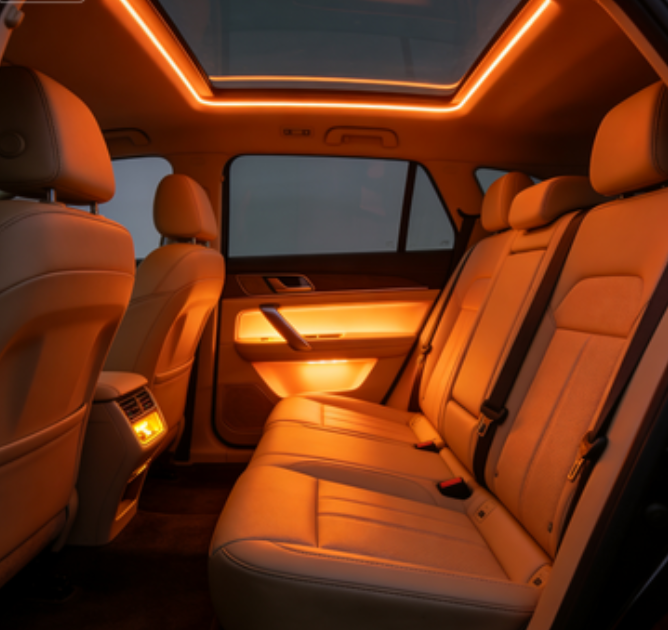
Door panels and footwells are also excellent locations for LED strip lighting.
Footwell lighting provides subtle illumination at night while enhancing the overall interior atmosphere. Door‑panel lighting can follow the existing interior lines and create a more integrated lighting design.
With RGB LED strips, users can adjust colors, brightness, and dynamic lighting modes through a smartphone APP.
3. Under‑Hood Lighting
For automotive enthusiasts, under‑hood lighting is another interesting application.
An under hood LED light strip installed around the engine compartment or beneath the hood can provide useful illumination when checking or servicing a vehicle at night while also creating a distinctive visual effect.
Because the engine compartment can be exposed to heat, dust, moisture, and vibration, it is important to consider waterproof protection, temperature resistance, mechanical protection, and installation methods when selecting an LED strip.
How to Choose the Right LED Strip for Your Car?
1. COB vs. SMD: Choosing the Right Light Source
One of the biggest advantages of COB LED strips is their continuous light output. Because the LED chips are densely arranged, they provide a smoother appearance with fewer visible dots, making them ideal for dashboards, door panels, and other visible locations.
SMD 2835 and 5050 LED strips offer mature product options, high brightness, and a wide range of RGB, RGBW, and RGBCCT configurations.
If your priority is a smooth linear effect with minimal visible LED points, COB is an excellent choice. If you need high brightness, RGB colors, or advanced dynamic effects, SMD or addressable LED strips may be more suitable.
2. Choosing the Right Voltage
The power supply is one of the most important considerations when installing automotive LED strips.
12V LED strip lights for cars are a common choice because many vehicle electrical systems are designed around a 12V power supply.
Some products can also be powered through USB, such as 5V LED strips. USB‑powered products are convenient for DIY users, while 12V products are often more suitable for professional installations connected to the vehicle's electrical system.
Whatever product you choose, always confirm that the LED strip's rated voltage matches the vehicle's power system and use appropriate fuses, connectors, and power conversion equipment where required.
RGB Car LED Strip Lights: Creating a Personalized Interior
If you want more dynamic lighting effects, an RGB car LED strip light is an excellent option.
Unlike single‑color LED strips, RGB strips allow users to switch between multiple colors through a controller or smartphone APP.
Advanced RGB LED strips can also support music synchronization, chasing effects, fading, breathing effects, and other dynamic modes, allowing the lighting to respond to music or the driving atmosphere.
However, brightness should be carefully controlled when using RGB lighting inside a vehicle. Extremely bright or rapidly changing lighting may distract the driver, so dimmable products are recommended. Avoid positioning bright lighting directly within the driver's line of sight.

Step‑by‑Step Guide to Installing LED Strips in a Car
Step 1: Plan the Installation Location
Start by deciding where the LED strip will be installed and measure the required length.
Common locations include underneath the dashboard, door panels, footwells, center console, beneath seats, and the engine compartment.
Before installation, consider the cable routing, power source, and controller location.

Step 2: Clean the Installation Surface
Clean the installation surface to remove dust, grease, and other contaminants. Make sure the surface is dry and reasonably smooth.
If adhesive backing is used, proper surface preparation can significantly improve adhesion and reduce the risk of the strip coming loose due to long‑term vehicle vibration.

Step 3: Measure and Cut the LED Strip
Measure the required length and cut the LED strip if necessary.
If the product is designed to be cut, always follow the designated cutting marks. Cutting the strip at an incorrect location may cause part of the LED strip to stop working.


Step 4: Secure the Strip and Route the Wires
Remove the protective film from the adhesive backing and carefully attach the LED strip along the planned route.
For areas exposed to vibration, heat, or moisture, additional mechanical fixing methods such as clips, aluminum profiles, or mounting accessories may be useful.
Keep wiring as neat and concealed as possible, and route cables away from hot components, moving parts, and areas where they may be damaged by friction.

Step 5: Connect the Power and Test the System
Before connecting the power, make sure the LED strip's rated voltage matches the power supply.
After connecting the system, test the brightness, colors, control functions, and overall operation. Once everything works correctly, complete the final installation and cable management.

Automotive LED Strip Safety Considerations
Automotive LED modification should focus not only on appearance but also on safety.
Do not position high‑brightness lighting directly within the driver's line of sight, and avoid placing lights where they can create distracting reflections on the windshield.
When connecting an LED strip to the vehicle's electrical system, use appropriate fusing and wiring methods, and ensure that all electrical connections are properly insulated.
For demanding environments such as engine compartments, select products with suitable waterproof, dust‑resistant, and temperature‑resistant protection.
It is also recommended to choose LED strips with stable performance, clearly defined specifications, and appropriate testing for the intended application.
Keep in mind that CE and RoHS compliance do not automatically mean that a product is "automotive‑grade." For professional automotive projects, always check the specific automotive electrical and safety standards required for the target market and application.
Conclusion: Create Your Own Automotive Style with LED Strips
From dashboard, door‑panel, and footwell lighting to under‑hood illumination, LED strips offer countless possibilities for automotive customization.
By choosing the right led strips for cars and combining them with the appropriate voltage, LED technology, control method, and installation technique, you can create a high‑tech, luxurious, or sporty appearance.
For users who want a smooth linear glow, COB LED strips are an excellent choice. For those looking for multiple colors and dynamic effects, RGB or addressable LED strips offer greater flexibility. For narrow installation spaces, a thin LED strip for car can provide a more discreet solution.
When connecting directly to a vehicle's 12V electrical system, 12V LED strip lights for cars are a practical option. For demanding areas such as engine compartments, waterproofing, temperature resistance, and long‑term reliability should be key considerations.
Whether you are an automotive lighting installer, car modification shop, lighting brand, or DIY enthusiast, selecting a reliable and flexible LED strip designed for the application is an important step toward creating a high‑quality automotive lighting system.
If you are looking for LED strip solutions for automotive interiors, footwells, door panels, or engine compartments, contact us for product recommendations or request a sample.
LED Strips for Under Kitchen Cabinets: Ideas, Tips and How to Choose
Discover practical LED strip lighting ideas for kitchen cabinets and learn how to choose the right brightness, color temperature, and installation method.
How to Choose the Right Color Temperature for LED Strips: A Professional Guide
Learn how LED strip light color temperature affects the look and feel of a space. This guide explains warm, neutral, and cool white options and helps you choose the right color temperature for different applications.
Recommended News
