After the LED Strip Burned Out, a Qatar Contractor Finally Understood the System
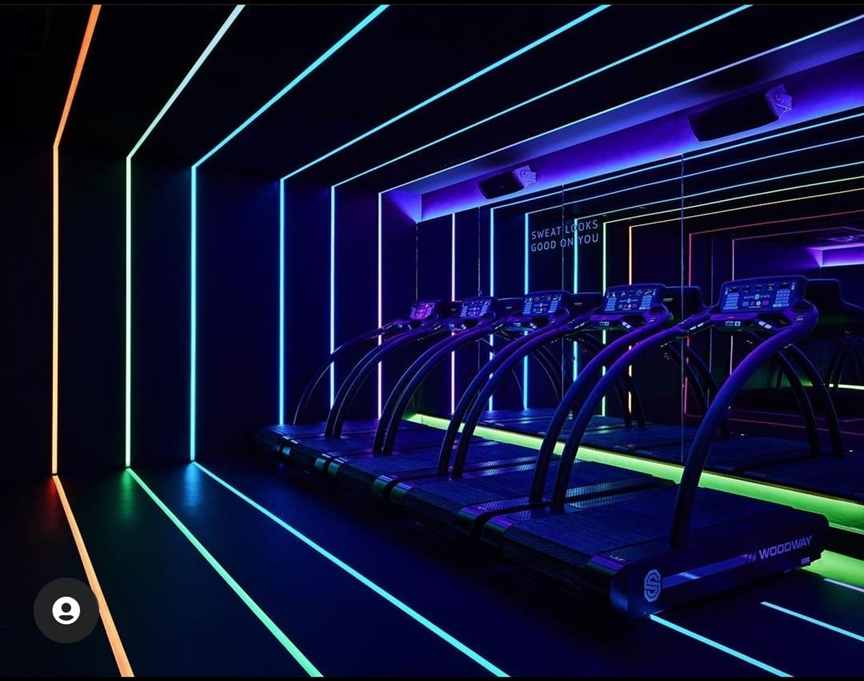
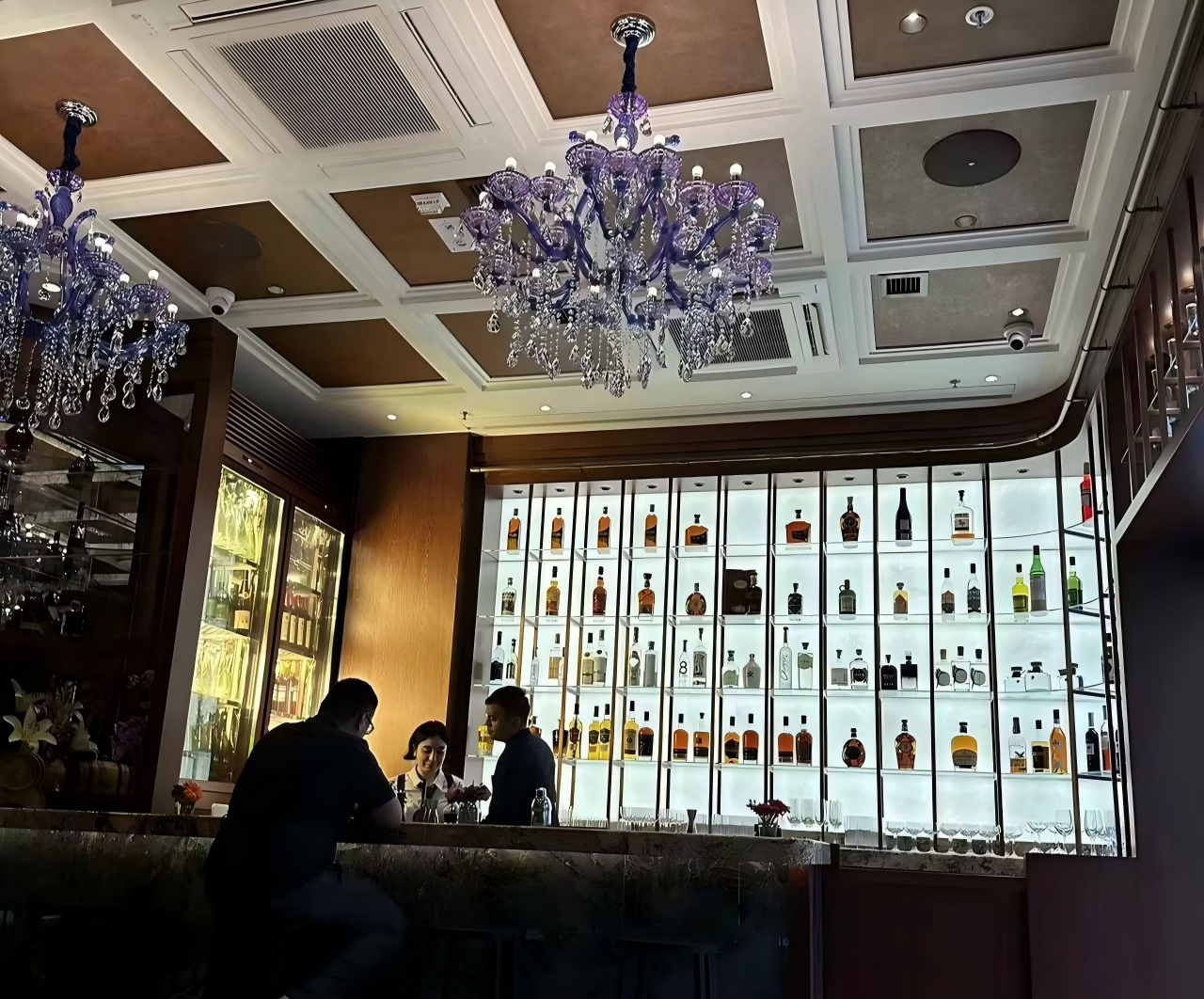
In Qatar, interior lighting and renovation projects tend to share three defining characteristics: large spatial scale, strong continuity requirements, and an exceptionally high sensitivity to visual quality.
The interior contractor in this case was working on exactly that kind of project — public area lighting combined with custom linear structures — with a clear mandate: clean, even illumination with zero granularity, while remaining flexible enough to follow the natural flow of interior lines.
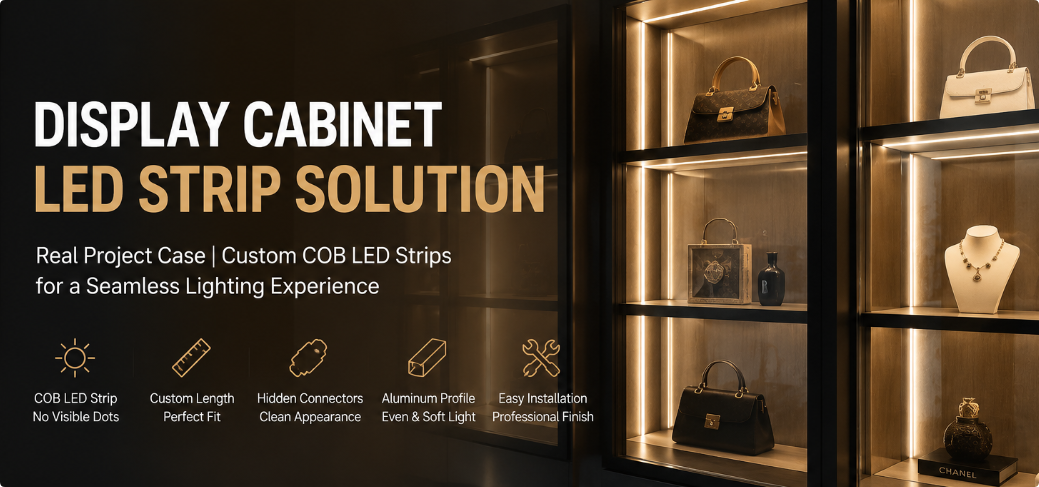
At the early planning stage, they naturally gravitated toward COB LED Strip lighting for the solution:
High brightness output;Continuous LED light strip performance — no visible hotspots or dot patterns;CRI ≥ 90, delivering truer, more natural color rendering within the space; Flexible construction, compatible with curved and irregular installation paths; From a pure performance standpoint, this was a perfectly sound choice.
During the installation phase, the contractor was running a SP 668E controller paired with a 10-meter Addressable RGB COB LED Strip, aiming to cover an entire linear zone in a single run. Initially, everything appeared to be working fine.
But after a period of continuous operation, the problem surfaced: Both the LED strip and the controller burned out.
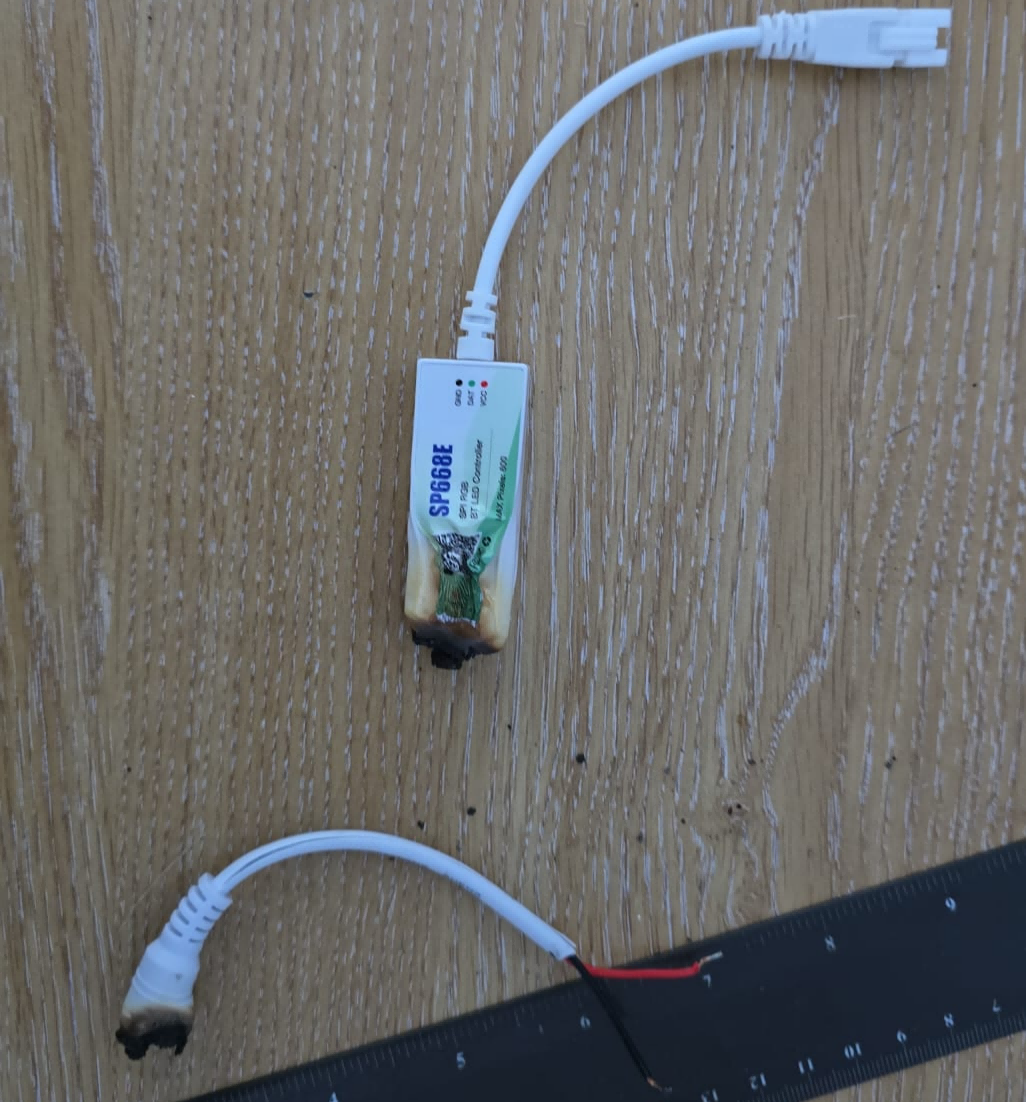
This wasn't an immediate failure on first power-up — it was a fault that developed after the system had already been running for some time.
And that's precisely what made the client stop and think: this might not be a simple issue.
So he came to us for consultation, bringing along the on-site usage details, the strip specifications, and the controller model number.
The first question we focused on was straightforward: How are you powering that 10-meter strip?
In the course of our conversation, one detail immediately caught our attention:
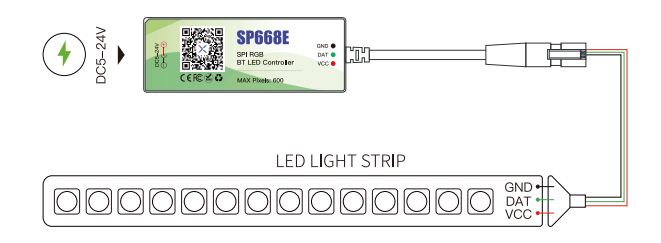
This particular controller supplies power to the strip through a single DC power cable.
And in many real-world installation environments, that single DC cable is precisely the kind of invisible bottleneck that tends to get overlooked.
Run the Numbers, and the Problem Becomes Clear
The strip the client was using carried the following specs: DC 24V, 16W per meter.
The DC power cable connected to the controller — under compliant, stable, and safe installation conditions (it's worth noting that many non-compliant cables exist on the market) — should not carry more than 4A in sustained engineering use.
We walked the client through the calculation, step by step:
4A × 24V = 96W (theoretical maximum load)
In professional installations, it's standard practice to operate within 80% of that capacity for long-term stability
96W × 80% ≈ 77W
Then, applying that back to the strip itself:
77W ÷ 16W per meter ≈ 4.8 meters
In other words — that single DC cable could safely and reliably support approximately 5 meters of strip lighting.
The client had connected 10 meters.
This was one of the questions the client was most focused on.
The answer is a familiar one in engineering practice:
Overloading doesn't always cause immediate failure. But when current consistently exceeds the cable's rated capacity over time, the consequences follow a predictable path:
- The wiring begins to generate excess heat
- Internal components experience accelerated degradation
- The controller gradually loses operational stability
- And eventually — burnout
So the real question was never: "Is this controller good enough?"
It was: "Is this power delivery setup actually suited to handle the load of a 10-meter strip?"
Once the underlying logic was clear, our recommendation was direct:
The SP 668E controller itself can continue to be used — the key is this: the controller should handle signal only; the LED strip must be powered independently.
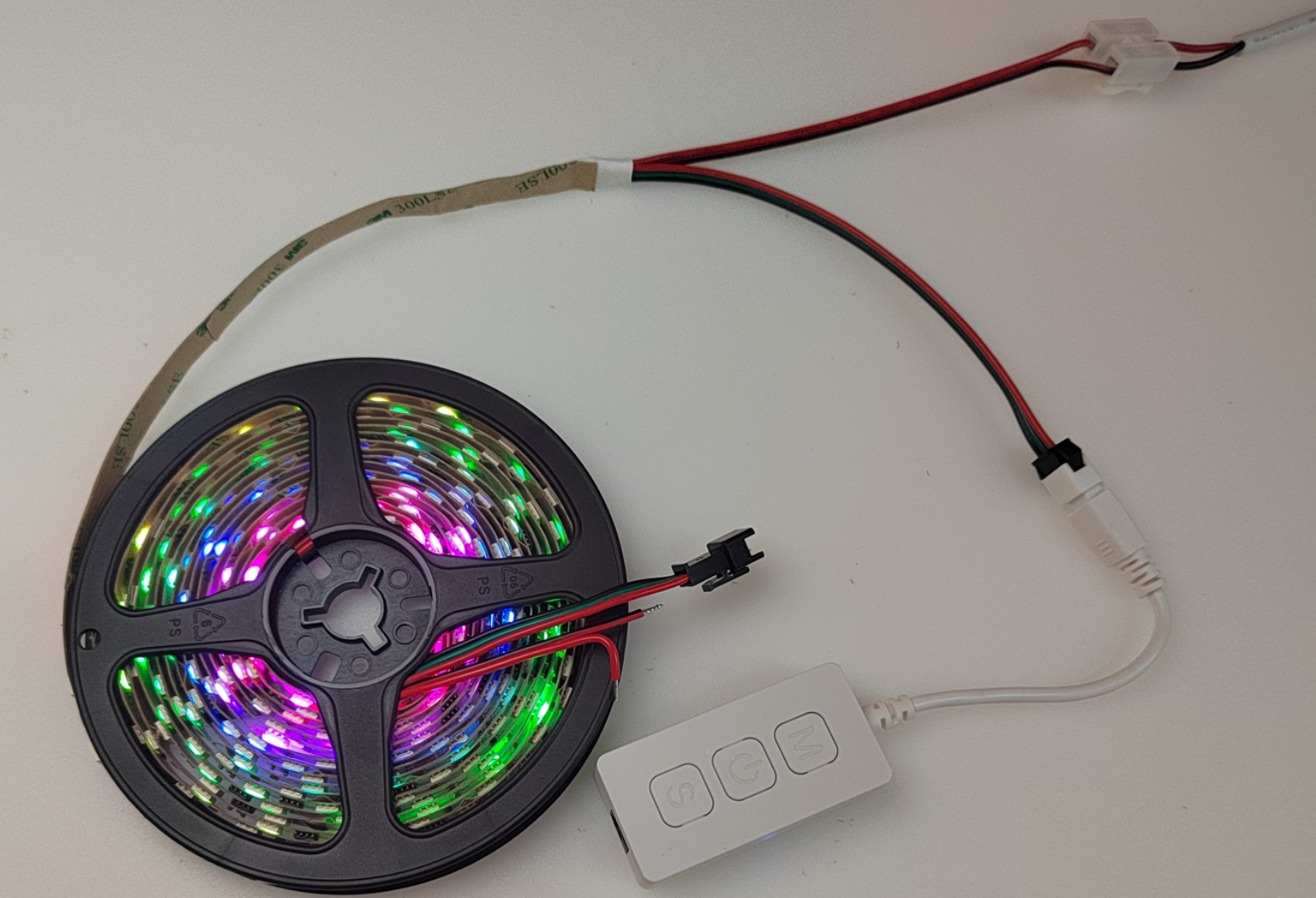
By moving to independent power delivery — whether through multi point feeding or parallel power supply — the system benefits immediately:
- Current is no longer concentrated through a single DC cable
- System load returns to a safe operating range
- Stability is naturally restored
With the power issue resolved, we then moved on to discuss a second layer of consideration with the client:
At a run length of 10 meters, does the strip have sufficient pixel density to ensure the smoothness and consistency of the dynamic color effects — especially given the demands of this kind of indoor LED strip lights application?
After our exchange, the client said something that stayed with us:
"This is the first time anyone has walked me through the entire logic from start to finish."
And it was exactly this approach — engaging from a genuine engineering perspective rather than simply pushing a sale — that built the client's trust in us.
In the end, he made a clear and decisive decision: to place all related project orders with us.
In interior lighting and renovation projects, most problems don't originate from the COB LED Strip, the controller, or the power supply in isolation — they stem from a system that was never fully understood as a whole.
We've always believed that three things make the difference:
- Run the current calculations properly
- Think through the system structure completely
- Identify and communicate the risks upfront
When you do that consistently, clients know exactly who is truly on their side as an engineering partner.
Looking to keep your LED indoor strip lights system running safely and reliably? Contact us today — our team of specialists is ready to design the most dependable power solution for your project, delivering bright, flexible, and dotless LED strip performance you can count on.